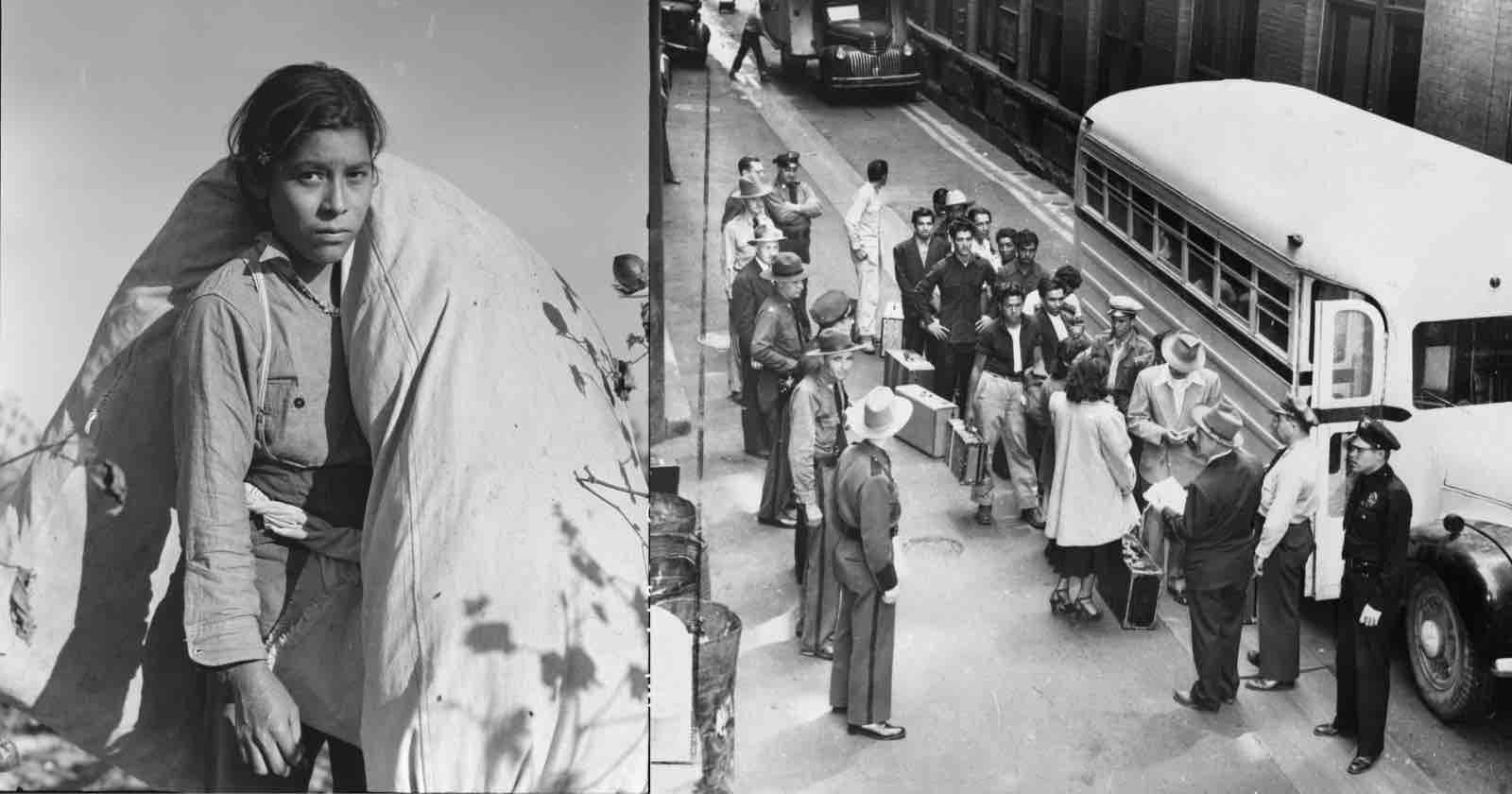
Photography has always held a mirror to the uncomfortable truths we often prefer to blur. The new exhibition chronicling a century of U.S. deportation campaigns does exactly that, and it refuses to look away. These images, capturing Mexican immigrants and American citizens alike caught in enforcement sweeps, are not just historical artifacts. They are a visual record of how policy translates into human displacement, one frame at a time. We see a young person carrying a sack that seems heavier than their own body, and families boarding buses under watchful eyes. The split-screen composition in the featured photograph says it all: the weight of a life uprooted does not discriminate by age or citizenship.
This exhibition arrives in a moment when we are already wrestling with how imagery shapes our collective memory. We recently reflected on how A Moment of Solidarity: News Outlets Limit Trump Imagery showed major outlets withholding certain photographs to control the narrative. That decision was about the power of a single image to provoke or protect. This deportation archive operates on a similar principle, but in reverse. It is not about withholding; it is about insisting that these moments be seen. The connection between the two stories is the act of curation, the deliberate choice of what we allow ourselves to witness. And just as A Life Unlived: Remembering Emmett Till Through Imagined Photography asks us to consider the lives behind the headlines, this collection forces us to see the faces behind the statistics. It is a powerful reminder that every enforcement action has a human cost, and that cost is often borne by those who have called this country home for generations.
What strikes us most is the quiet ordinariness of these scenes. There is no dramatic action, no overt violence in the frame, just the mundane mechanics of removal. That is what makes the work so unsettling. We are not looking at caricatures of criminals or villains. We are looking at neighbors, coworkers, and classmates. The exhibition does not preach or lecture. It simply presents the evidence, and lets the weight of a century settle on the viewer. For our readers, many of whom value authenticity and a life that is both curated and genuine, this is a call to engage with history beyond the glossy surface. It is easy to look away from a policy debate, but harder to turn away from a photograph of a child holding a sack that holds everything they own.
Our honest take is this: art has a responsibility to bear witness, and this exhibition fulfills that duty with a quiet, unflinching grace. It does not offer easy answers or tidy resolutions. Instead, it leaves us with a question that lingers long after we leave the gallery. What will future generations see when they look back at our own era of enforcement and exclusion? Will they see a nation living up to its ideals, or will they see a century of shadows that we chose to ignore? The photographs are already there, waiting for us to look closer. The only question left is whether we are brave enough to see ourselves in them.