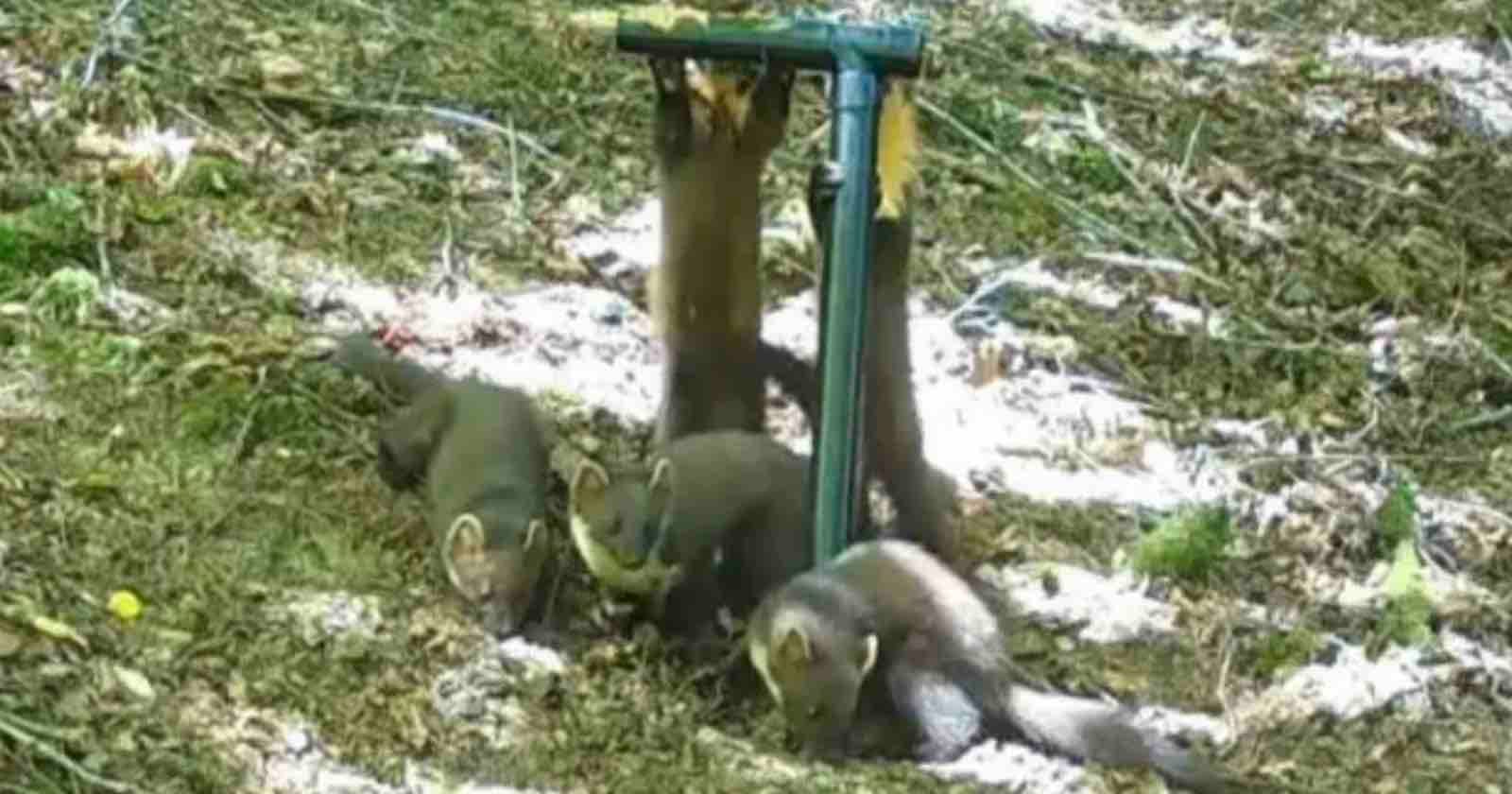
Somewhere in the quiet, damp woodlands of southwest England, a trail camera caught a moment that had been a century in the making: four wild pine martens, including a pair of kits, moving with that characteristic, curious grace. For over one hundred years, this species had been absent from the region, a ghost of the understory. Now, the camera traps have confirmed what conservationists have been hoping for, the first wild baby pine martens born there in a lifetime. It is a small, fuzzy headline, but it carries the weight of a landscape slowly remembering itself.
We find this story profoundly moving because it is not about a grand, dramatic intervention. It is about patience, habitat, and the quiet return of a native species to a place where it belongs. This feels like a direct counterpoint to the stark reality of the cheetah census we recently covered in A Quiet Count: South Africa's Cheetah Population Reveals a Stark Reality. There, the camera traps delivered a sobering accounting of scarcity. Here, they offer a glimpse of renewal. It is a reminder that the same tools, the same patient observation, can tell two very different stories about the natural world, one of loss, one of hope. For our readers, the practical takeaway is beautifully simple: rewilding works. It is not always about reintroducing large predators; sometimes, it is about letting the forest heal enough for its smaller, elusive residents to find their way back.
This is where our editorial lens focuses. We are not just nature writers; we are students of aesthetics and authenticity. The pine marten is a creature of pure artistry, a streak of chestnut and cream that moves like liquid shadow. Its return is not just an ecological win; it is a restoration of a certain kind of wild beauty that we often fear we have lost forever. We would tell a reader who asks us about this that it is a masterclass in the power of observation. Just as we appreciate the deliberate craft of capturing a perfect frame with Embrace the Drama: Exploring the Allure of Ultra-Low ISO Film, the conservationist's work here is about waiting for the right light, the right moment, and having the technical setup ready. The camera trap is their lens, and the forest is their studio. The result is a portrait of resilience that no studio could ever stage.
The practical consequence for us all is that these small victories are the blueprints for larger ones. They prove that when we remove the pressures we have imposed on a landscape, nature has a remarkable capacity to correct its own course. The question that lingers, and the detail we will be watching, is how this small population expands. Will they find each other, will they spread to new valleys, and will their return have the cascading effect on the local ecosystem that we hope for? For now, we have the image of those kits, a living, breathing argument for conservation that is as elegant as it is effective. That is a story worth telling, and a truth worth capturing.