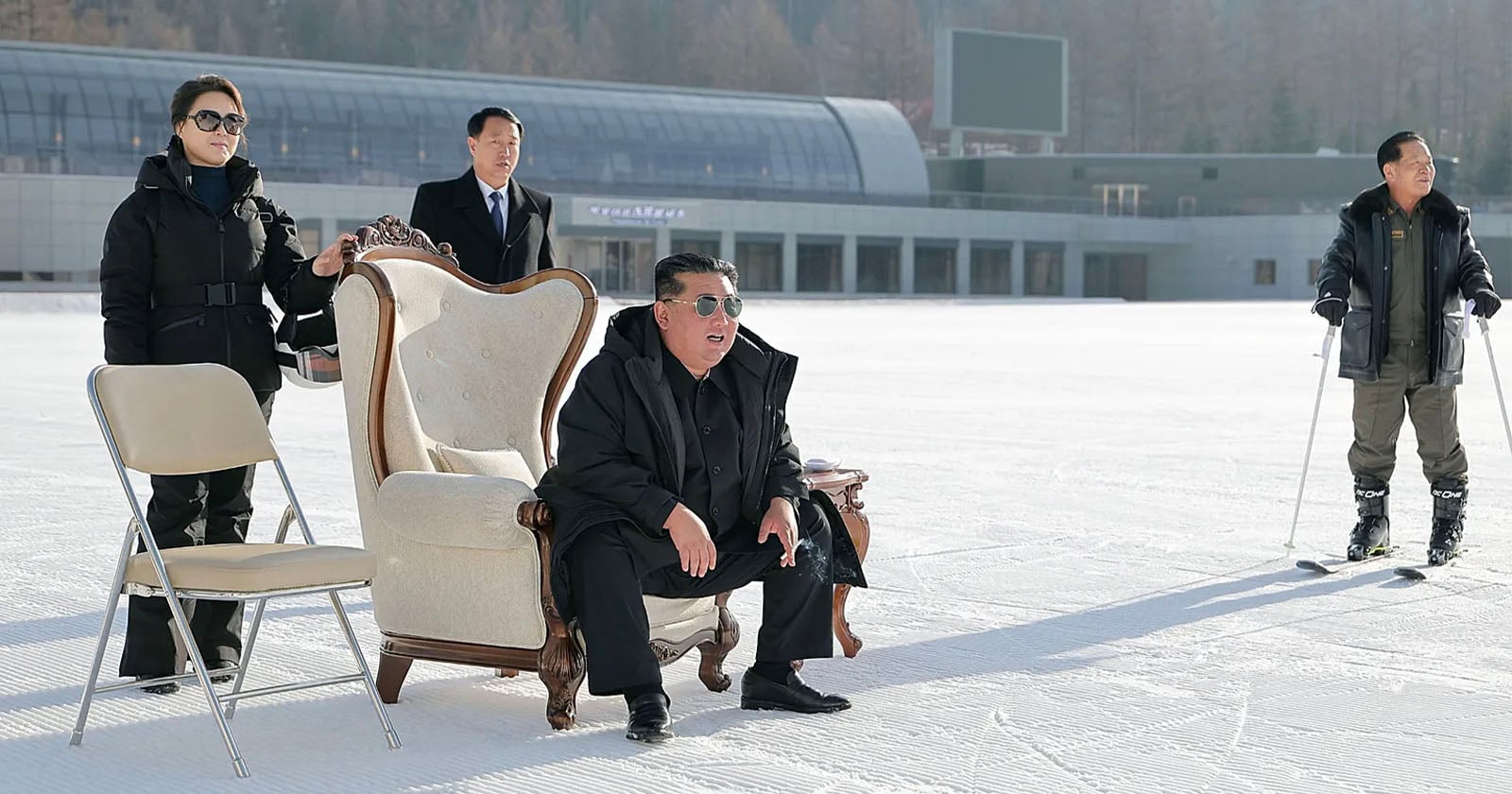
There is something unsettling about a staged photograph, especially when it is the only kind a regime allows. North Korean state media recently published a series of curated portraits of Kim Jong Un and his daughter, the presumed heir, and the images are as revealing for what they omit as for what they show. The father-daughter bond is presented as warm, natural, even aspirational, but every frame is a piece of propaganda, calculated to project stability and dynasty. For an audience that values authenticity, this is a reminder that the most polished image is often the least truthful.
We live in a world where our own images are regularly harvested without consent, as Italy's $887 Million Message on Privacy: Your Photos Are Not Free for the Taking makes clear. That story underscores a fight for the right to control how our likenesses are used. Compare that to North Korea, where citizens have no such right, and the supreme leader's image is managed with the precision of a military operation. The contrast is stark: one society fines a tech giant billions for misusing personal photos; the other orchestrates every public image of its leader to manufacture a narrative. The takeaway here is not about politics in the abstract, it is about the power of the gaze. Whose gaze controls the image? And what story is being told?
There is also an artistic dimension worth considering. The photographs of Kim and his daughter are composed with care, lighting, framing, even the choice of clothing, all designed to evoke warmth and continuity. It is a form of visual storytelling, but one stripped of spontaneity. Compare this to the work of a photographer like Monica Dhaka, whose lens turns a scar into a story of survival, as explored in Through Monica Dhaka's Lens, a Scar Becomes a Story of Survival. Dhaka's images are raw, personal, and rooted in lived experience. They do not seek to control the viewer's reaction; they invite it. The North Korean portraits do the opposite, they demand a single reading, a sanctioned emotion. One is a conversation; the other is a command.
What does this mean for our readers, who value both artistic sensibility and authentic engagement? It means we must become better readers of images. The next time a perfectly lit, emotionally resonant photograph appears in your feed, whether from a state media outlet or a luxury campaign, ask who curated it and why. The surface may be beautiful, but the story underneath is what matters. And in this case, the story is about succession, control, and the careful staging of a future that allows no room for the unscripted. The detail to watch is not the daughter's smile, but the absence of any other face in the frame.