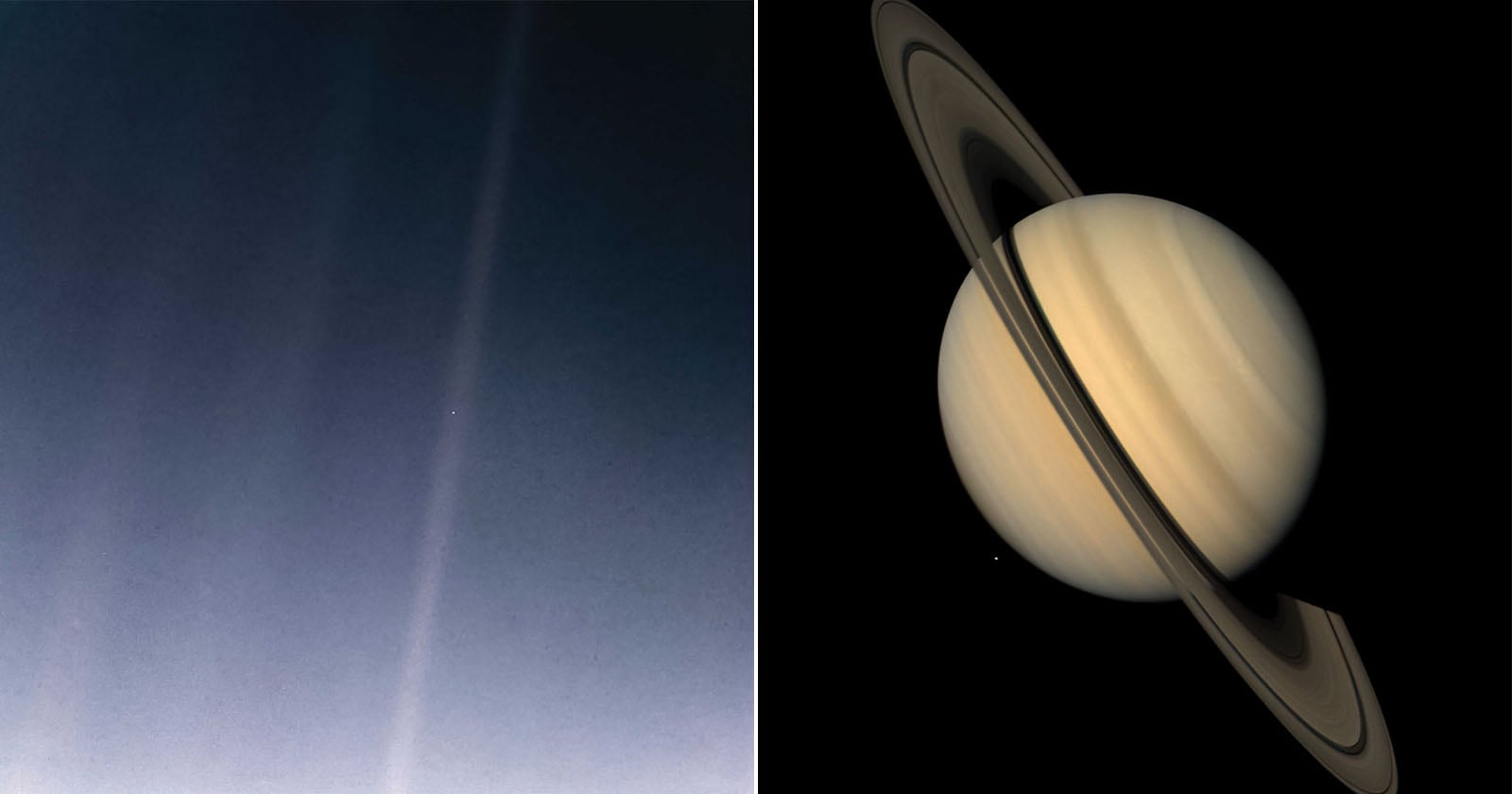
There is something quietly profound about a human-made object crossing the threshold of one light-day from Earth. Voyager 1, launched in 1977, now drifts so far that its signals take an entire day to reach us. This is not merely a number; it is a redefinition of scale. We find ourselves moved less by the engineering achievement and more by the artistic implication: what does it mean to create a portrait of space from such a distance? This is curation on a cosmic level, and it asks us to reconsider how we frame the worlds we cannot touch.
The image-making here is not about megapixels or lens flares. Voyager's iconic portraits, the Pale Blue Dot, the family portrait of planets, were captured with instruments designed for science, not aesthetics. Yet they resonate as art because they force a shift in perspective. They remind us that every photograph is a choice: what to include, what to leave in darkness, what to let time erode. In that way, they echo the carefully staged propaganda portraits of North Korea's leadership, where every frame is a deliberate construction of power and narrative. The difference is intention: Voyager's images are honest about their limitations. They show us a speck of dust against the void and call it home. There is no spin, only scale.
For our readers, those who move between fitness studios and galleries, who find beauty in both a well-cut jacket and a well-executed squat, this moment offers a practical lesson in attention. We spend so much time curating our own images: the perfect café table, the golden-hour workout shot, the flat lay of a new fragrance. Voyager 1 reminds us that the most powerful images are often the ones that make us feel small, not significant. It is an invitation to step back from the curated self and look outward, to let the vastness of a light-day humble our daily obsessions. The Lumix SHX1 Blends Cinema Soul with Compact Craft may give us cinematic control in our hands, but no lens can manufacture the kind of perspective Voyager offers for free.
What lingers is the silence. One light-day means a twenty-four-hour lag in conversation. Voyager speaks, and we wait. It is a reminder that some of the most authentic dialogues require patience. As we continue to frame our lives in real-time stories and instant replies, this spacecraft asks a quieter question: what are we willing to wait a day to hear? The answer may be the most curated image of all.