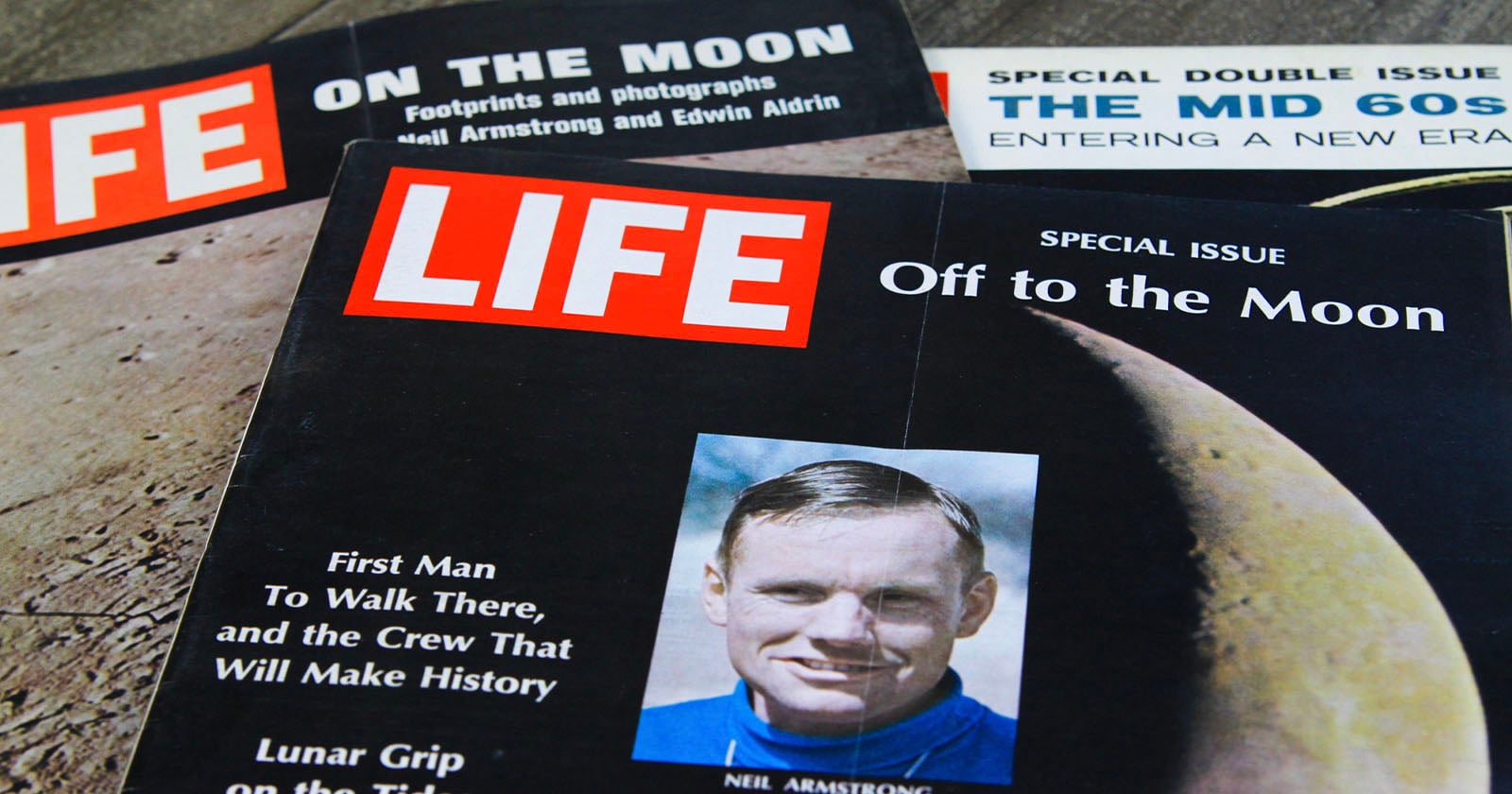
There is something quietly radical about bringing a legendary photojournalism magazine back to print in an age when most of us consume images on screens smaller than a postcard. Life Magazine's return, 90 years after its first issue, feels less like nostalgia and more like a deliberate recalibration of how we want to see the world. We think it signals a hunger for permanence, for photographs that demand we stop scrolling and actually look.
The revival arrives at a moment when the line between capturing a moment and interrupting it has never been thinner. Just weeks ago, a photographer was physically grabbed by security during a live broadcast of the Ballon d'Or, his camera still raised. That incident, which we covered in When Art Meets Interruption: A Photographer's Ballon d'Or Moment, exposed the tension between the instinct to document and the systems that control access. Life Magazine built its reputation on photographers who were granted, and sometimes seized, unprecedented access to history. Its return asks us to reconsider what access even means today, when everyone holds a camera but few hold the trust required to truly witness.
This is not merely a publishing decision; it is a curatorial statement. A print magazine forces editors to choose, to sequence, to commit. That discipline resonates with the ethos we explore in The Art of Seeing America with Stephen Wilkes on Our Podcast, where the photographer spends days capturing a single location from dawn to dusk. Wilkes's work is about compression of time into a single frame; Life's original photojournalism was about compression of world events into a weekly rhythm. Both reject the endless feed in favor of the deliberate image. Meanwhile, the collaboration between Artra and Rollei, detailed in Artra and Rollei Frame Time Through a Collector's Iconic Lens, reminds us that the tools themselves can be objects of artistry. A Rolleiflex viewfinder is a square of discipline. Life Magazine was its editorial equivalent.
For our readers, who move between fitness studios and galleries, who value the texture of a print over the gloss of a pixel, this revival offers a practical invitation. The concrete takeaway is this: expect the new Life to curate, not merely collect. If the original magazine taught Americans how to see the Dust Bowl and the moon landing, the reboot will have to teach a generation how to see anything at all in an environment designed to distract. That is an ambitious brief, and the first issue will tell us whether the editors understand that their greatest asset is not their archive but their authority to say no. We will be watching for what they choose to leave out.