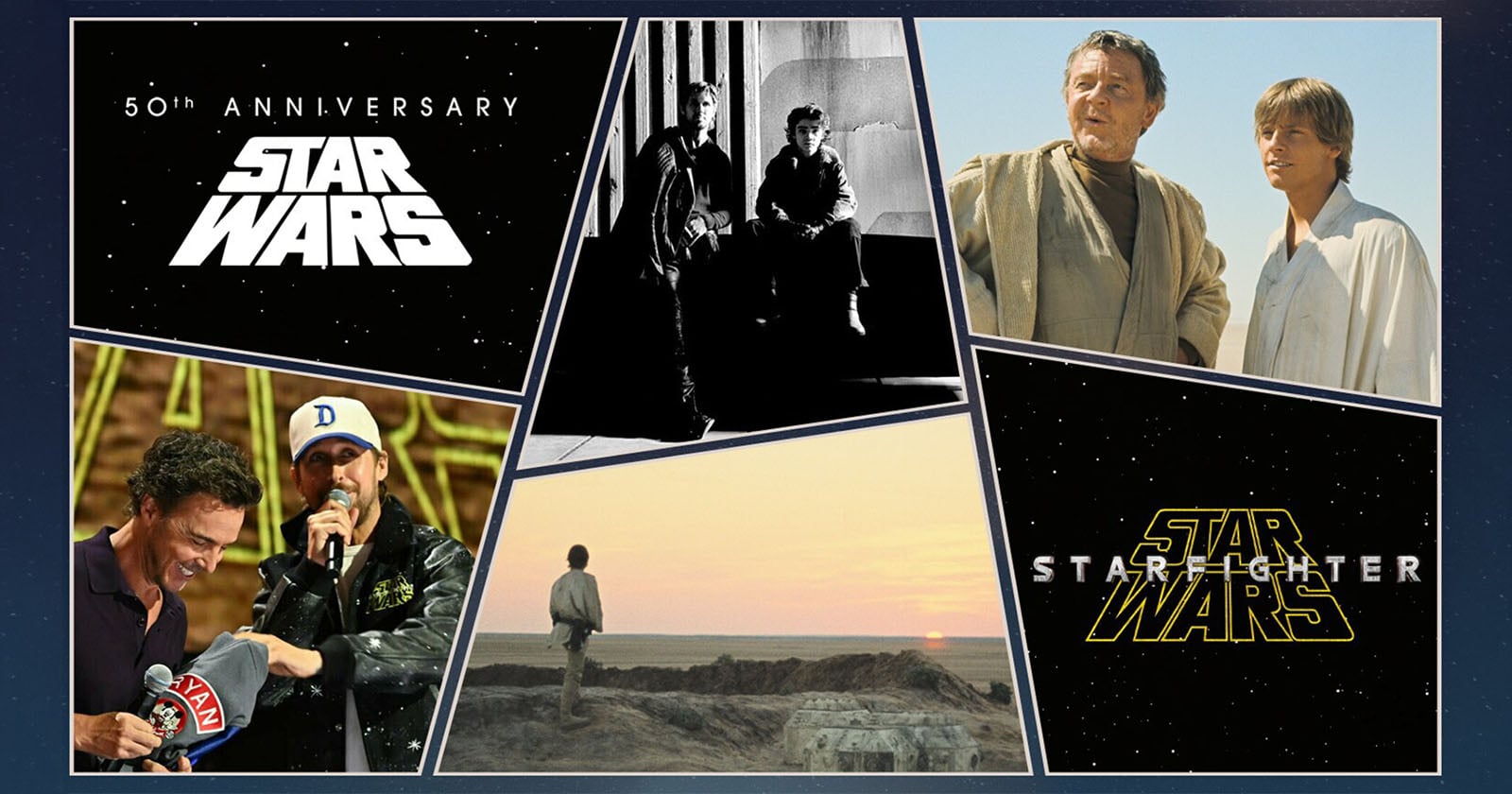
There is something quietly radical about the idea of watching a Star Wars film on actual film, in 70mm IMAX, with all the grain and grandeur that format demands. Christopher Nolan's *The Odyssey* has already proven the appetite for that kind of cinematic pilgrimage, and now Disney is betting that a galaxy far, far away can carry that same weight in 2027. For those of us who grew up on VHS pan-and-scan or grainy streaming marathons, the promise of seeing the original trilogy's opening crawl stretched across a towering screen is not just nostalgia; it is a re-framing of the myth. This is not about "better" in a technical sense, but about the texture of the thing, the tangible presence of a story that has lived in our heads for decades finally taking up physical space.
For our readers, the practical takeaway is simple: this is the moment to start planning your calendar around theatrical calendars. The announcement points to two Star Wars films screening in IMAX 70mm, and if the format's recent resurgence has taught us anything, it is that these engagements are events, not just showings. You will want to be the one who showed up early for the 5 a.m. screening, not the one who waited for a home release that will never quite capture the same light. We would tell anyone asking: do not assume this is a permanent revival. The industry has a habit of treating physical film as a boutique curiosity, and while Nolan's success has opened doors, those doors can close just as quickly. If you have ever wanted to see the Millennium Falcon feel like a real, battered ship rather than a digital afterthought, this is your window.
What makes this move interesting is not the spectacle alone, but the implicit argument it makes about how we watch. Disney is not just selling tickets; they are selling a kind of attention that has become rare. In a world of infinite scroll and second-screen viewing, a 70mm IMAX print demands something from you. It asks for your eyes, your patience, your willingness to sit in a dark room and let a story unfold at its own pace. That is a beautiful thing, and it is also a gamble. The audience that shows up for *The Odyssey* might not automatically show up for a 40-year-old space opera, no matter how much grain is on the print. The question is whether the nostalgia is strong enough to convert curiosity into a cultural moment, or whether this will be a lovely footnote in the history of format revivals.
Here is what we will be watching: the specific films chosen, and whether Disney leans into the original trilogy's raw, lived-in texture or tries to polish it into something more modern. "The original Star Wars" is coming to IMAX, which suggests a return to the source, but the phrase "a pair of Star Wars films" leaves room for interpretation. If they pick *The Empire Strikes Back* and *Return of the Jedi*, you have a perfect trilogy arc. If they branch into the prequels or sequels, the energy shifts entirely. Our advice? Do not wait for the discourse. Book your tickets the day they go on sale, and treat it like the rare, physical event it is. Because the real takeaway here is not that Star Wars is coming back to theaters. It is that film, actual film, still has the power to make us feel like we are seeing something new, even when we have seen it a hundred times. That is worth getting off the couch for.