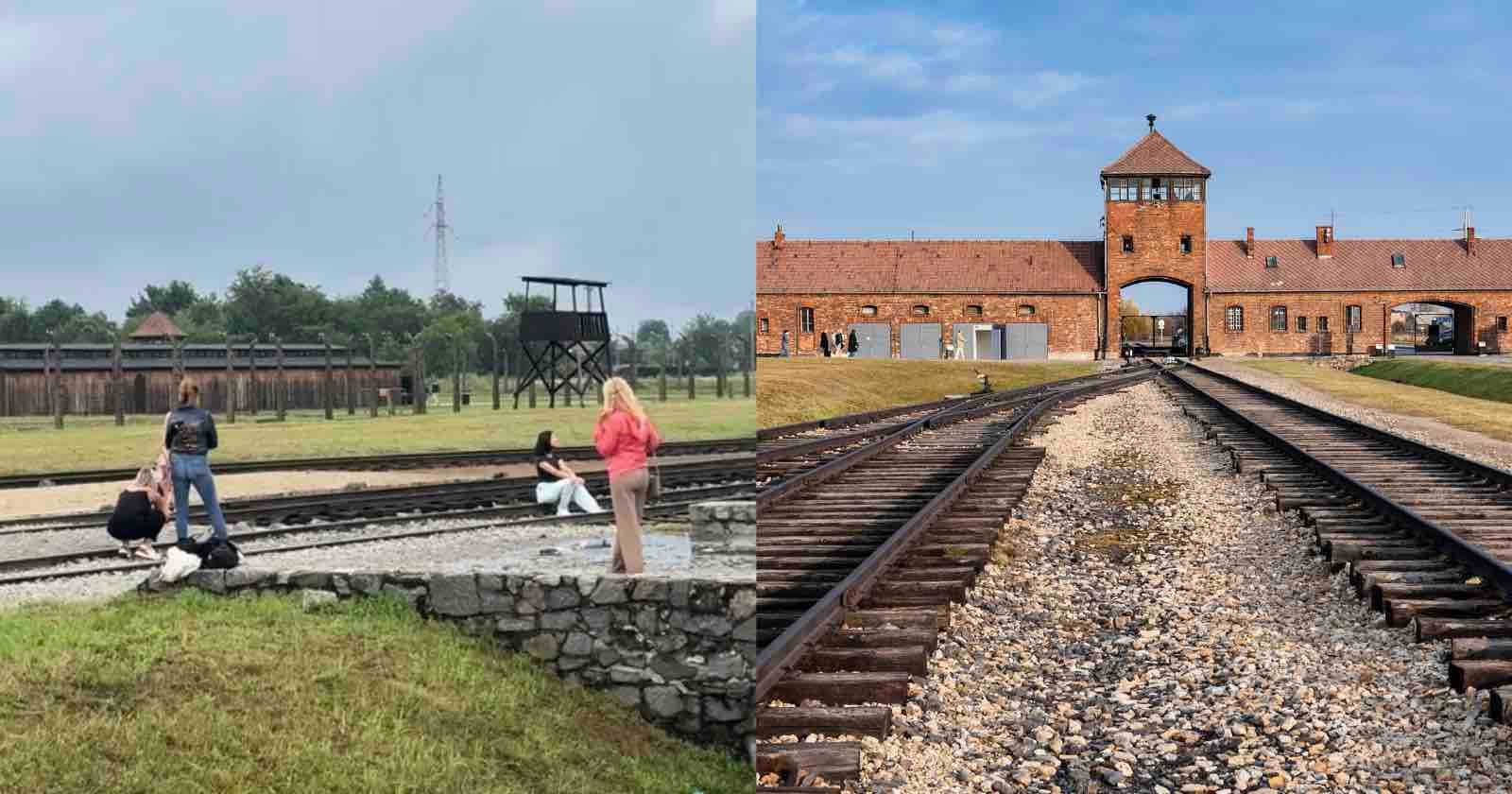
There is a particular kind of stillness that settles over a place like Auschwitz-Birkenau, a weight that has nothing to do with the summer sun and everything to do with the soil beneath your feet. So when footage emerged of a group of tourists treating the entrance to that former death camp as a backdrop for a photo shoot, the collective gasp was not about the act of photography itself. It was about the collision of worlds: the curated, filtered present colliding with the unvarnished, horrific past. We are all documentarians now, carrying high-resolution cameras in our pockets, but that does not mean every frame is ours to take. The instinct to freeze a moment is human; the failure to read a space is a choice.
This incident is not a call for outrage, but an invitation to recalibrate. For the creative soul, the one who seeks beauty in every shadow and light, the challenge is to understand that some places are not backdrops; they are altars. We have built a culture that prizes the aesthetic above all else, that whispers that if it looks good on our feed, it has value. But the entrance to Birkenau, with its iconic gate and rail lines, is not a set piece. It is a threshold to an unthinkable reality, and our posture there should be one of reverence, not performance. If you find yourself asking whether a particular pose is appropriate, that question itself is your answer. The moment you need to ask, you already know.
The practical takeaway here is not to police others, but to hold a mirror to our own habits. Before you raise your phone or camera at any site of historical trauma, pause. Ask yourself what you are there to do. Are you there to learn, to witness, to pay your respects? Or are you there to collect a visual souvenir that will gather digital dust? We have seen this tension play out on the streets of Charleston, at the edge of the Grand Canyon, and now at the gates of a Nazi camp. The line between appreciation and appropriation, between homage and exploitation, is not always clear, but it is always felt. We would tell a reader who asked: the most powerful image you can take from a place like Auschwitz is not one that appears on your camera roll, but the one that remains seared into your memory, unshared and unpolished.
So what do we do with this discomfort? We use it. We let it temper our instinct to capture and strengthen our capacity to feel. The next time you stand somewhere that holds the echo of profound human suffering, consider leaving your phone in your pocket. Let the silence do the talking. Let the gravity of the place settle into your bones without the buffer of a lens. The world does not need another photograph of you at a gate; it needs you to understand what lies beyond it. And that understanding, not the image, is the only thing worth taking home. The question we should all be asking is not "Can I take this photo?" but "What am I hoping to preserve, and at whose expense?" The answer, for many of us, might just be the most honest thing we capture all year.