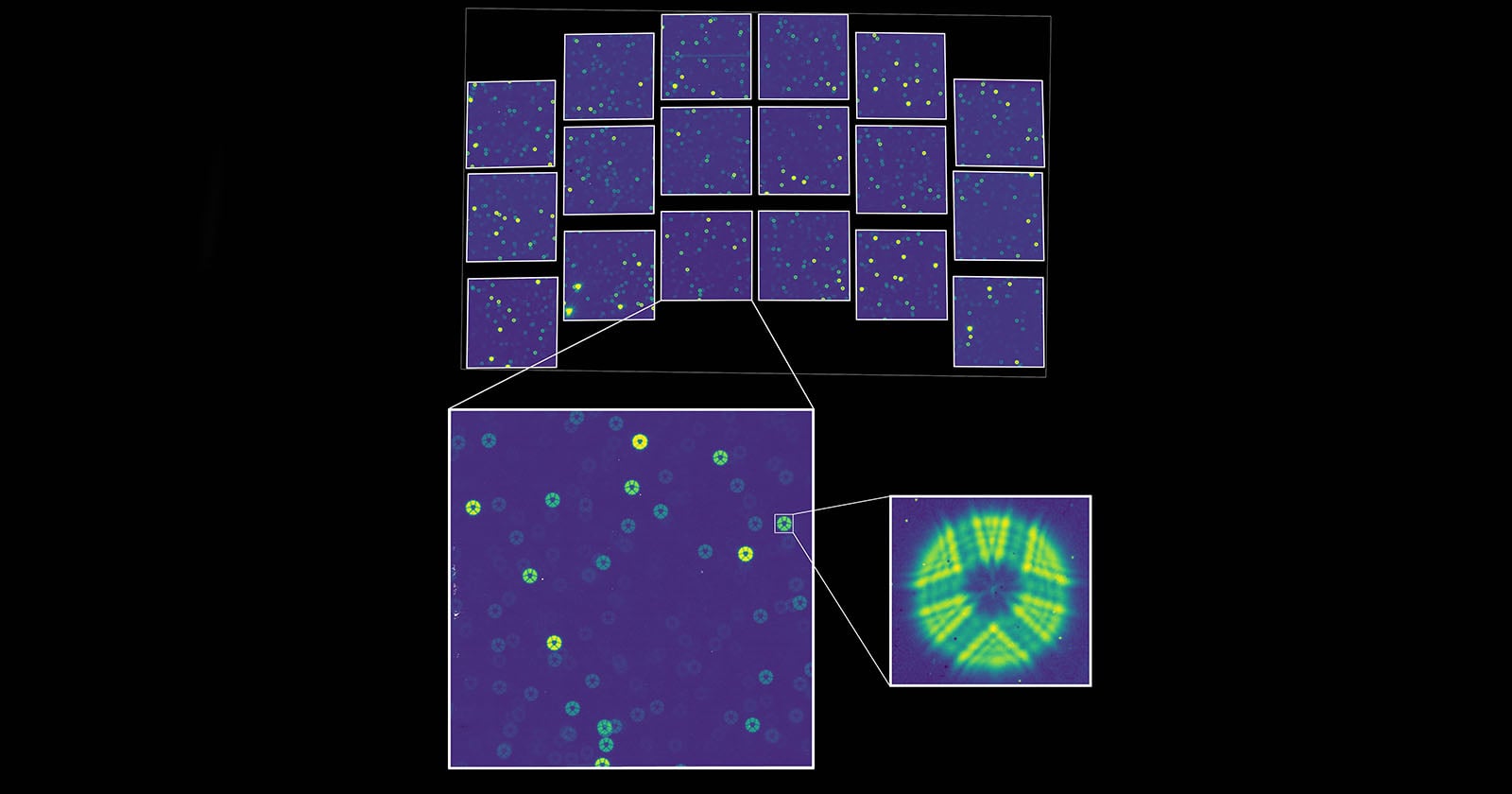
There is a particular kind of quiet that settles over a room when the first light from a new instrument reaches us. The Nancy Grace Roman Space Telescope, now awake and shivering through its initial tests a million miles from home, has sent back a grid of dark-field panels that reads less like a photograph and more like a proof of intent. We are looking at the first deliberate breath of a 300-megapixel eye, and while the image itself is modest, the architecture behind it is anything but. For those of us who track the intersection of human curiosity and engineered restraint, this is a moment worth pausing over. Not because the telescope has discovered anything yet, but because it has arrived. The Wide Field Instrument is awake, and that alone changes the tenor of the next few years.
We have to be honest about what this means in practical terms. A telescope of this scale is not a single photograph; it is a commitment to looking for longer and wider than we ever have before. The Roman mission is built around the kind of cosmic cartography that turns the night sky into a living archive. For the creative minds in our audience, the ones who find beauty in the way light bends around gravity or how a galaxy cluster stretches into a smudge of ancient fire, this is the equivalent of a new sketchbook with an endless page. For the health-conscious and the disciplined, there is a parallel worth noting: the telescope's testing phase is not glamorous. It is a series of methodical calibrations, a slow and deliberate rehearsal of thousands of moving parts. That is the quiet discipline we often celebrate in our own routines. The first tests are passing, but the real work is in the weeks ahead, when every mirror and sensor must learn to work as a single, seamless consciousness.
What we would tell a reader who asks us about this is simple: do not mistake the opening act for the whole performance. The image we are seeing now is a calibration frame, a test pattern that proves the hardware survived its journey to L2. The real magic will come later, when Roman begins sweeping across vast swaths of sky, capturing fields of view that are each larger than the full moon. This is not a telescope for staring at one star; it is a telescope for mapping the entire stage. It is also a reminder that patience is a form of participation. We do not get to rush the cosmos, and we do not get to rush the instrument that is meant to read it. The full story of this testing phase is one of measured optimism, a slow unspooling of data that will eventually rewrite what we know about dark energy, exoplanets, and the structure of the universe itself.
So here is the concrete point to watch: the next public release from Roman will not be a pretty picture. It will be a stress test, a deliberate push of the instrument to its limits, and how it performs under that pressure will tell us more than any single snapshot could. The telescope has passed its first check, but the real voyage is just beginning. Keep your eyes on the calibration data, not the headlines. That is where the truth lives, and that is where the next chapter of our cosmic story will be written.