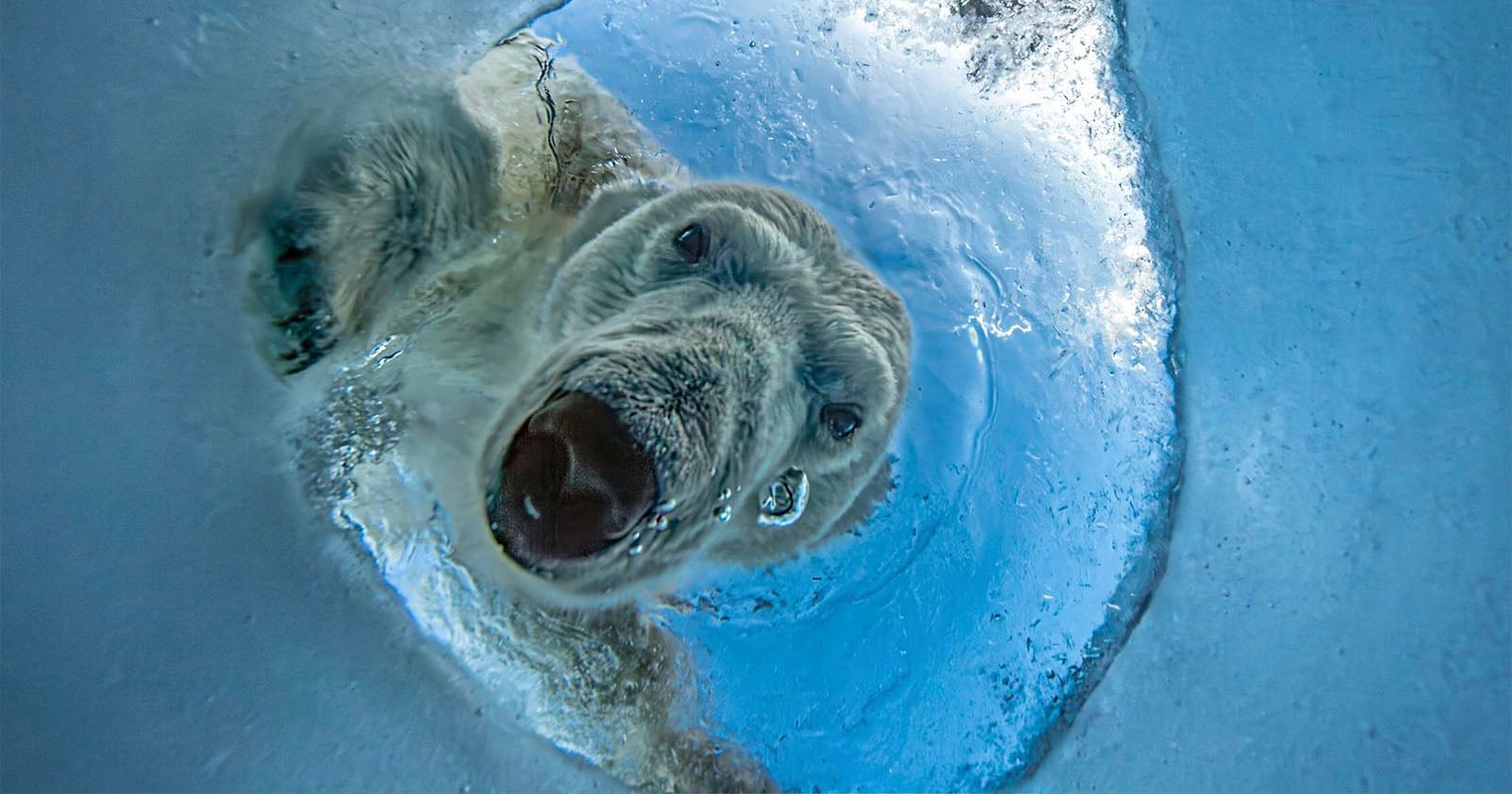
The polar bear's shadow stretches across the ice like a bruise on white silk. It is the kind of image that stops you mid-scroll, not for its beauty alone, but for what it quietly implies: the light is fading, and the creature casting that shadow is running out of room. The winners of the Ournature Environmental Photo & Video Awards for 2026 have been revealed, and this haunting frame took the top honor. Our take is simple: this is not a picture about a bear. It is a picture about absence, the space between what remains and what is already gone.
We spend considerable attention on the curated and the beautiful, and we stand by that. Recently we explored Curated Timepieces for the Discerning Eye: 2026's Finest New Watches, objects built to mark seconds with precision and grace. We also celebrated Through the Lens of Victory, One Italian Photographer Captures Nature's Art, where a single image froze a wild moment into something timeless. But the polar bear's shadow asks a different kind of question: what happens when the subject of your art is disappearing? This photograph does not tell us to buy anything or join anything. It invites us to witness, and that act of witnessing is itself a form of responsibility.
For our readers, creatives, athletes, aesthetes, this award carries a practical implication. The best visual storytelling today is not merely decorative; it is documentary. Whether you are framing a fitness campaign or a fashion editorial, the lens you choose says something about what you value. The Ournature jury has made a deliberate choice to honor an image that is spare, uncomfortable, and unresolved. There is no heroic pose here, no soaring eagle or colorful reef. There is only a silhouette on shrinking ice. This tells us that the environmental story is no longer a separate category of art. It is the context for everything else we capture.
The concrete takeaway is this: the most powerful images of 2026 will not be those that flatter our interiors, but those that unsettle our comfort. The polar bear's shadow is a detail to sit with, not scroll past. It asks each of us to consider what we are framing out of our own frame. Next time you raise a camera, whether for a watch, a landscape, or a face, ask what story the shadows tell. That is where the truth lives.