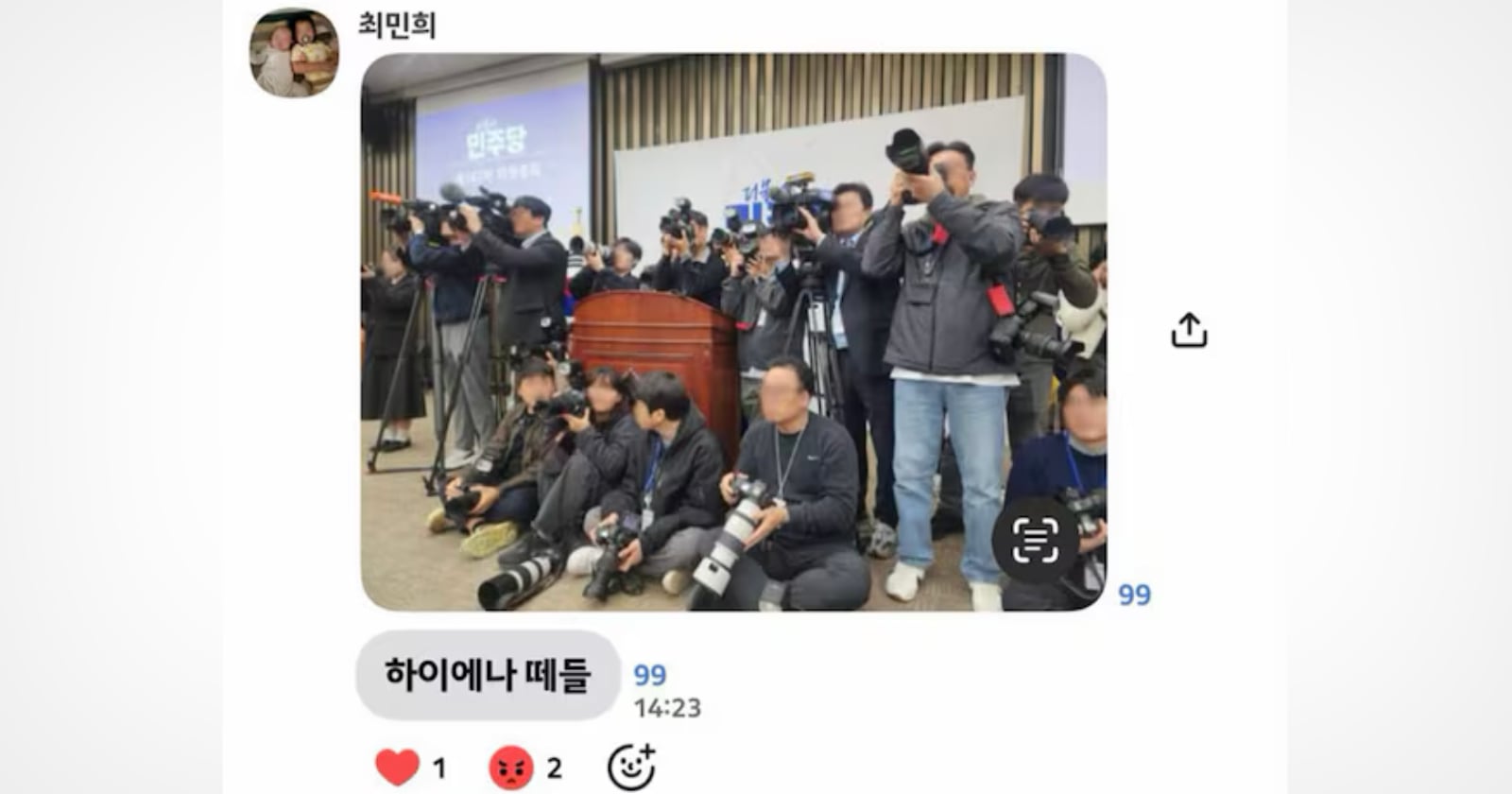
A leading South Korean politician's decision to call photojournalists a "pack of hyenas" in an online chatroom is more than an insult, it is a revealing glimpse into how power sees the act of bearing witness. The remark has rightly sparked a formal police complaint from press photographers and fierce backlash from the country's media. Our take is clear: this is not a petty squabble over name-calling. It is a battle over dignity, and it matters to anyone who values the craft of seeing clearly.
For our readers, who appreciate the artistry of a perfectly composed frame and the discipline of capturing truth in a single exposure, this story should land with particular weight. Photojournalists do not scavenge. They stand in the margins of history, often at personal risk, to bring us images that demand our attention. The same impulse that drives a photographer to wait hours for the right light on a Leica Noctilux is what drives a press photographer to hold position in a scrum of bodies and shouting. We recently explored A Curated Portal Into Six Decades of Leica's Noctilux Legacy, celebrating the patience and precision that goes into making an image that endures. That same patience and precision is what the politician dismissed as predatory. The contrast could not be starker: one worldview treats photography as a craft worthy of reverence; the other treats it as a nuisance to be shamed.
What makes this episode particularly resonant is that it unfolds in a country with a sophisticated visual culture and a robust press ecosystem. South Korea's photographers are among the most technically accomplished in the world, and its photojournalists have documented everything from democratic protests to pop-culture phenomena with a sharp, unflinching eye. To reduce their work to the behavior of scavengers is to fundamentally misunderstand what it means to document. It is also, practically speaking, a strategic error: the more a public figure attacks the people holding the cameras, the more those cameras will train their lenses on that figure's every move. The A curated collection of 2026's most visionary photography from 80 countries reminds us that the best images are born from collaboration, curiosity, and respect, not from contempt.
The concrete takeaway here is that language has consequences, especially when it comes from those in power. Calling press photographers hyenas does not make them less diligent; it only reveals a discomfort with being watched closely. For our readers who work with images daily, or who simply love the stories images tell, the question worth watching is whether this moment forces a broader conversation about how we value the people behind the viewfinder. We should all be paying attention to the answer.