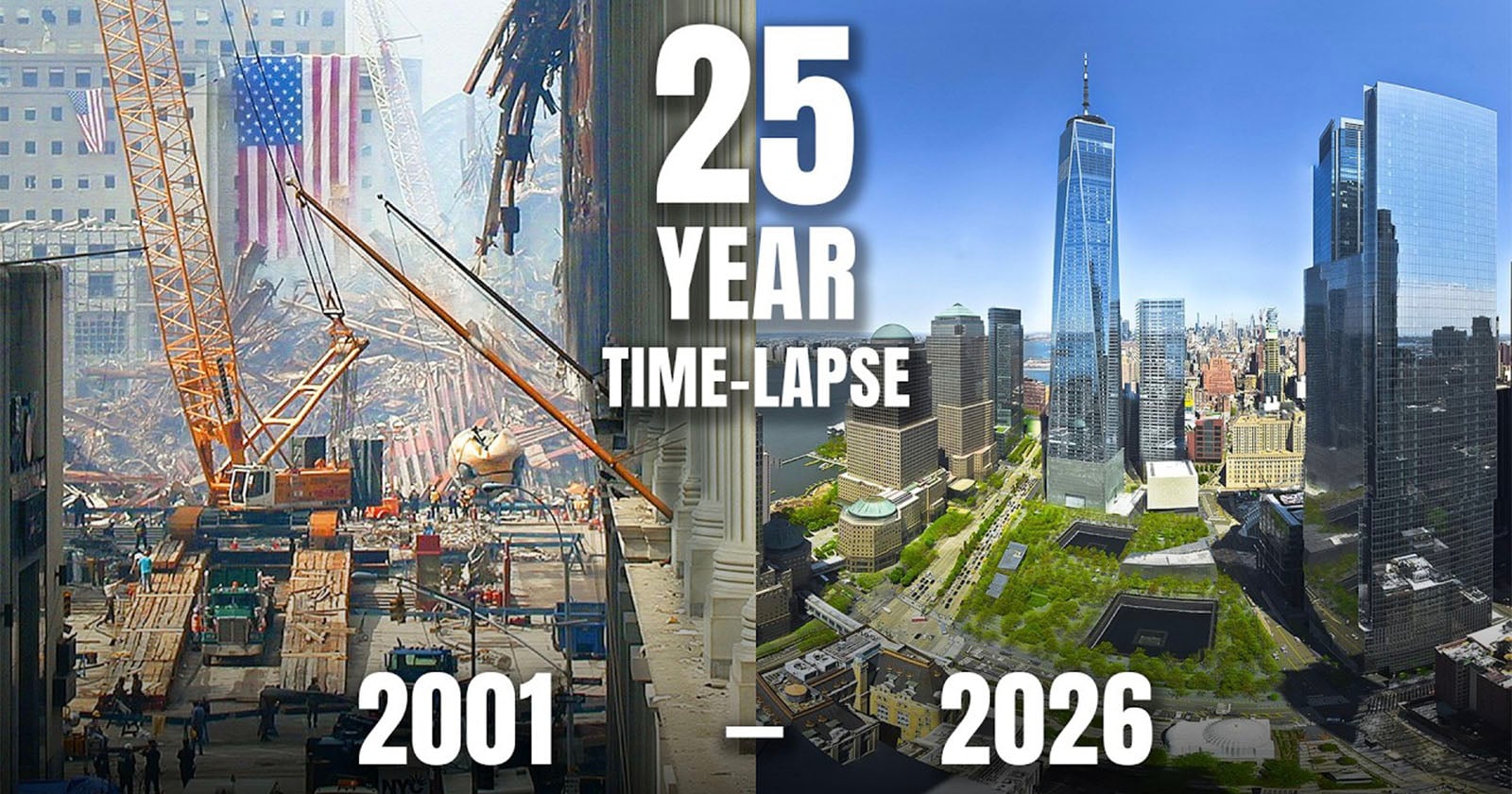
Twenty-five years is a long time to watch a single patch of skyline, yet EarthCam has given us exactly that: a quarter-century of footage, compressed into a single timelapse, of lower Manhattan rising from loss. The split-screen image that frames the project, Ground Zero in 2001 on the left and the completed World Trade Center complex in 2026 on the right, is stark in a way words rarely are. It is not just a record of construction; it is a study in collective patience. For those of us who work in the visual arts, this is the kind of project that makes you pause. It is raw documentation, yes, but it is also a curatorial act, a decision to look at time itself as a material. It reminds us of how Collaborate & Create: Boudoir Sessions Offered Across Florida's Coast asks us to see intimacy as a form of storytelling, or how Leica Lux 2.0: Crafting iPhone Photography with Artistic Vision turns a daily tool into an instrument of intent. The thread is the same: the camera is never passive. It is always making an argument about what matters.
Our honest take? This timelapse is not about nostalgia, and it is certainly not about the tragedy itself. It is about the refusal to let a frame end on a dark note. EarthCam's lens was there, recording the dust and the silence, and then it stayed for the cranes, the concrete pours, and the slow return of light to the streets below. That is a specific kind of discipline, one that we can all borrow from, whether we are building a portfolio or a personal practice. The practical lesson for our readers, the photographers and creators among us, is about the value of showing up without a script. You do not always get to choose the moment; you only get to choose to be present. The Refined and Accessible: The Nikon Z5 IIC—A Full-Frame Camera, Reimagined is a tool that rewards that kind of patience, but no gear matters if you are not willing to keep the shutter open when the story is still forming. This is that story, told in 25 years of frames.
What strikes us most is the quiet audacity of the project. It does not flinch, but it also does not wallow. It shows us a city that had every reason to stay down, and instead, it shows us the skyline filling out again, block by block. We would tell a reader who asks about this: watch it not for the spectacle of destruction, but for the mundane heroism of the rebuild. The concrete detail to hold onto is the timeline itself. Twenty-five years is not a generation in the abstract; it is a full career, a childhood, a lifetime of mornings. The final frame is not a conclusion. It is an invitation to ask what we are building now, while the cameras are still rolling, that will look this meaningful to someone else a quarter-century from now.