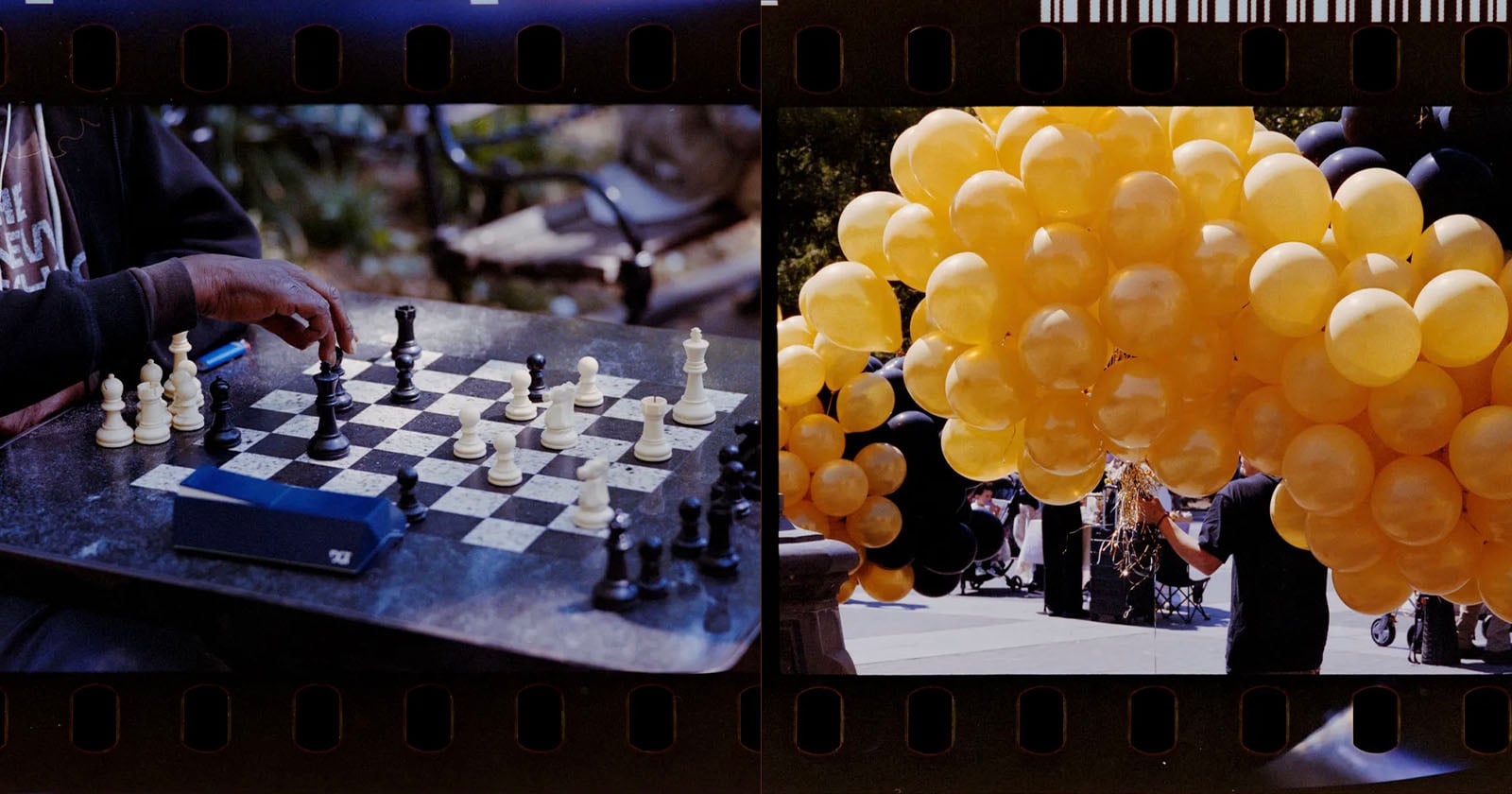
There is a particular kind of magic in holding something that was never meant for your hands. When a friend in the film industry respooled Kodak's Verita 200D, the stock built for *Euphoria* season three, into 35mm canisters, they weren't just sharing a product. They were handing over a secret. Kodak doesn't sell this to photographers. You can't order it, you can't stockpile it, and you certainly can't walk into a store and ask for it by name. It exists for the screen, for the glow of a televised fever dream, not for the quiet ritual of a still camera.
But here is the thing about artistry: it refuses to stay where it was placed. This film was engineered for a specific visual language, one of saturated euphoria and cinematic intimacy, and yet in a still camera, it becomes something else entirely. It becomes a tool for the rest of us. This resonates deeply with the work we champion, whether it's the Collaborate & Create: Boudoir Sessions Offered Across Florida's Coast or the deliberate vision behind Leica Lux 2.0: Crafting iPhone Photography with Artistic Vision. The thread is the same: the equipment is the doorway, but the intention is the room.
What strikes us most is not the scarcity, but the permission it grants. When you shoot a film that was never meant for you, the pressure to make it ordinary evaporates. You are not comparing your results to a thousand online galleries. You are simply chasing the feeling the stock was built to hold. There is an authenticity in that, a rawness that aligns perfectly with the Refined and Accessible: The Nikon Z5 IIC—A Full-Frame Camera, Reimagined philosophy, where accessibility and craft meet without dumbing down either. This is not about gear envy. It is about the willingness to shoot something that might not work, and loving the process anyway.
Our take is simple: this is the antidote to the overly curated feed. In a world where every frame can be edited, cropped, and color-graded into submission, shooting a roll of unreleased cinema stock is an act of trust in the moment itself. If a reader asked us what to do with this knowledge, we would say this: chase the unusual. Borrow the film, buy the odd lens, shoot the abandoned scene. Not because it will be perfect, but because it will be yours. The concrete consequence of this story is not that you will find a roll of Verita 200D, because you will not. It is that the next time you see a tool that was built for someone else's vision, you will remember that your own vision is just as valid. And that is a roll worth shooting.