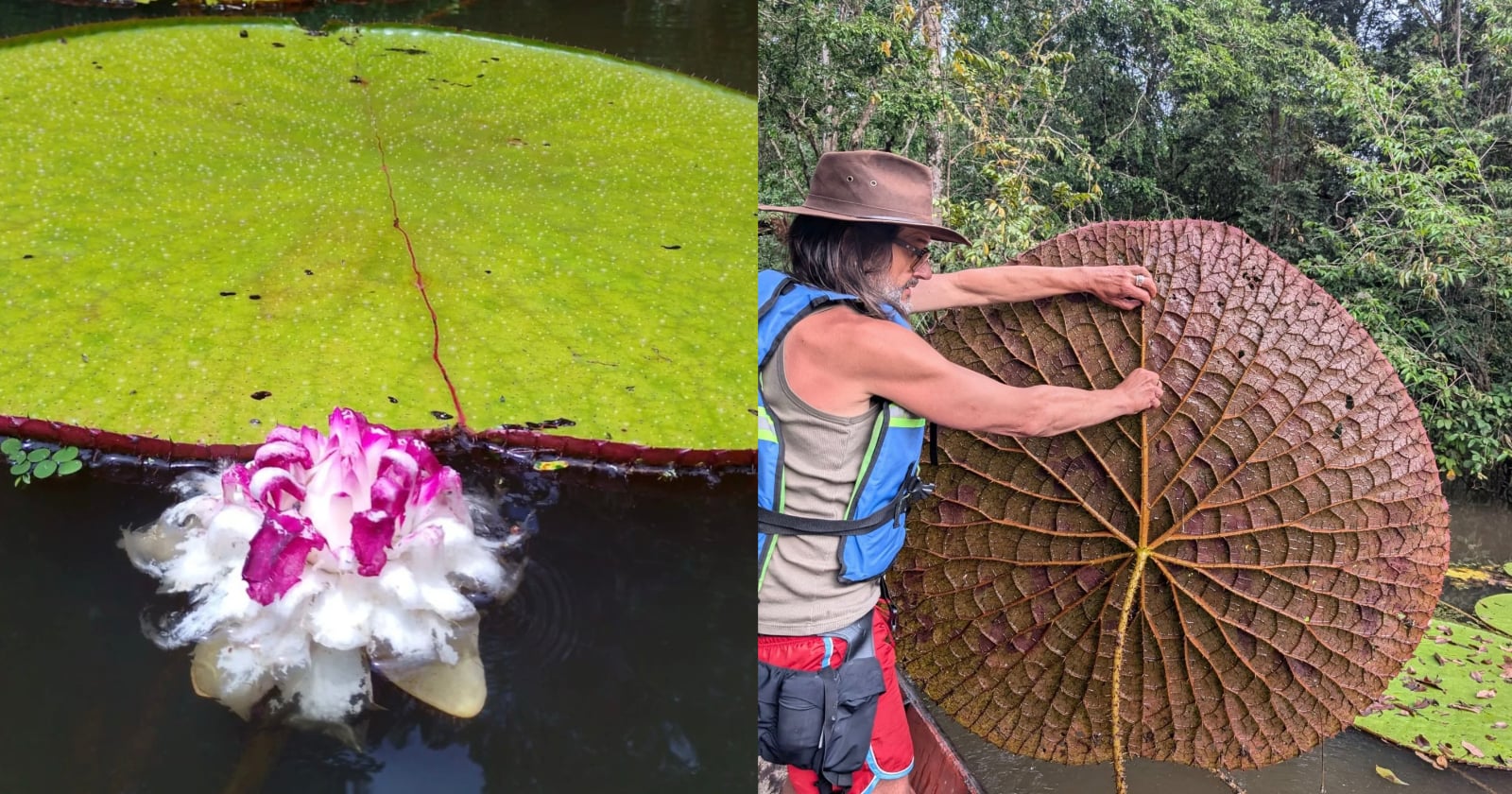
A selfie, of all things, has rewritten the botanical record. A giant waterlily, large enough to be spotted from space, was hiding in plain sight until an Instagram post revealed its existence. This is serendipity at its most curated, a reminder that discovery often arrives not through a lab's cold precision, but through the warm, spontaneous act of sharing a moment. It is a beautiful collision of the digital and the natural, and we are here for every petal of it.
This find feels especially resonant alongside Curated by Time Itself: Mars' Wind-Sculpted Cliffs, Framed at Dawn, where a rover's lens turns distant rock into art. Both stories hinge on the act of looking, one aimed at the red planet, the other at a pond, and both prove that attention is the first step toward awe. While NASA's panorama is a triumph of engineered curiosity, the waterlily discovery is a victory for accidental observation. It suggests that wonder does not always require a mission plan; sometimes it just needs a phone and a willingness to post. We also see a parallel in Graciela Iturbide Joins Leica Hall of Fame with a Vision of Art and Light, where a master photographer teaches us that framing is an act of authorship. But here, the photographer was an everyday tourist, and the frame was casual, unstudied. The result is no less profound.
For our readers, the lesson is practical: do not underestimate the value of your own documentation. That snapshot of a pond, a flower, or a street corner might be more than a memory, it could be a contribution to science. The waterlily's story is a call to look closer at the ordinary, to trust that our personal perspectives can hold data we do not yet understand. It also shifts how we think about expertise. The botanists who confirmed the species were essential, but the trigger was a social post, not a peer-reviewed paper. This democratization of discovery is exhilarating, but it carries a quiet challenge. We must become better observers, more willing to ask questions about the world we scroll past daily.
The specific consequence to watch is the taxonomy itself. Naming this new species will require a formal process, and the specimen will need to be cultivated and studied. We suspect the real bloom will be in the data that follows, how this giant adapts, where it thrives, and what other secrets are waiting in similar habitats. Until then, we are left with a simple, stirring truth: the next great find might be sitting in your camera roll right now, waiting for you to hit post.