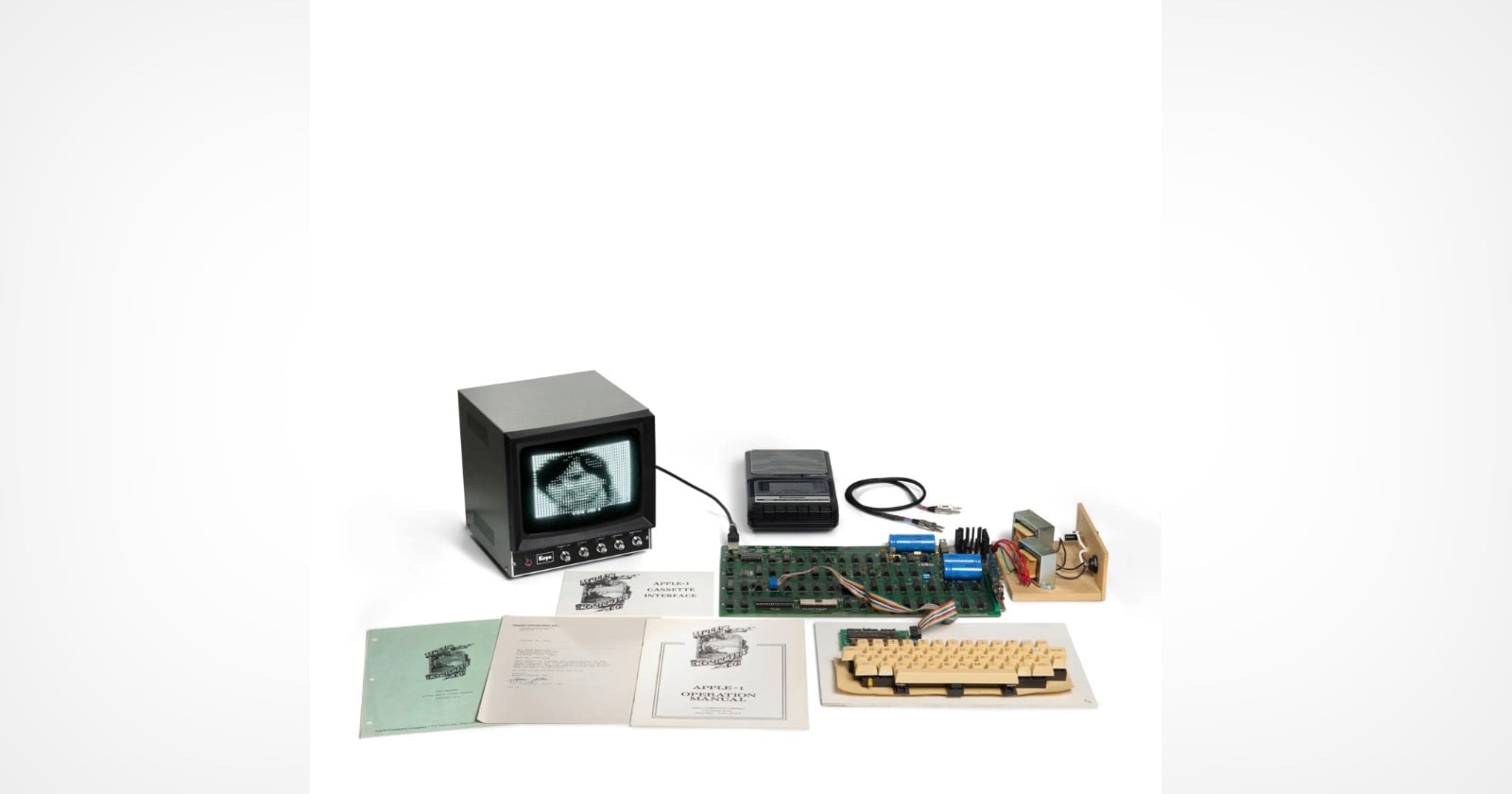
There is something quietly profound about a machine that still works, signed by a man who is no longer here. The Apple-1 computer heading to auction next month is not merely a relic of Silicon Valley's garage-born mythos; it is a functioning piece of origin story, estimated at up to $800,000, and its handwritten letter from Steve Jobs transforms it from artifact into intimate correspondence. That is the kind of object that whispers a question back at us, our own hands on our own devices: what will we leave behind that still runs, still means something, still bears a human mark? For our readers who move between the worlds of iPhone 18 Pro's variable aperture unlocks a more immersive Final Cut experience and A Curated Eye for Light and Legacy: 200 Photographs to Auction, this auction is a rare intersection of craft and consequence. It is not about nostalgia for beige boxes. It is about the tension between the mass-produced tools we carry and the singular objects we revere.
The Apple-1 was never designed to be beautiful in the way a photograph by Edward Steichen or Man Ray is beautiful. It is a bare circuit board, a tangle of wires, a keyboard that feels more like a typewriter than a portal. Yet its elegance lies in what it started. That single board, sold to a hobbyist in 1976, carries the same DNA that now powers a cinema-grade video tool in your pocket. The fact that it still boots up, that it runs, feels almost like an act of defiance against planned obsolescence. It forces us to ask: how many of our current devices will a collector want in fifty years? The answer, we suspect, is close to zero. The Apple-1's value is not in its processor speed; it is in its testimony to a moment when one person's signature mattered more than a spec sheet. That is the kind of authenticity no software update can replicate.
This is also a story about legacy, but not the polished, corporate brand legacy Apple now projects. The Jobs signature on that letter is personal, handwritten, deliberate, imperfect. It is a reminder that every object of enduring value begins with someone deciding to put their name on it. Compare that to the curated collections we covered in A Legacy of Vision: Linda McCartney’s Photography Celebrated by USPS, where a stamp becomes a canvas for an artist's eye. Linda McCartney's photographs, like Jobs's signature, are evidence of an individual's presence pressing against the machinery of mass reproduction. The Apple-1 auction, however, adds a layer of function: this machine was used. It computed. It was someone's tool for thinking, not just an object to be admired behind glass. That functional authenticity is precisely what the highest bidder will be paying for, a computer that still speaks its original language.
So what does this mean for our audience, the creatives and health-conscious enthusiasts who value both form and function? It means that the most powerful act of curation is often the simplest: keep something working. The $800,000 estimate is not a price tag for nostalgia; it is a vote for endurance over disposability. The concrete takeaway is this: the next time you consider discarding an older device, ask what story it still holds. There is a reason this Apple-1 still runs, and there is a reason someone signed it. That is not a thing to bury in a drawer. It is a thing to pass on, still alive, still ready to prove that the best technology does not just get faster, it gets remembered.