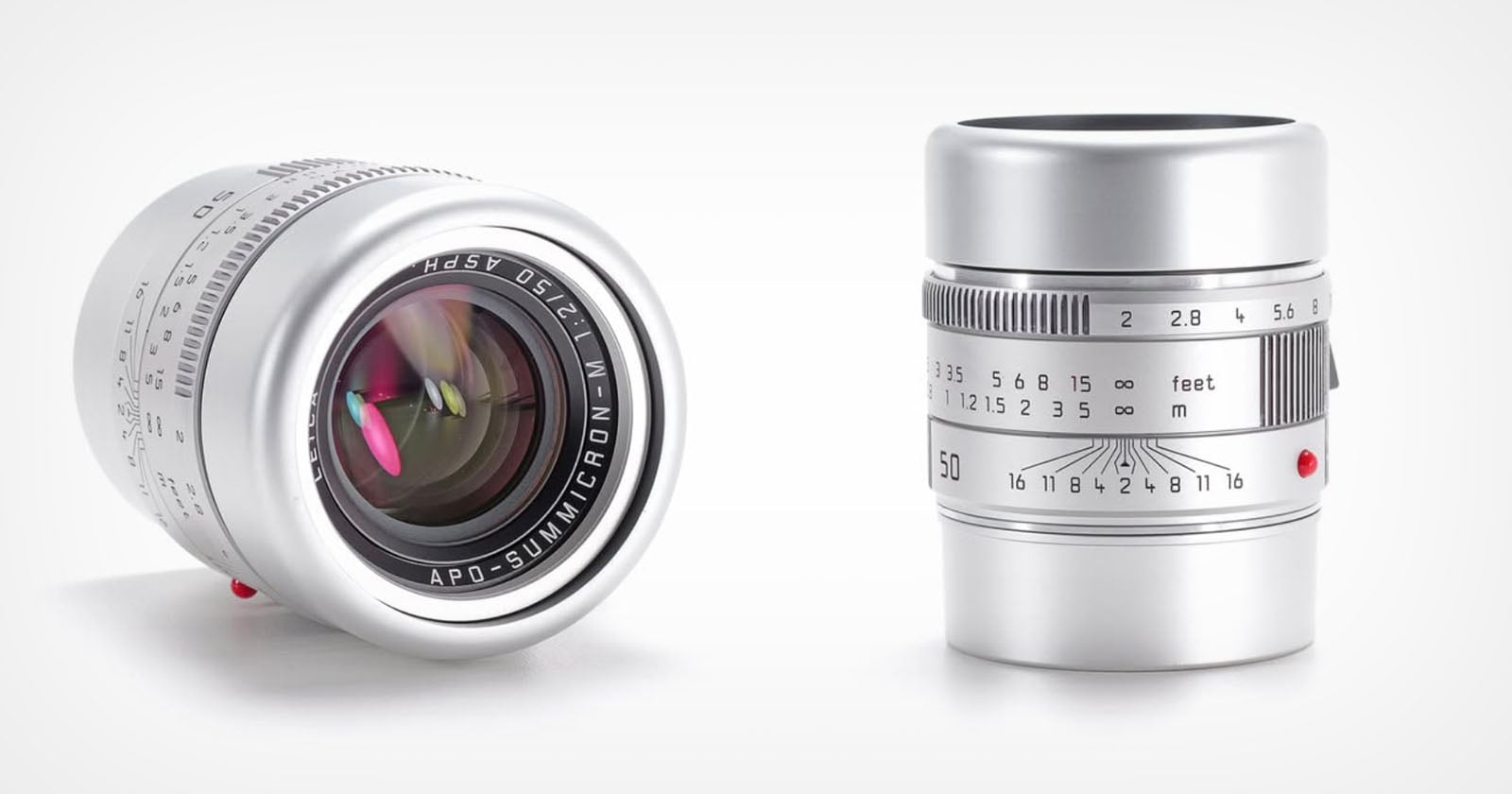
Some objects arrive in the world already carrying a story, and the Leica prototype lens designed by Jony Ive and Marc Newson is one of them. This is not a tool for the masses, nor is it a piece of equipment meant to disappear into a camera bag. It is a singular object, a meeting point of industrial design and photographic precision, and the fact that it is coming to auction in October feels less like a sale and more like an unveiling. We are not neutral on this. We think it is exactly the kind of artifact that reminds us why we care about the gear we carry.
For our readers, this is not just another announcement to scroll past. It is a conversation about what we value in our own practice. We spend so much time chasing sharpness, contrast, and the perfect exposure that we sometimes forget the object in our hands is itself a statement. This prototype is a reminder that photography is as much about the maker as it is about the moment being captured. It is a piece of history that you can hold, and that physicality matters. It connects to the way Finding Joy on the Streets, One Frame After Fashion explores the emotional weight a single frame can carry, and how Capturing Cosmic Beauty: An Astrophotography Journey with Nikon reminds us that even the vastness of space is filtered through the lens we choose. This Leica is the same idea in a different register: the tool shapes the vision.
There is a practical takeaway here that goes beyond the auction house. When you look at something designed by Ive and Newson, you are looking at intentionality. Every curve, every aperture ring, every tactile click was considered. It is a lesson for us all, whether you are shooting with a vintage film body or the latest mirrorless system. We would tell any photographer who asks: do not buy this lens to shoot with it. That is not the point. The point is to study it, to understand what happens when design and function are given equal weight. It is the same spirit that drives Experience Photography's Artistry: The 5 Boro Foto Fest Returns, where the act of seeing becomes the art itself.
So what do we actually think? We think this prototype is a quiet challenge to the industry. It asks us if we are willing to slow down, to consider the beauty of the instrument as much as the image it produces. The auction will be a spectacle, but the real story is what it leaves behind for the rest of us. Watch for the details in the design language, the way the silver finish catches the light, the deliberate placement of the markings. That is where the lesson lives. The buyer gets the object, but we get the inspiration. That is a trade we are happy to make.