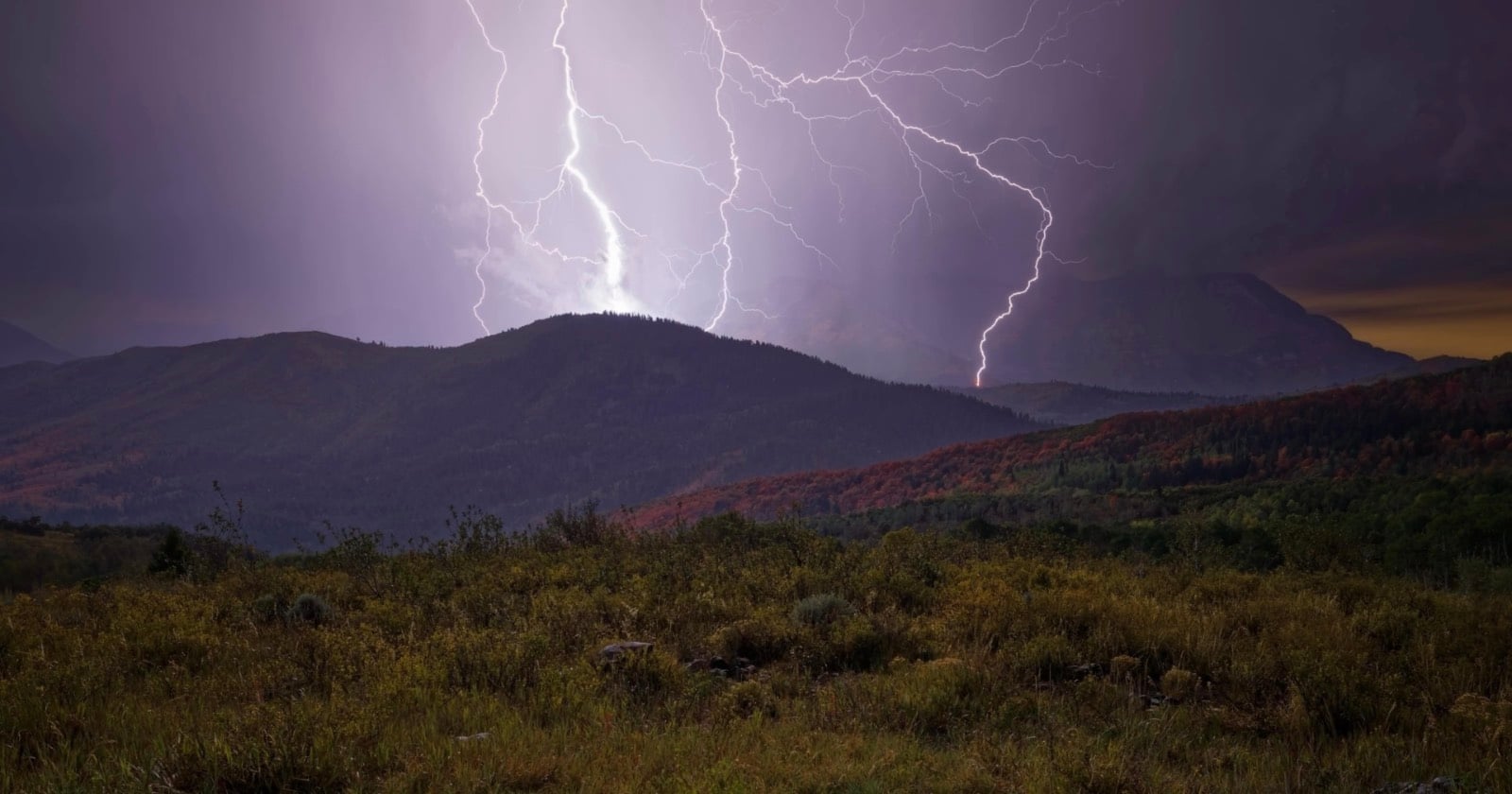
There is a particular kind of stillness that settles over a landscape right before a storm breaks. The photographer in this story chased that stillness, framing the dark, rolling peaks and the promise of electricity in the sky. He captured his shot, two brilliant bolts descending like veins of light, and in that moment, he was an artist. He was also, unknowingly, a documentarian of a tragedy. The same strike that created his image had just ended the life of a 19-year-old hiker nearby. We don't know the photographer's name, and we don't know the hiker's, but the collision of those two realities is the story that will stay with us.
This image, now circulating as a stark piece of visual drama, is a profound reminder that the aesthetics we chase are often intertwined with forces we cannot control. For the creative and health-conscious among us, the mountains are a sanctuary. We go there for the curated sunrise, the immersive summit, the authentic burn in our lungs. But the wilderness does not curate. It does not offer safe framing. It asks us to respect its full spectrum, which includes the very real, very sudden violence of a lightning strike. We see a photograph of "beauty" and our brains want to separate it from the "tragedy," but the truth is they are the same event. The photographer didn't fail to see the danger; he saw the beauty first. That is a very human instinct, and it is precisely why we must train ourselves to look twice.
What would we tell a reader who asks about this? We would say: let this be the moment you check your assumptions about risk. The practical takeaway here is not to stop going outside; it is to stop treating the forecast as a suggestion. When the sky turns that particular shade of bruised purple, when the air feels charged and your hair stands on end, the shot is not worth the exposure. Your phone's weather app is not your enemy; it is a piece of safety equipment. The photographer got his image, but he also got a story he likely never wanted to tell. For every frame we take, there is a context we cannot see. For the hiker, the mountain was not a backdrop. It was the last place they stood. We would advise our readers to be more than audience members to their own lives. Be the person who sees the storm and decides the summit will wait for a clearer day. That is not fear; that is the highest form of self-respect.
We should also consider the weight of the image itself. It is a powerful piece of art, but its power is now inseparable from the tragedy it contains. In the coming days, this photo will be shared, commented on, and perhaps even sold. We hope the conversation that follows is not just about the technical skill of the photographer, but about the responsibility we all carry when we step into wild places. The mountain does not care about your aperture settings or your hiking pace. It will do what it does. The question is whether we will be present enough to survive it. Watch the skies, know your exit routes, and remember that the most beautiful photograph is the one you get to live to tell your friends about. The storm will pass, but the memory of that young life should make us all a little more cautious about chasing the perfect shot.