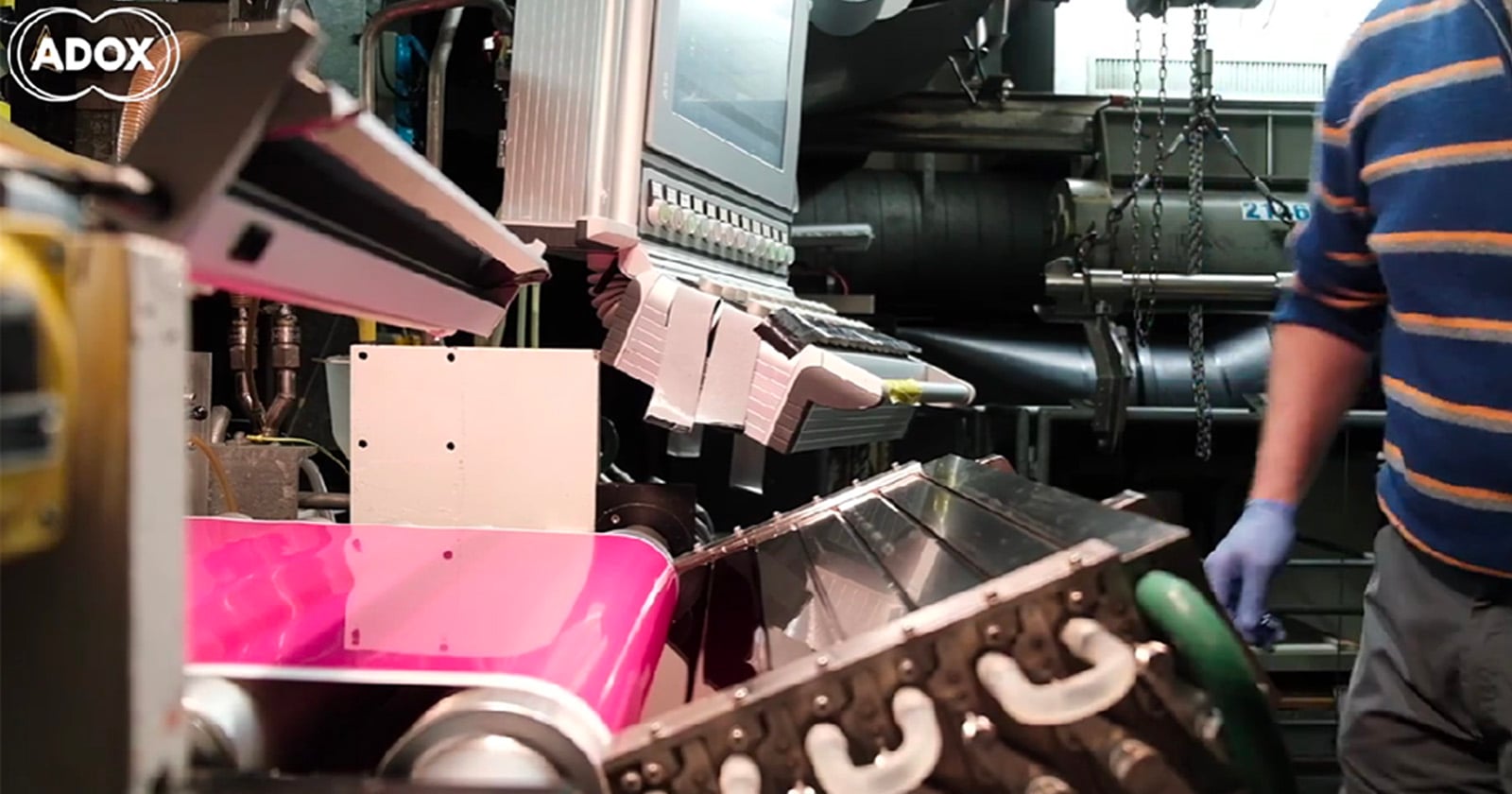
There is something quietly profound about a machine that has spent decades doing one thing exceptionally well. In Marly, Switzerland, near the invisible line where French and German tongues trade places, Machine E stands as a monument to analog precision. This multilayer photographic coating machine helped bring some of the world's most beloved films to life, and its existence feels increasingly rare in an era obsessed with the next software update or the latest mirrorless sensor. We tend to romanticize the photographers, but the real artists often wore hairnets and safety glasses, coaxing emulsions onto spools of acetate with a patience that borders on devotion.
This story lands with particular weight when placed beside our own exploration of the Sub-100 Club’s ultra-low ISO films. That piece celebrated the tactile, almost sculptural quality of slow film, and Machine E is the quiet force that made such textures possible. It is one thing to admire the fine grain of a 50-speed stock; it is another to understand the industrial choreography required to lay down each layer evenly, without a single bubble or streak. For our readers who chase that ethereal, creamy highlight roll-off, this machine is not a footnote. It is the reason. It is also a gentle counterpoint to the current conversation around Adobe’s acquisition of Topaz Labs, where the industry leans further into computational convenience. We are not here to pick sides, but the contrast is instructive: one path smooths over the rough edges of the medium, while the other celebrates the physicality of the process itself.
Our honest take is that Machine E deserves more than nostalgia; it deserves active curiosity. In a cultural moment where we are drowning in digital flexibility, there is a rebellious thrill in constraints, in knowing that a single coating pass can make or break an entire batch of film. This machine asks us to slow down, to respect the craft that precedes the click of the shutter. If you have ever shot a roll of film and marveled at its consistency, or if you have ever felt that a particular stock just has "something" that digital cannot replicate, you are responding to the invisible hand of machines like this one. They are the silent partners in your favorite photographs, and they are not being replaced; they are simply being asked to keep up with the intimate, deliberate pursuit of capturing tigers up close, where every frame matters and there is no room for retakes.
The practical takeaway here is not that you should book a flight to Marly (though you could), but that you might consider what goes into the tools you trust. Machine E is a reminder that the most advanced technology is not always the newest; sometimes it is the one that has been refined through years of patient iteration. The next time you load a roll of film, ask yourself: who built this, and what did they have to believe in to make it? The answer, more often than not, is that they believed in the beauty of a process that cannot be rushed. And that is a lesson worth shooting with. Watch how the industry treats these relics; the next step will be whether they become museum pieces or continue to shape what we see through the viewfinder.