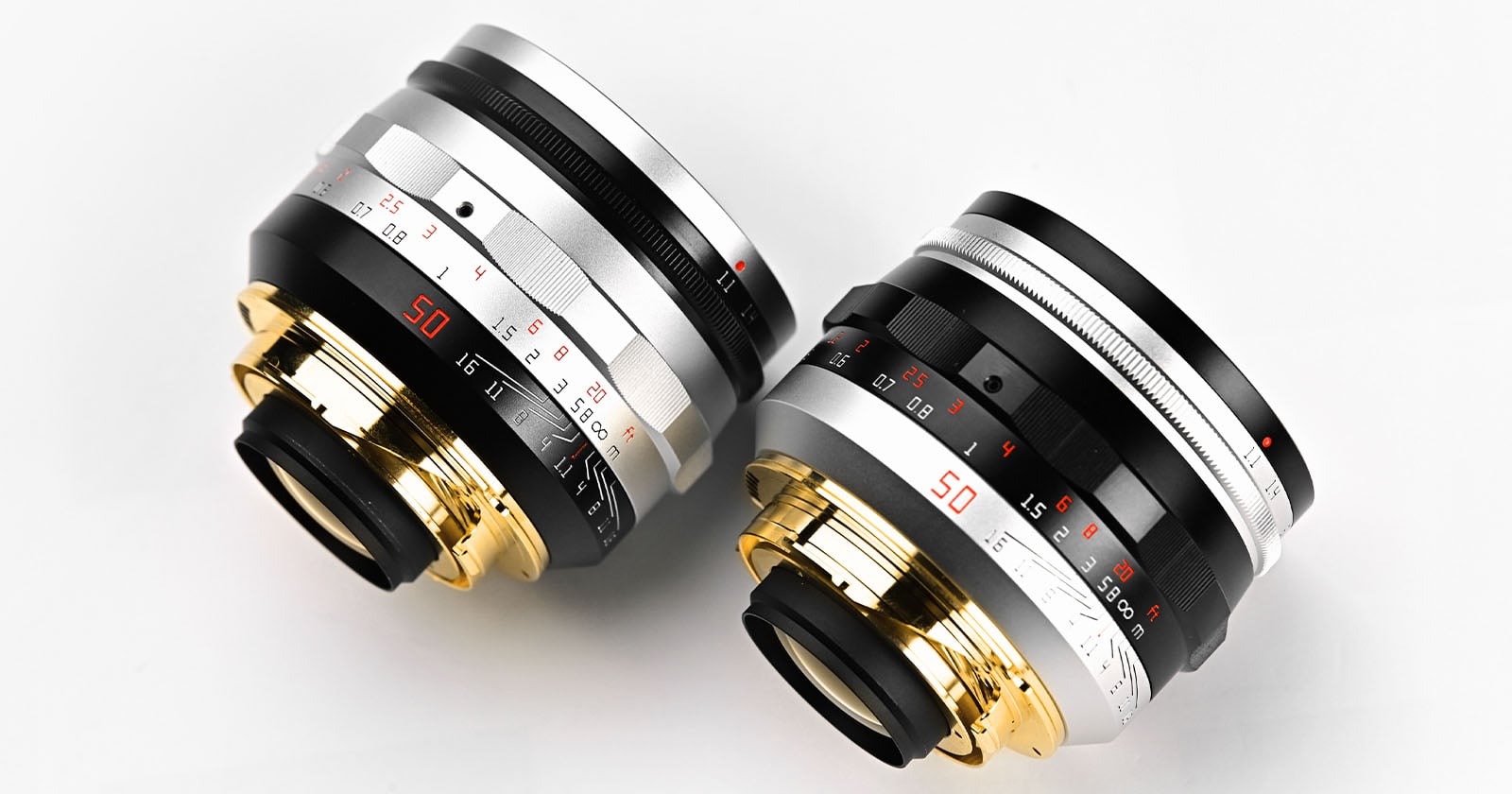
There is something magnetic about a company that refuses to let history gather dust. Shoten Kobo Co., Ltd. has announced a new lens based on the Hugo Meyer Kino Plasmat 5cm f/1.5, a piece of cinema glass so rare that most working photographers will never see one in person, let alone mount one on a camera. The new version, a 50mm f/1.1, is described as very fast and extremely limited, which in an era of endless rebrands and incremental sensor upgrades feels less like a product launch and more like a quiet act of preservation. We are not just buying a piece of glass; we are buying a conversation with a century-old craft.
This is where our usual coverage of the medium finds a natural echo. We spend a lot of time celebrating the spontaneous and the candid, whether that is Finding Joy on the Streets, One Frame After Fashion or chasing the technical precision demanded by the night sky in Capturing Cosmic Beauty: An Astrophotography Journey with Nikon. What links those stories is a shared belief that the tool shapes the eye. A lens that forces you to slow down, to work with a manual aperture ring and a focus throw that has its own personality, changes how you see. It is not about sharpness charts or corner-to-corner perfection. It is about character, the kind of glow and softness that cannot be replicated by a digital preset.
Our honest take is this: you do not need this lens, but you might want what it represents. For the working photographer, the practical value is narrow. It is a specialty tool for a specific mood, and the limited production run means it will sell out quickly and likely appreciate in value. But for the artist who treats every frame as a curated detail, this is a reminder that the market can still surprise us. It is a counterweight to the ordinary, a piece of wearable history that happens to take pictures. We would tell a reader who asks: if you have the means and the patience, this is not a purchase; it is an heirloom. If you do not, the announcement alone is a gift, because it proves that some manufacturers still believe in the romance of the chase.
The real question is what happens next. Will other makers follow suit, digging through their archives for forgotten formulas and giving them new life? Or will this remain a one-off passion project, a beautiful anomaly in a sea of plastic and software? We are watching closely, and we hope the answer is the former. The artistry on display here, the decision to resurrect a pre-war design rather than chase the latest autofocus algorithm, deserves a place in the ongoing story of photography as a living art, much like the community events we cover that celebrate the craft in all its forms. For now, we would say this: if you ever get the chance to hold one of these, take the shot. That is the whole point.