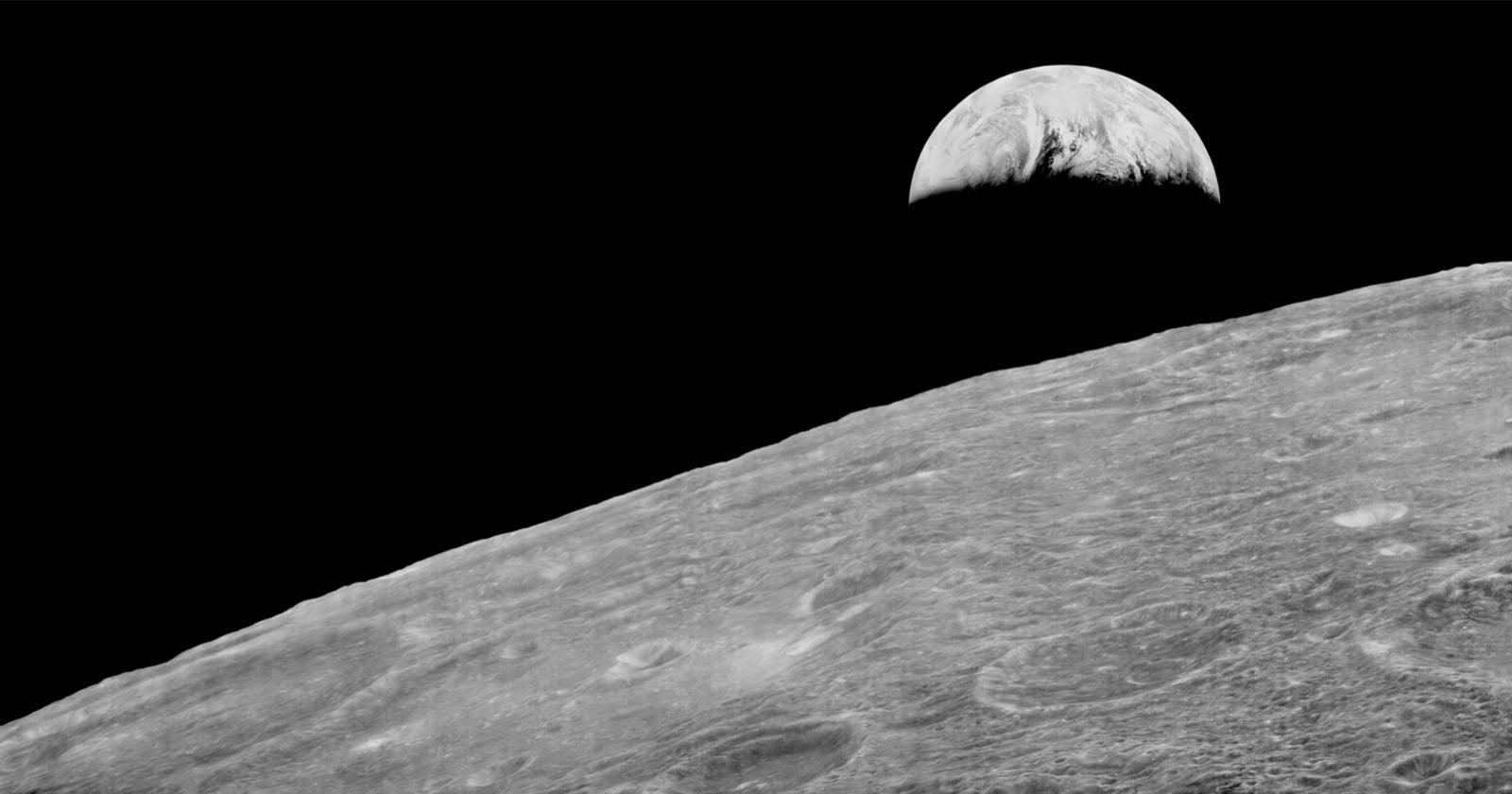
Sixty years ago, a robotic eye blinked open in the lunar dark and caught something no human had ever seen: our world, rising like a blue jewel over a cratered horizon. The first Earthrise photo, shot on film by a machine, remains one of the most reproduced images in history. And this year, the Artemis II crew recreated that view, trading a robotic gaze for human ones. We keep returning to this image, not because it is new, but because it refuses to age. It is a photograph that asks us to look again, and that is a quiet kind of art.
For our readers, who move between Collaborate & Create: Boudoir Sessions Offered Across Florida's Coast and Leica Lux 2.0: Crafting iPhone Photography with Artistic Vision, the Earthrise holds a specific lesson. We spend our days chasing the perfect frame, the flattering light, the curated detail. But the most powerful images are rarely the ones we plan. They are the ones that arrive by accident, with a robotic spacecraft or a phone pulled from a pocket. The Earthrise was never composed for beauty. It is beautiful because it is true. That is the same honesty we look for in a portrait that honors every skin tone, as we explored in Celebrating Portraits: Photography Honoring the Spectrum of Skin Tones. The camera does not lie, but we have to be brave enough to let it tell the truth.
Here is our honest take: we are tired of images that are merely pretty. We want images that mean something. The Earthrise works because it collapses distance, reminding us that we are all on this rock together, hurtling through an indifferent void. It is a humbling image, and humility is a rare quality in our feed-driven world. When Artemis II astronauts looked out their window and saw the same curve of blue, they were not just taking a photo. They were continuing a conversation that began with a machine, and before that, with a dream. That is the kind of continuity we should chase in our own work, whether we are shooting a boudoir session or editing a phone photograph.
What would we tell a reader who asks about this? Keep your eyes open for the accidental frames. The best tools, whether a film camera on a 1960s probe or the latest iPhone, are just ways of paying attention. The Earthrise was not a triumph of technology; it was a triumph of perspective. And sixty years later, it still has something to teach us about composition: sometimes the subject is not the moon, not the Earth, but the space between. Watch for the next time a human eye meets that horizon again. That will be a photograph worth waiting for.