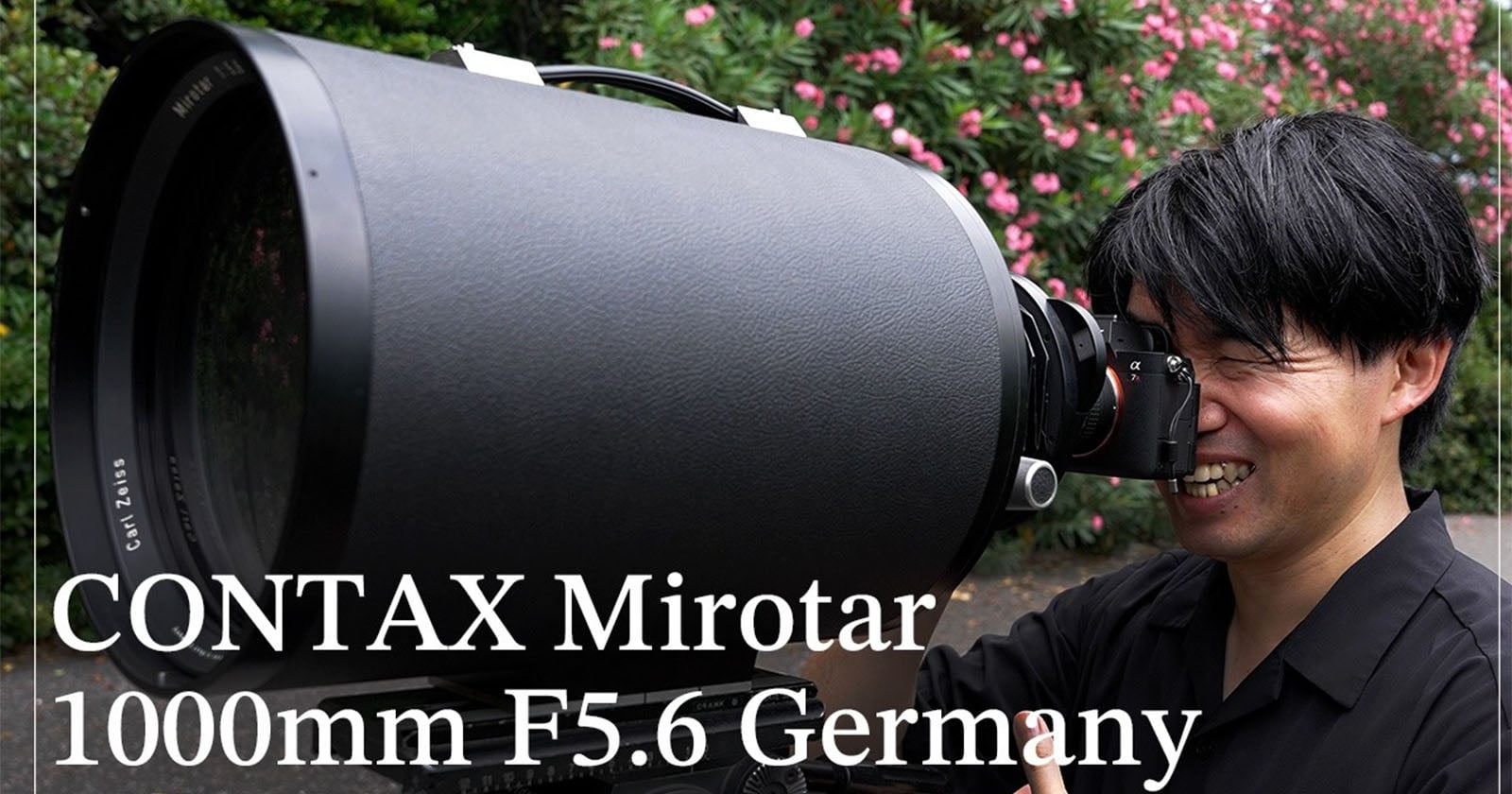
There is a particular kind of joy that comes from watching someone wrestle with a piece of machinery that has no business being as absurd as it is. The recent test of the Contax Mirotar 1000mm f/5.6 by Map Camera is exactly that kind of spectacle. This is a lens that looks less like a tool for capturing images and more like a prop from a retro-futuristic film set, a massive cylinder of glass and metal that demands a certain reverence. While the technical specs are impressive, the real story here is about the relationship between the photographer and the instrument. It is a reminder that sometimes, the most immersive experiences in photography come from leaning into the impractical, not away from it. This sentiment echoes what we often explore in our own coverage, whether it is Finding Joy on the Streets, One Frame After Fashion or the deliberate patience required for Capturing Cosmic Beauty: An Astrophotography Journey with Nikon.
For our readers, the takeaway is not that you should rush out and sell a kidney to own a vintage super-telephoto. The practical lesson is more nuanced, and perhaps more valuable. In an era of computational photography and featherweight zoom lenses, a 1970s prime like this represents a stubborn commitment to a singular vision. It forces a slower, more deliberate approach to the craft. You cannot casually hand-hold this lens; you must plan, brace, and anticipate the moment. This is the antithesis of the spray-and-pray mentality. We would tell anyone curious about this path that the magic is not in the sharpness chart or the bokeh wide open, but in the ritual. The act of wrestling with a piece of history changes how you see the world, making the ordinary feel monumental. It is a form of Experience Photography's Artistry: The 5 Boro Foto Fest Returns in its purest sense, where the process is as important as the final print.
The honest take, however, is that this lens is not for the faint of heart or the shallow of pocket. It is a niche within a niche, a collector's item that happens to take photographs. But watching Map Camera handle it with such obvious delight, you understand that there is an aspirational quality to this absurdity. It is a celebration of optical engineering as an art form, a piece of functional sculpture that just happens to capture light. For the health-conscious, vibrant lifestyle we often espouse, this serves as a metaphor: true growth and creativity often require carrying something heavy for a while. The question that lingers is not whether you would buy this lens, but whether you would carry it across a field just to see what it could show you. That is the detail to watch for in the coming months, to see if the desire for the authentic, the curated, and the extraordinary outweighs the convenience of the everyday.