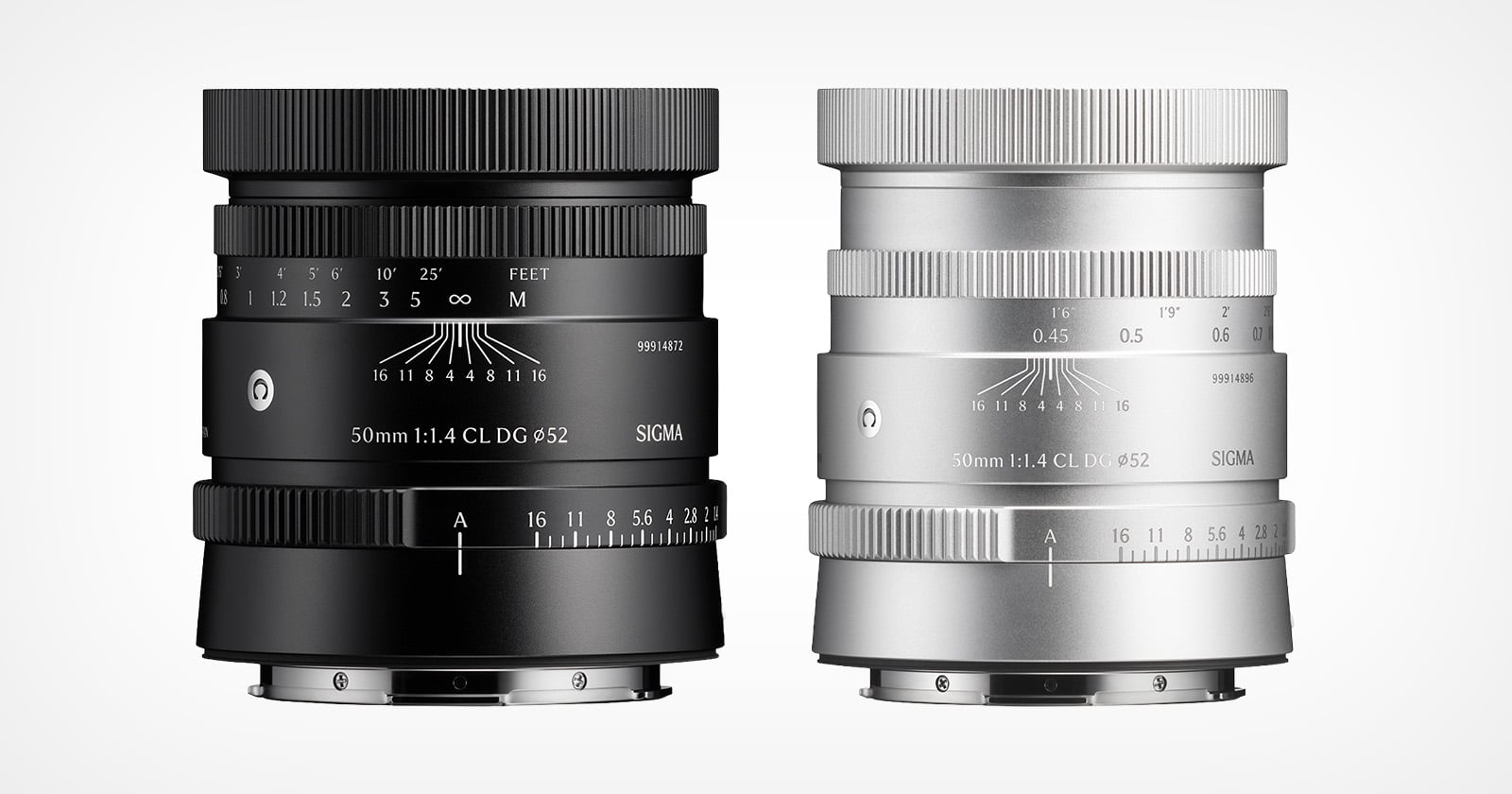
There is something deeply refreshing about a lens company that dares to prioritize soul over specs. Sigma's new 50mm f/1.4 CL DG Contemporary, a compact prime built around old-school aesthetics rather than optical perfection, feels like a quiet rebellion in an industry obsessed with MTF charts and pixel-level sharpness. We think it is one of the most honest product announcements we have seen in years, and it points toward a truth many photographers already know: a technically flawless image is not always a moving one.
This announcement lands in a moment when photography culture is rediscovering the value of anticipation and imperfection. Just as Rediscover anticipation with an app that holds your photos, just like film invites us to slow down and wait for the reveal, Sigma's new lens asks us to stop chasing clinical resolution and instead embrace a certain kind of character. The company describes this as a "new lineage" for premium compact primes, but the philosophy feels like a return to something older, a time when a lens had a personality, a signature look that couldn't be corrected away in software. For the creative professional or the discerning enthusiast, this is not a compromise; it is an invitation to work with a tool that has its own voice.
What makes this move particularly compelling is how it pushes lens design forward by looking backward. Sigma is not simply adding a vintage filter effect to a modern lens. They are engineering a physical object that delivers a specific aesthetic, perhaps softer highlights, a particular bokeh texture, or a subtle glow, while retaining the build quality and reliability that modern shooters expect. This is a nuanced craft, one that requires as much artistry as technical skill. It reminds us of the thoughtful problem-solving seen in Crafting Clarity: New Filters Solve the Mission 1 Pro's Focus Flaw, where a close-up filter solved a real-world shooting issue without abandoning the camera's core design. Here, Sigma is solving a different problem: how to give photographers a lens that feels alive, not just accurate.
The practical takeaway for our readers is clear: if you have been feeling that your images lack a certain warmth or depth, the culprit may not be your technique but your glass. A lens that prioritizes character over correction invites a more intuitive way of seeing. You compose for the lens's strengths, you work with its quirks, and the results feel less like data and more like art. The question Sigma leaves us with is whether other manufacturers will follow suit, or whether this remains a niche for those willing to trade the last two percent of sharpness for a hundred percent more soul. We will be watching closely to see which path the industry chooses.