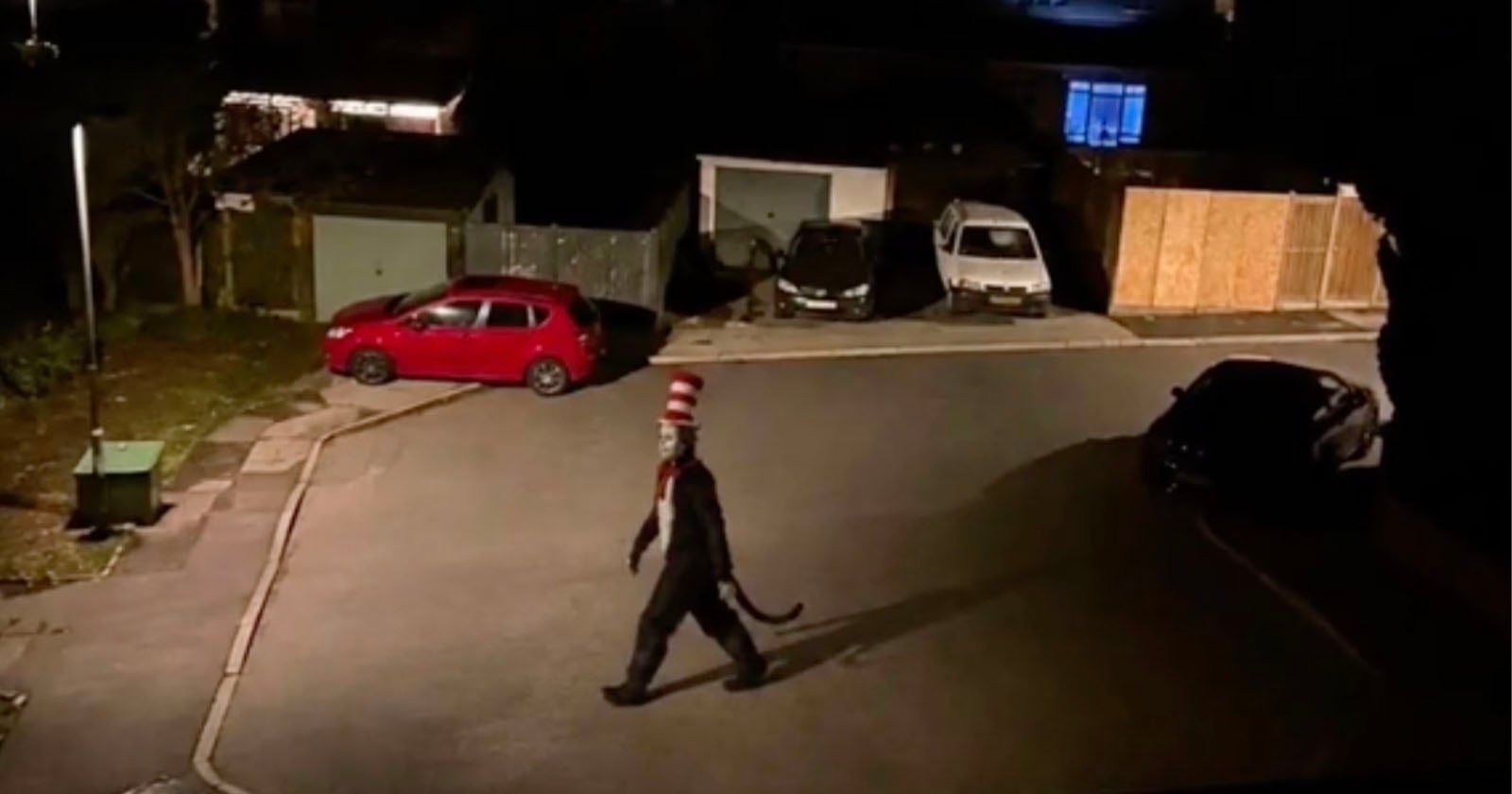
The image is unmistakable: a beloved children's character, rendered in grainy night-vision footage, lurking in a suburban driveway. Except it isn't real. Police in the U.K. and Ireland have had to issue public statements clarifying that the Cat in the Hat is not, in fact, a serial killer, after AI-generated pictures and videos of the character in menacing scenarios went viral. The official response, that the character "was not in your driveway," is a necessary piece of digital literacy for a public that has been conditioned to believe its own eyes. This isn't a story about a fictional cat; it's a story about the death of visual trust, and what that means for all of us who create, consume, and curate imagery.
For our audience, this is not an abstract tech-ethics debate. You are the people who understand the mechanics of an image, who appreciate the difference between a well-composed frame and a manipulated one. This incident is a stark reminder that the tools we use to celebrate beauty and document life are now in the hands of anyone with a grudge and a prompt. It's one thing to see a deepfake of a celebrity; it's another to weaponize a childhood icon to create a localized panic. The practical takeaway is sobering: the burden of verification has shifted entirely onto the viewer. We can no longer ask "did this happen?" but rather "why was this made, and who benefits from me believing it?" This is the same critical eye that drives our Refined and Accessible: The Nikon Z5 IIC—A Full-Frame Camera, Reimagined reviews, where we push for authenticity in color and detail, because the camera is only as trustworthy as the hand holding it.
The police's response, while pragmatic, reveals a deeper cultural anxiety. They are not just correcting a falsehood; they are trying to reassert a shared reality. But the genie is out of the bottle. When a fictional character can be framed for a crime, the very notion of photographic evidence becomes fragile. This is why the work of visual storytellers matters more than ever. The Vivo X500: A Curated Lens for the Art of Life is a tool for capturing a real moment, a real texture, a real light. In a world of generative fakes, those authentic imperfections become the gold standard. We would tell any reader who asks: do not let this desensitize you, but let it sharpen your awareness. The question is no longer just about composition, but about provenance.
So, what do we do with this? We keep creating, but we create with intention and skepticism. We need to demand that platforms and cameras build in verification from the moment the shutter clicks, not as an afterthought but as a core feature. The real story here is not the prank itself, but the fact that we now live in a world where a police department has to issue a statement denying a fictional cat's criminal record. The specific detail to watch is how quickly the public's reaction shifts from alarm to indifference. When we stop being shocked by the fake, we lose the ability to value the real. That is the cost we pay, and it is a price that should concern every one of us who picks up a camera to capture the truth, however strange it may be.