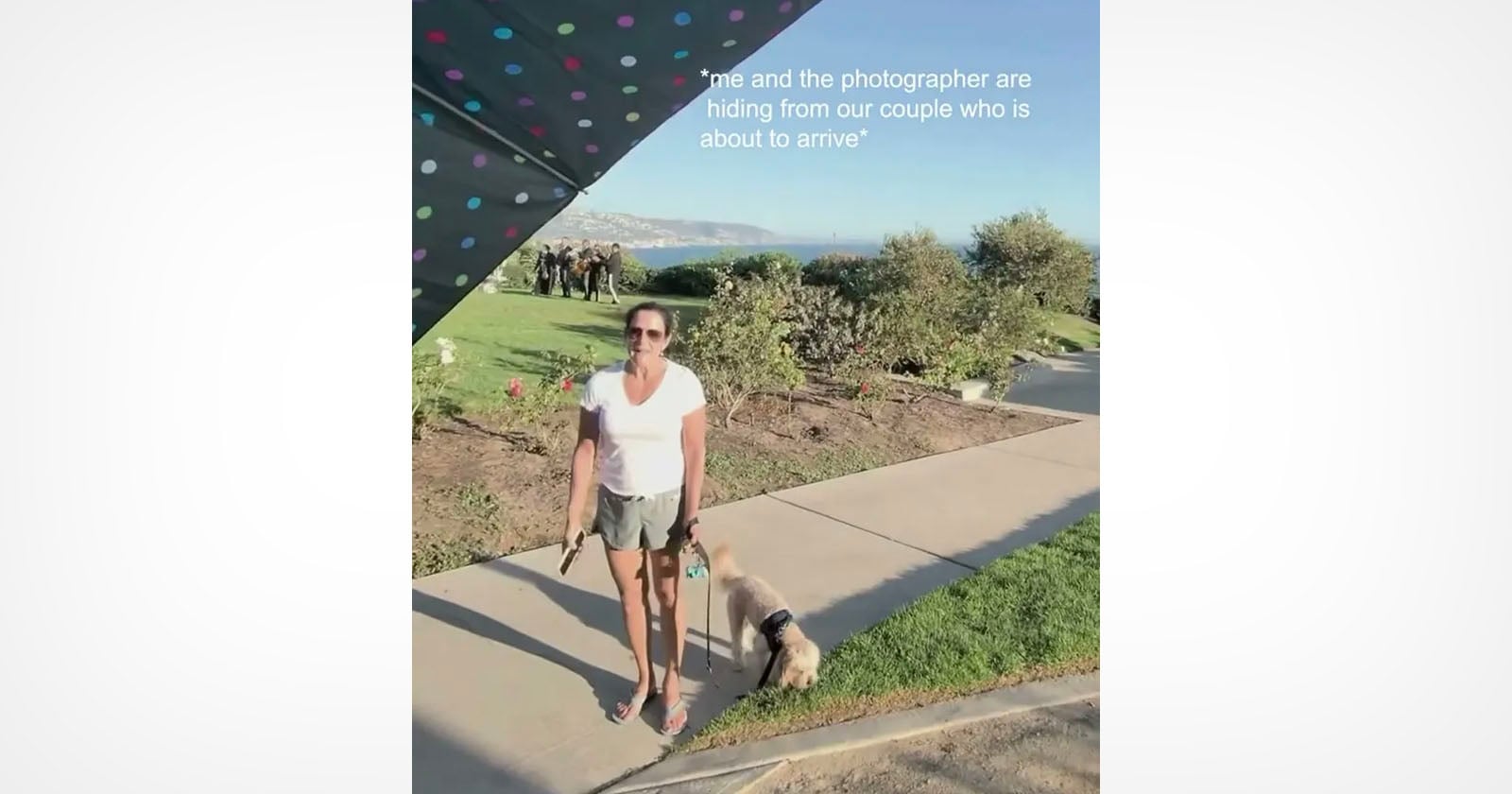
The moment a couple chooses to say yes should feel like the world is holding its breath, not bracing for impact. When a woman in Laguna Beach decided to hurl "go back to Mexico" at photographers capturing an engagement, she didn't just interrupt a private celebration. She tried to shrink an entire community's joy into a stereotype, and the internet responded by refusing to look away. We think that matters, not because outrage is a sport, but because authenticity is the only luxury worth defending. This wasn't a political debate or a misunderstanding; it was a person weaponizing hate against a moment of pure, unguarded love. And the fact that she was outed isn't just about accountability. It's about what we, as a culture, are willing to tolerate in the spaces we share.
For our readers, the ones who curate their lives with intention, this story lands close to home. You understand that a photograph is never just an image; it's a testament to a feeling, a split second of truth preserved against the noise. The photographers on that cliff were doing what artists do: honoring a narrative that had nothing to do with hate. Yet the woman's venom became part of the frame, a stark reminder that visibility can attract both admiration and attack. This is where we connect the dots to our own coverage of The Lens Over the Spectacle: Why Real Photographers Show Their Work. In that piece, we explored how the craft is often overshadowed by the spectacle. Here, the spectacle wasn't the art; it was the interruption. And unlike the carefully staged narratives we critique, this raw intrusion demanded a response. Similarly, when we consider how A family's grief confronts the media machine that shaped the war's story, we see that the public's role in shaping a narrative carries weight. In Laguna Beach, the internet became the editor, choosing to amplify the victim's perspective rather than the aggressor's ignorance.
So what does this mean for you, practically? It means that your voice, your platform, your choice to share or stay silent, has consequence. The woman likely never expected her words to follow her home. But they did, because we live in an era where authenticity is currency and hate is a debt that eventually comes due. The couple, whose engagement should have been a private memory, now has a public story. The silver lining is that their story isn't about her; it's about the resilience of a love that refuses to be dimmed by a stranger's fear. We should all take note: the next time you witness someone trying to steal a moment, you have a choice. You can let them, or you can bear witness. The photographers did. And in doing so, they turned an act of hate into a testament of endurance. The real question isn't whether the woman feels sorry. It's whether the rest of us are paying attention to how easily a beautiful moment can be weaponized, and how powerfully we can respond by simply refusing to look away.