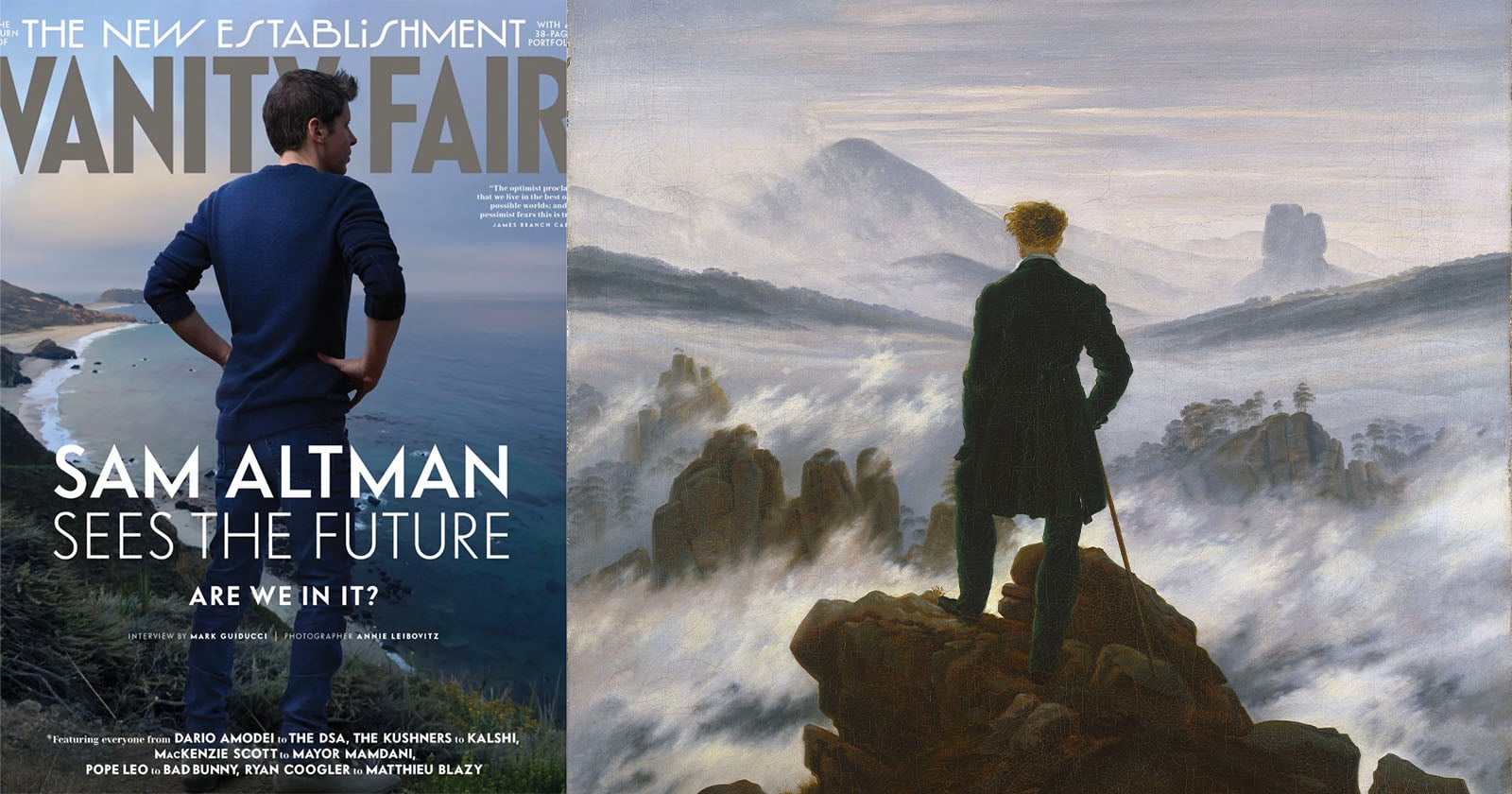
There is something quietly radical about Annie Leibovitz training her lens on Sam Altman for Vanity Fair's New Establishment edition. We see it not as a simple portrait session, but as a deliberate collision of two worlds that rarely acknowledge each other: the romantic, tactile realm of fine art photography and the cold, forward-charging logic of artificial intelligence. For readers who have followed our exploration of Capturing Elegance: Where Artful Frames Meet Timeless Romance, this pairing feels less like a stunt and more like a thesis. Leibovitz, who has spent decades finding the human vulnerability inside power, is now asking us to look at the face of the machine age and see something other than code.
The choice matters because Altman is the public symbol of a technology that has already begun reshaping how we create, consume, and even define beauty. Just weeks ago, we reported on a very different kind of image problem at OpenAI: When Art Meets Oversight: ChatGPT's Private Images Were Shared Publicly, where fifty-three private images leaked from ChatGPT into public view. That story was about control, consent, and the fragility of digital intimacy. This one is about the opposite: a fully intentional, curated surrender of an image to the world. Leibovitz's portrait is not a leak. It is a gift, or perhaps a negotiation. It asks us what we want our leaders to look like when they are not performing for a stage or a screen.
For the creative and health-conscious audience we speak to, the practical takeaway here is a reminder that aesthetics and ethics are never truly separate. Leibovitz does not photograph machines. She photographs people, with all their texture, shadow, and imperfection. By placing Altman within that tradition, Vanity Fair is quietly arguing that the future of intelligence must still be legible through a human face. That is not a sentimental position; it is a strategic one. The technology Altman represents will increasingly determine how we see ourselves, how we edit our bodies, how we curate our spaces. If we cannot see the person behind the product, we risk surrendering our own sense of what is beautiful, authentic, and ours.
What we will be watching for is whether this portrait changes the visual vocabulary around AI leadership. For years, tech executives have been photographed in hoodies, on stages, or against minimalist white backdrops that signal efficiency without emotion. Leibovitz offers something warmer, more complicated, a romantic lens that does not flatter so much as it insists on presence. The question that lingers is whether Altman, and the industry he represents, can meet that invitation with the same authenticity. If the portrait is a bridge, we want to know who is willing to cross it.