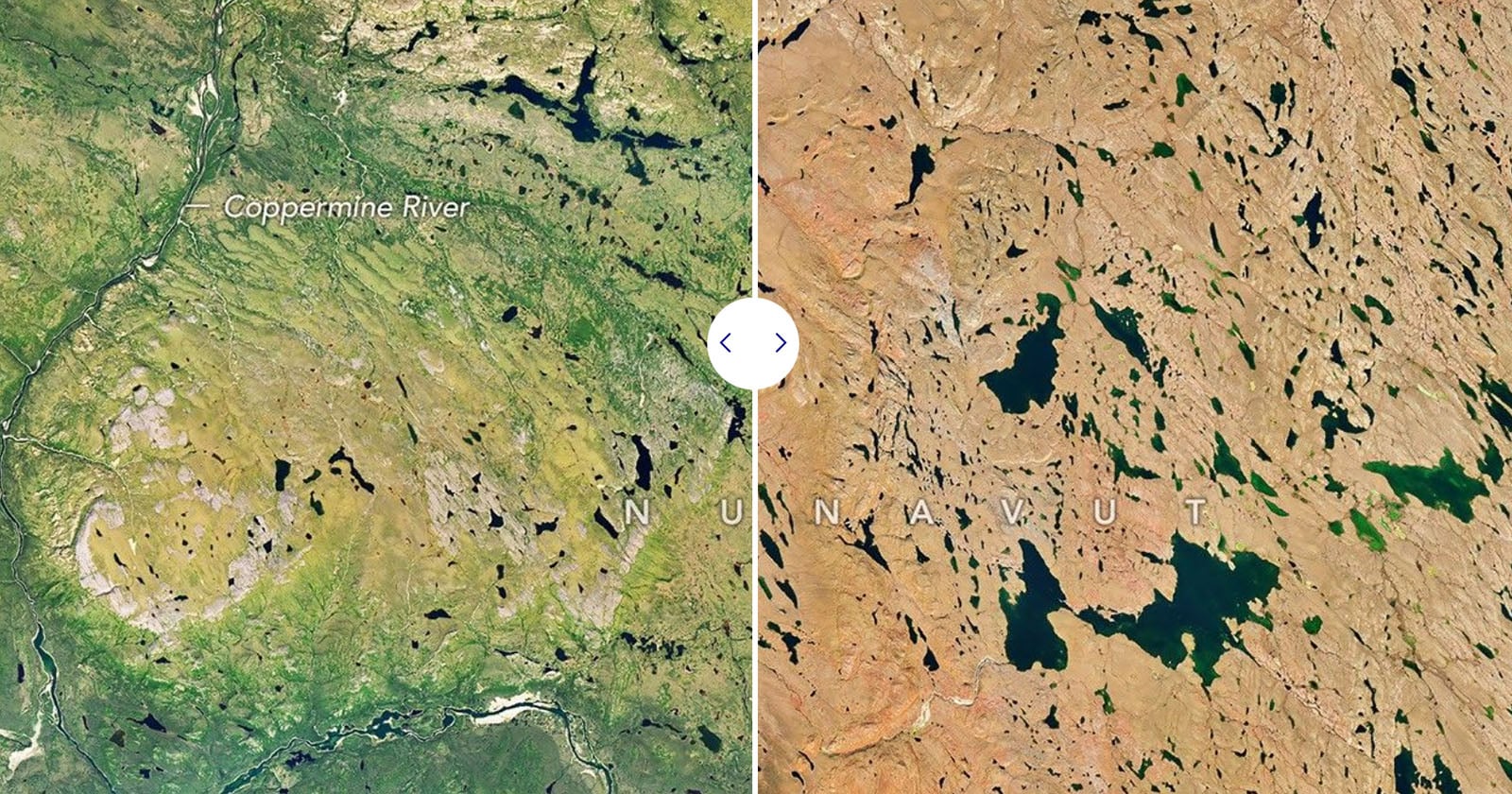
There is a particular irony in watching autumn arrive from space before it ever reaches your own window. The NASA satellite image of Nunavut shows tundra painted in rust and amber, a full-force seasonal shift happening thousands of miles north while most of us are still squinting at a single reddening maple. It is a reminder that nature does not consult our calendars or our local forecasts. It moves on its own schedule, and sometimes you have to zoom out to see the whole picture. That perspective feels increasingly rare, and increasingly valuable.
We spend so much of our lives looking at the world from ground level, caught in the immediate clutter of our own routines. We track the foliage report for our own county, refresh the radar for our own commute, and miss the larger rhythm playing out across the continent. This image from space is not just a pretty satellite photo. It is a quiet lesson in scale. The same way A Quiet Count: South Africa's Cheetah Population Reveals a Stark Reality forces us to look beyond the charismatic sighting and confront the unglamorous math of conservation, this photograph asks us to consider what we are not seeing from where we stand. The cheetah survey took three and a half years of camera traps to reveal a hard truth about numbers. This image takes one frame to reveal a truth about timing. Both are invitations to widen the aperture.
For the creative mind, there is something almost poetic in the contrast between the two halves of the satellite split-screen. On one side, a green, river-carved landscape still holding onto summer. On the other, a rocky terrain dotted with lakes, already stripped to its bare, colorful bones. It is a visual reminder that beauty is not a uniform experience. It is localized, uneven, and deeply personal. The same could be said for the way we approach our own creative work or our fitness routines. Some weeks you feel like the green side, lush and full of momentum. Other weeks you are the rocky terrain, exposed but vivid, showing your colors whether you planned to or not. Capturing Cosmic Beauty: An Astrophotography Journey with Nikon explores that same desire to reach for something vast and make it feel intimate. This satellite image does the opposite, it takes something intimate, a season change, and makes it feel vast.
What we would tell a reader who asked us about this image is simple: do not wait for the peak. Do not wait for the perfect weekend or the ideal light or the moment when every tree on your street has turned. The first hints of color are not a preview of the real thing. They are the real thing. The cheetah population story teaches us that what is rare is often hiding in plain sight, and the astrophotography piece reminds us that the cosmos rewards those who look up regularly, not just during eclipses. So look at this satellite photo and let it be a nudge. Go find the earliest color you can, even if it is just one branch, even if it is just a glimpse. Because by the time the full spectacle arrives, the moment of noticing it first is already gone.