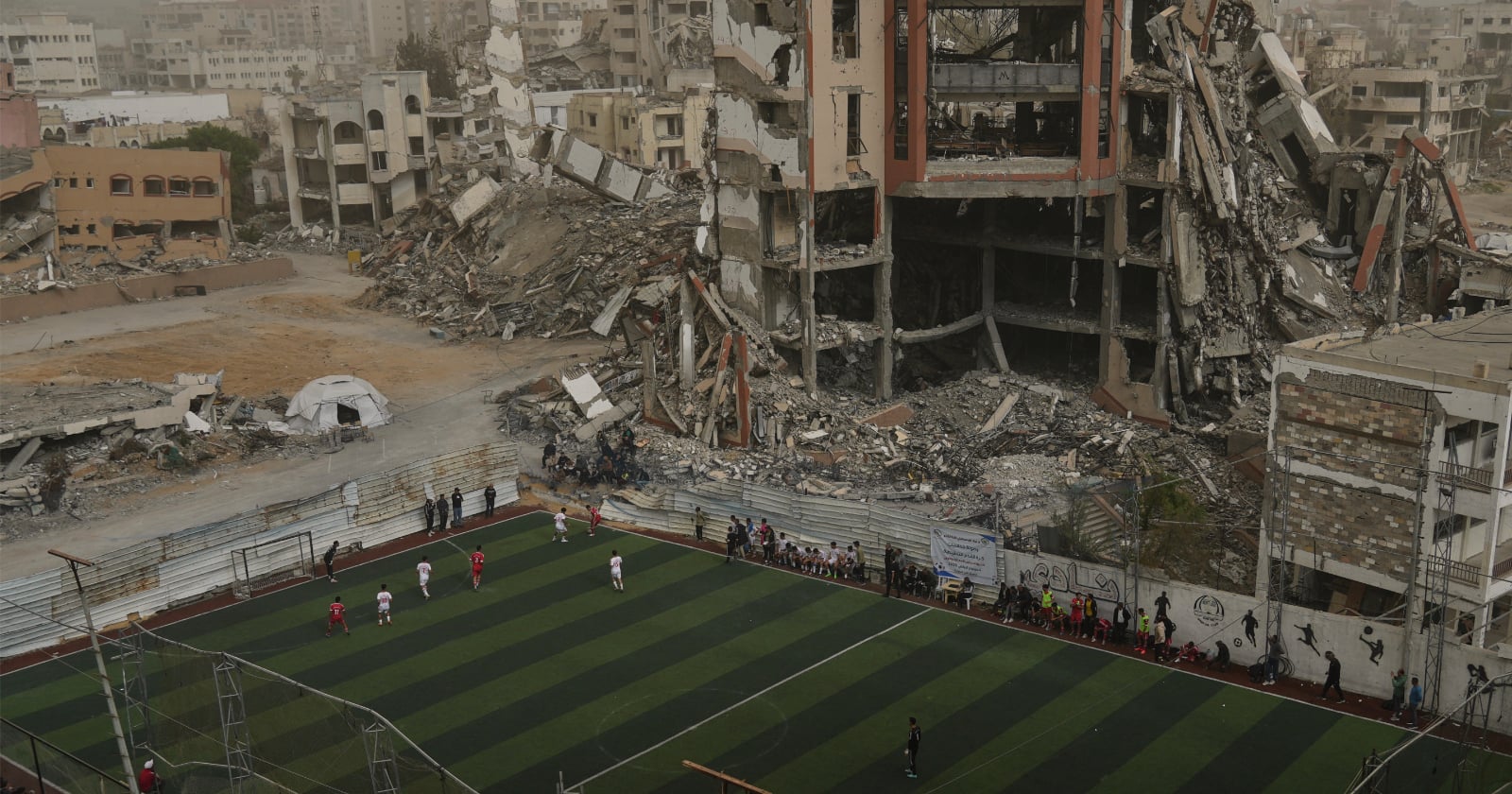
A single photograph can hold an entire world, and the image in question did just that: a soccer match unfolding on a small turf field, ringed by the hollowed shells of collapsed buildings. The Palestinian photographer captured a moment of defiant joy, a game played in the shadow of erasure. Yet, this image was pulled from a sports photography festival because outside parties requested its removal, with organizers citing a desire not to "offend" anyone. We have to pause there, because the word "offend" is doing a lot of heavy lifting, and it is a weight the image was never meant to carry.
This decision speaks to a troubling conflation of art, sport, and sensitivity. For our readers, who navigate a world where their passions for fitness, beauty, and culture intersect, this is not a distant political squabble. It is a practical lesson in curating your own lens. When a festival removes a photograph because it shows reality, the message is clear: some stories are too heavy for the frame. But we know better. The beauty of sport, and of art, is its ability to hold both the sweat of the game and the dust of the battlefield. By removing this image, the organizers have stripped the match of its context, leaving only a sanitized version of athleticism that pretends the world outside the white lines does not exist. That is not sensitivity; it is erasure. For a practical takeaway, consider this: when you curate your own feed, your own brand, or your own gallery, ask yourself if you are avoiding offense or avoiding truth. The former is a marketing strategy; the latter is a disservice to your audience.
If a reader asked us about this, we would tell them to look closer at the photographer's intent. The image was not designed to shock; it was designed to document. It shows children and adults finding a sliver of normalcy amidst chaos, a universal human instinct that transcends politics. The festival's choice reduces that instinct to a liability, treating the photograph as a hot potato rather than a testament to resilience. We would advise our community to champion the photographers who show the whole game, not just the parts that fit a comfortable narrative. In your own creative work, whether it is a fitness campaign or a fashion editorial, remember that authenticity is your currency. The most impactful visuals are often the ones that challenge the viewer to look twice, not to scroll past in comfort.
The concrete point to watch here is the precedent. If a sports festival folds to external pressure over a single image, what will be next? Will we see the removal of a marathon photo because it shows a runner's grimace, or a yoga shot because it reveals a scar? The line between curating and censoring is thin, and this decision has drawn it in the sand. For our readers, the takeaway is clear: support the artists who refuse to sanitize the human experience. The next time you see a photo that makes you feel something uncomfortable, lean in. That discomfort is not an offense; it is an invitation. And in a world that increasingly prefers the easy path of avoidance, choosing to look is a radical act of style, substance, and soul.