There is something quietly profound about a human hand reaching across 238,000 miles of silence to write on the edge of a photograph. NASA's release of the Artemis II crew's annotated image of the dark side of the Moon feels less like a data transmission and more like a postcard home from a place where no one has ever sent one before. The handwriting is unpolished, personal, almost reverent, and that is precisely why it lands with such force. We are used to seeing the Moon rendered in flawless, sterile detail, but this image is different. It is curated not by a machine, but by people who looked out the window and felt something worth saying. The annotations capture a tension we rarely acknowledge in our polished visual culture: the pull between documentation and emotion. In an era where every frame is filtered, sharpened, and optimized for engagement, the crew's handwritten notes feel like an act of resistance. They remind us that the most immersive experiences are not the ones we consume, but the ones we participate in. This is a lesson that echoes beyond orbit. Consider how Crystal Monique on Preserving a Signature Aesthetic Across Every Frame speaks to the discipline of maintaining a consistent visual identity even as the work evolves. The Artemis II image is the opposite of that polished consistency, and yet it holds its own signature, one that no algorithm could replicate. And when we think about why today's digicams can't recreate that vintage spark, the answer may be simpler than sensor size or lens coatings: the spark was never in the glass. It was in the hand that held it, the eye that framed it, and the margin note that made it personal. This is what makes the image so resonant for our audience of creators and enthusiasts. It reminds us that the most immersive work is rarely the most technically perfect. The crew's scrawled observations, the slight unevenness of the lettering, the sense that a gloved hand pressed against the glass, all of it points to a truth we chase across every creative discipline: authenticity outshines polish. The same instinct that makes a photographer's contact sheet more compelling than the final edit, or a digicam's accidental grain more evocative than a sensor's flawless noise floor, is at work here. We are drawn to the human trace, the evidence that someone was present and paying attention. That is why Crystal Monique on Preserving a Signature Aesthetic Across Every Frame resonates so deeply with this moment. A signature aesthetic is not about perfection; it is about consistency of feeling, and the Artemis II crew just gave us a masterclass in that. There is also a lesson here about the tools we romanticize. We chase sharper sensors and faster glass, yet this image reminds us that the most powerful instrument in any frame is the person holding it. The crew's notes do not try to compete with the imagery; they complement it, grounding the vastness in a human scale. It is the same impulse that makes us mourn the loss of that vintage spark in today's digicams, a quality we explored in Why Today's Digicams Can't Recreate That Vintage Spark, where the imperfections are not flaws but fingerprints of the moment. Similarly, the crew's scrawled observations remind us that the most compelling images are often the ones that admit a human being was present, not just a sensor array. This is a lesson that extends far beyond the lunar surface. It speaks to the same instinct that makes a photographer fight to preserve a signature look across a career, as Crystal Monique does when she protects a visual identity through every frame, or why we chase the imperfect spark of a vintage digicam that no modern sensor can quite replicate, a conversation our podcast explores with Gordon Laing and Sarah Teng. Those stories are about the fingerprints we leave on our tools, and this lunar image is the same impulse scaled to the cosmos. The crew's notes are not a correction to the photograph; they are a companion to it, a reminder that the most immersive experiences are rarely the most polished ones.
NASA
Artemis II's Handwritten Lunar Notes Capture the Dark Side's Poetic Pull
There's something magnetic about seeing the Moon's hidden face rendered in a crew's own handwriting.
4 min readPetaPixel
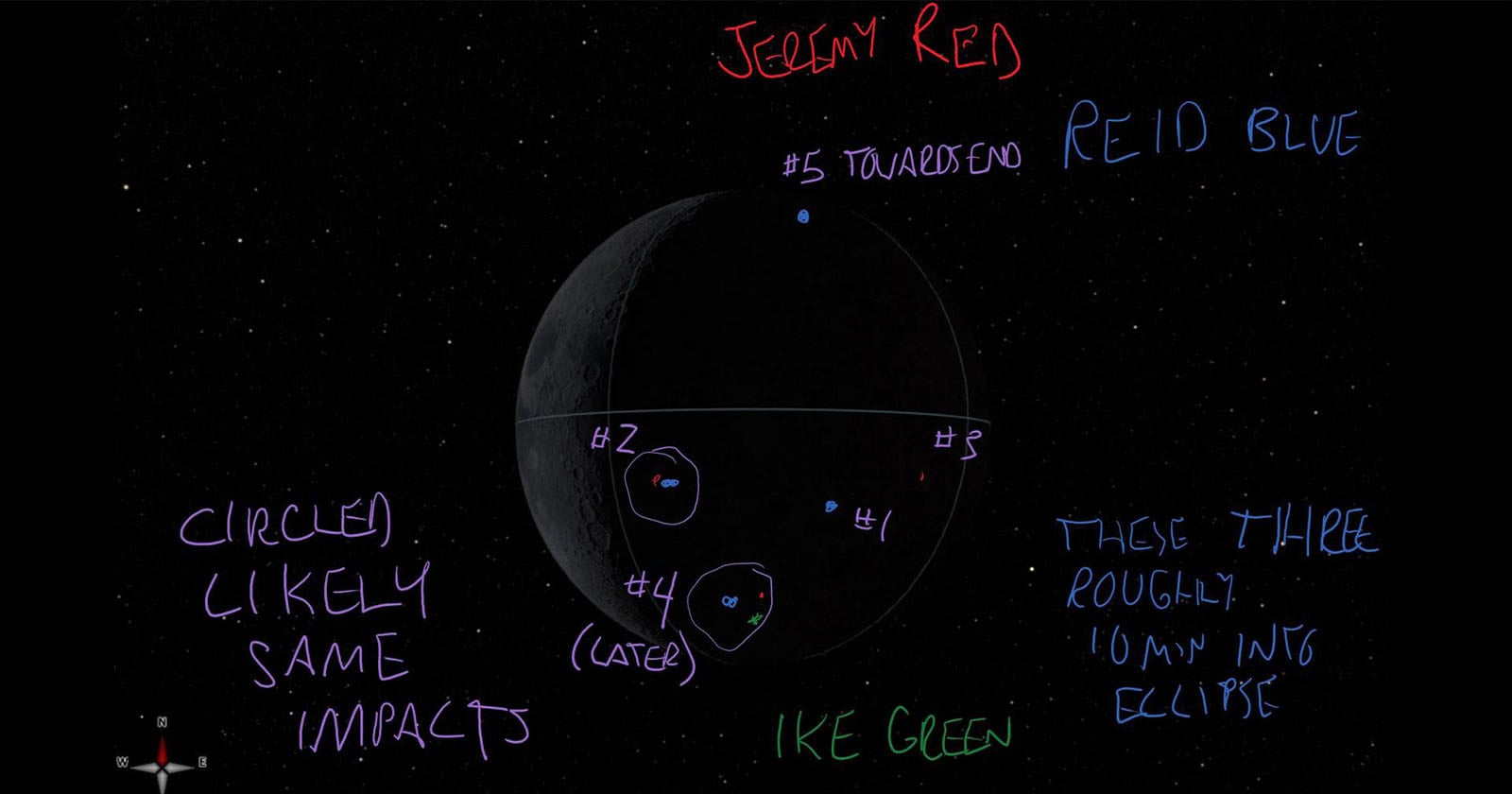
NASA has released an image of the dark side of the Moon complete with handwritten annotations made by the Artemis II crew who were observing it at the time.