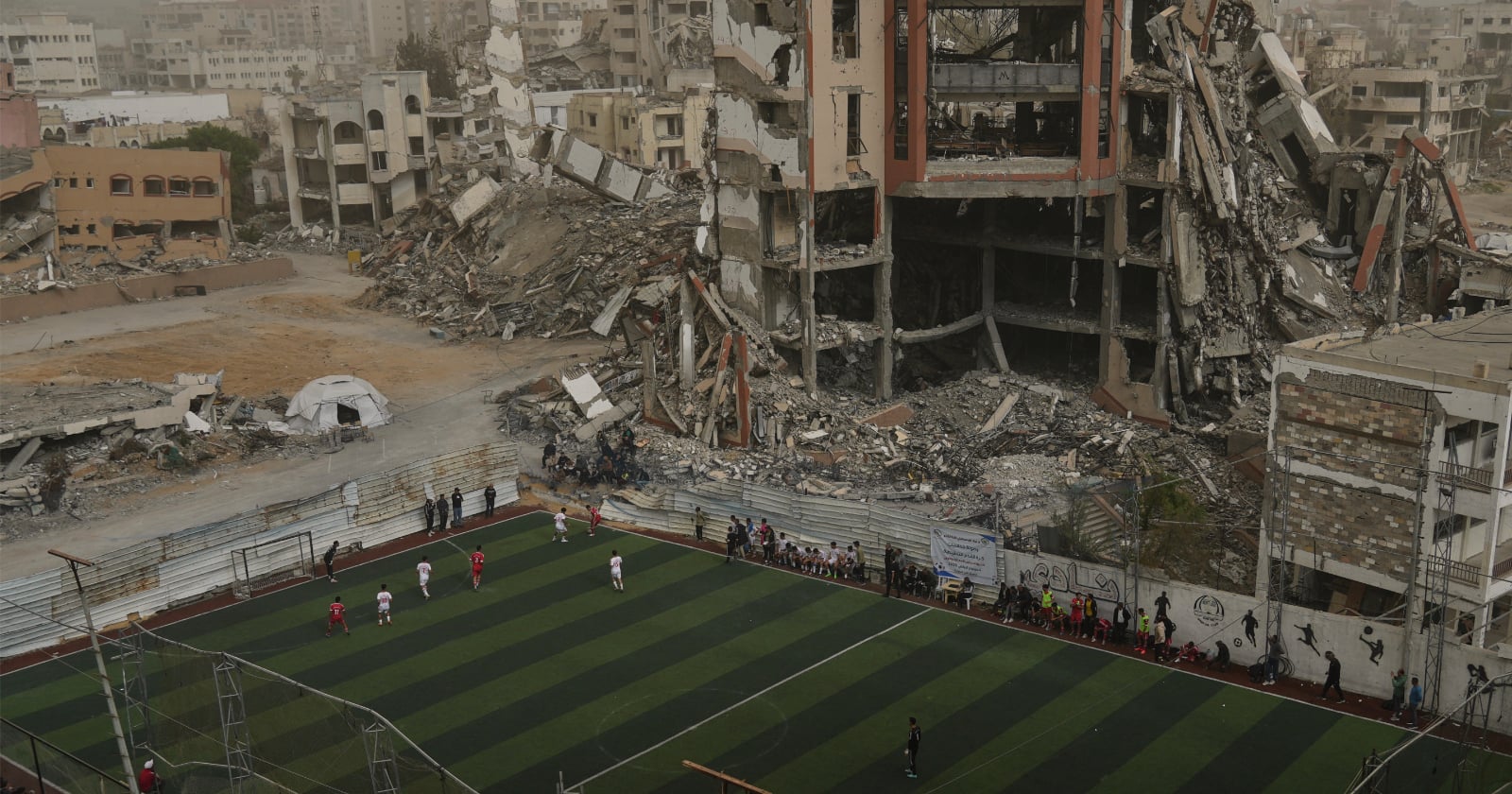
There is something quietly radical about a single image winning a legal battle before it is even allowed to be seen. The court's order to reinstate an Associated Press photographer's image of a soccer match in Gaza at a sports photography festival is not just a win for press freedom, though it is certainly that. It is a reminder that the frame an artist chooses, and the story that frame tells, can be more powerful than the pressure to look away. We have seen how quickly a photograph can be pulled, how easily a moment of human joy can be buried under the weight of outside influence. And we have also seen, in this case, that clarity can prevail when the work itself is allowed to speak.
This story lands in a curious place beside our own recent coverage of photographers making headlines for very different reasons. There was the A Photographer's Fall: Luxury, Swiftie Dreams, and a $4.6M Loss, a cautionary tale about a photographer who traded trust for a fantasy and lost everything. And there was the A Moment of Tension: Photographers Converge Outside the White House, where the mere presence of cameras became a flashpoint. What connects all three is the weight we place on the photographer's eye. A photograph is never just a document; it is a point of view. When a festival removes that point of view because someone outside the frame objected, they are not just editing a gallery wall. They are deciding which realities deserve to be seen.
Our take is simple: this ruling matters because it treats the photograph as what it is, an artistic statement with its own integrity. The image of a soccer game played on a small turf field, surrounded by heavily damaged and collapsed buildings, is not a political slogan. It is a portrait of persistence, of people carving out a patch of normalcy in a place where normalcy is a luxury. The court understood that removing it was not a neutral act. It was an attempt to silence a specific vision, and that is never acceptable, no matter the subject. For our readers, the practical takeaway is this: when you look at a photograph, ask not just what it shows, but what it refuses to hide. The work that challenges us, that makes us uncomfortable or even angry, is often the work that deserves the most careful attention.
What we would tell a reader who asks about this is to hold onto the image itself. The legal battle is important, but the photograph is the real victory. It is a moment captured by an AP photographer who saw something worth preserving, and a court agreed that the public had a right to see it. The festival will likely move forward, but the precedent is set. We will be watching to see if other institutions take note, or if the pressure to curate for comfort wins out again. For now, we would point you to the quieter lessons in our own archive, like the Moments Captured: Shin Noguchi’s Street Photography, Now in a Deck, which reminds us that the everyday, when seen with intention, can be extraordinary. The Gaza image is not a headline. It is a human moment, and that is exactly why it had to be shown.