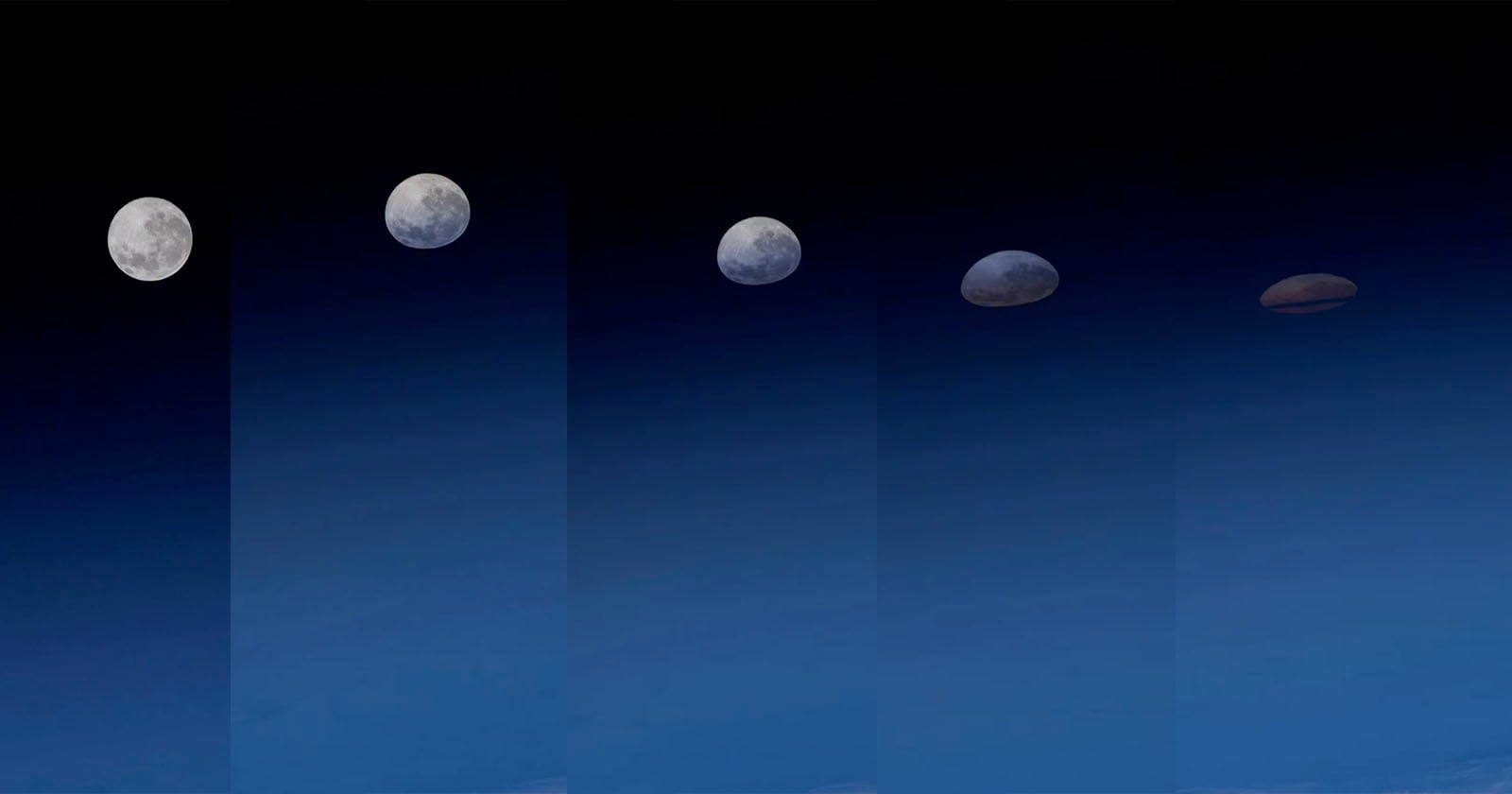
There is something profoundly humbling about watching a celestial body slip away, and NASA astronaut Anil Menon has given us that gift from the only vantage point that truly matters: orbit. His video of a luminous moon descending into Earth's glow, captured yesterday from the International Space Station, is not just a technical feat, it is a quiet masterpiece of perspective. We see what we so rarely feel: that we are passengers on a spinning marble, and the moon is leaving us for a few hours, not the other way around. This is the kind of image that makes you stop scrolling and breathe.
For an audience that values both artistry and authenticity, Menon's moonset is a reminder that the most compelling content often requires no studio, no filter, and no algorithm. It is raw, frame-worthy, and utterly singular. That same spirit of intentional curation runs through the work of creators who choose tools like the Brightin Star's 35mm APO lens brings artistry to every frame, a piece of glass built to capture light with a painter's precision. And it echoes the resurgence of a legacy brand like Kodak, whose Kodak's Fifth Quarter of Growth Is a Curated Comeback proves that thoughtful craft still commands attention in a world of disposable content. Menon's footage is the same principle in action: a single, deliberate frame that says more than a thousand generic posts ever could.
What makes this moment stick is not the science, though the orbital mechanics are elegant, but the framing. Menon chose to capture the moon as it slipped into Earth's atmospheric glow, a soft, hazy rim of light that transforms a cold rock into something almost painterly. It is a choice that feels both instinctive and deeply considered, the kind of eye that knows when to hold still and let the subject do the work. For photographers, filmmakers, and anyone who lives in the tension between control and surrender, this is the whole lesson: the best images are not manufactured; they are witnessed. Even the debate around tools like AI in post-production, as covered in The New York Times Draws a Line Against Undisclosed AI in Photoshop, ultimately circles back to the same question, what do we owe the authenticity of the original moment? Menon's answer is simple: everything.
The specific takeaway here is a challenge to every creative and health-conscious reader. The next time you step outside, ask yourself what is leaving or arriving that you could frame with the same quiet reverence. That moonset is gone now, but the impulse to see it, to stop, to compose, to share something that makes others feel small in the best possible way, is something you can practice tonight. The question is not whether you have a camera; it is whether you are willing to look.