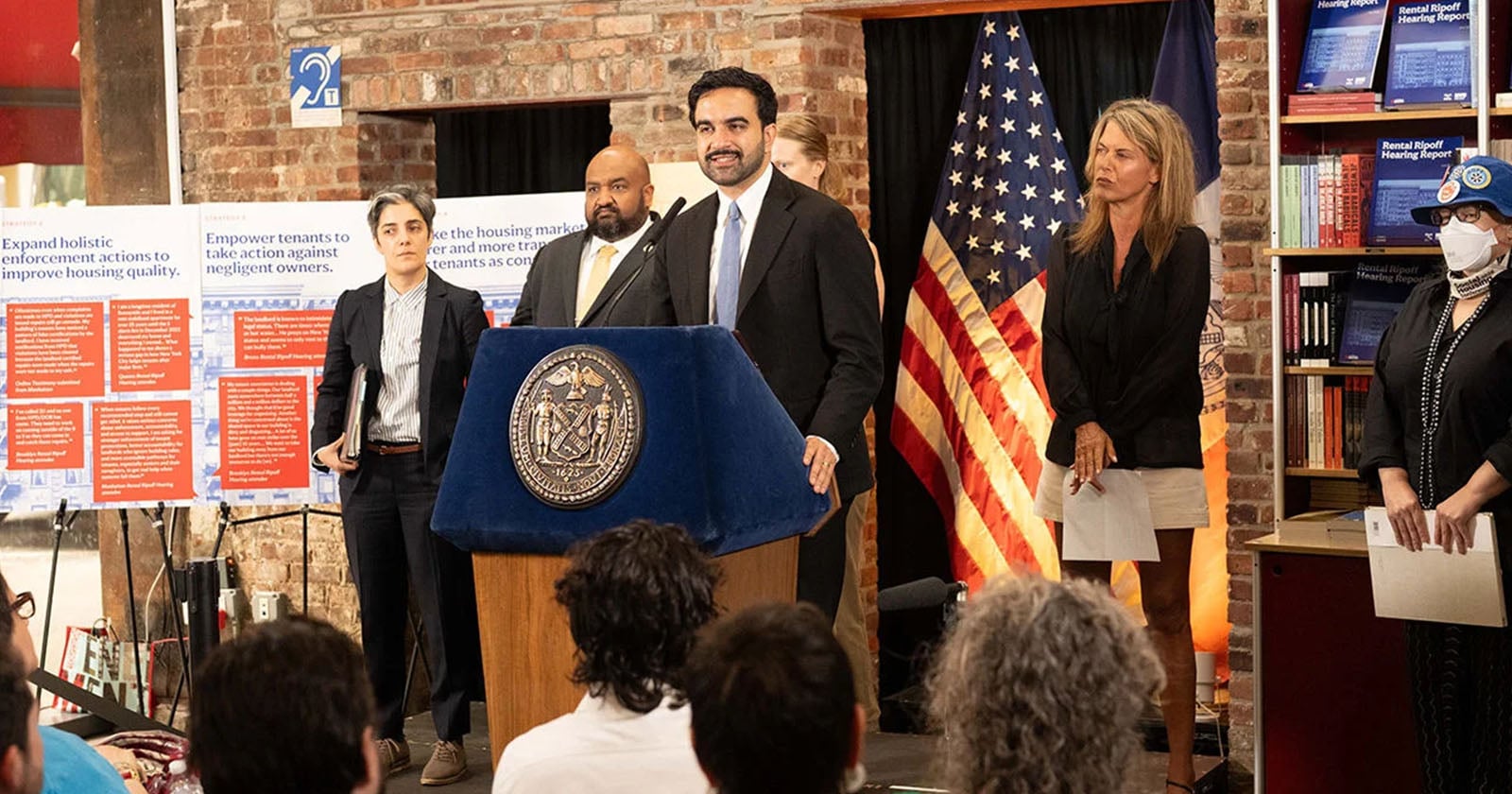
New York City mayor Zohran Mamdani is having a very busy week. Just a day after taking on Adobe with a "click-to-cancel" rule, he is now targeting what his office calls "deceptive landlord practices", specifically, the use of AI-generated and AI-edited images in property listings. For anyone who has ever walked into an apartment that looked nothing like the photos, this feels less like a regulatory footnote and more like a moment of reckoning. We have written before about the blurred line between curation and deception, and this move by Mamdani suggests that line is about to be drawn in sharp, legal ink.
Our take is straightforward: this is a rare intersection of technology, trust, and the very human experience of finding a home. The real estate industry has long relied on staged photography, wide-angle lenses, and strategic lighting to make spaces feel aspirational. But AI tools now allow landlords to remove a crack in the ceiling, widen a narrow kitchen, or even add a window where none exists. That is not curation. That is fiction. For the creative and health-conscious readers we speak to, people who value authenticity in their fitness, fashion, and living spaces, this matters deeply. You cannot curate a life around a lie. A studio that was digitally stretched to look like a one-bedroom is not an invitation to explore; it is a trap disguised as a promise.
What does this mean in practical terms? First, if you are apartment hunting in New York, you now have a legal lever. Landlords who use AI to misrepresent a property may be subject to enforcement, and the city's action gives renters a clearer basis to challenge deceptive listings. Second, this sets a precedent that could ripple across other lifestyle industries. If a landlord cannot use AI to fake a view, should a fashion brand be allowed to use AI to slim a model's waist? Should a wellness studio use AI to make its yoga room look twice as spacious? The artistic sensibility we champion has always been about elevation, not fabrication. Mamdani's move invites a broader conversation: where does enhancement end, and dishonesty begin?
The specific detail to watch is enforcement. The mayor's announcement is a strong signal, but the real test will be how the city investigates complaints and what penalties it imposes. A single fine might not deter a landlord who profits from thirty AI-enhanced listings. We would tell any reader who asks us: let this be your permission to demand transparency. When you see a listing that feels too perfect, ask whether the image is real. And if the answer is vague, remember that authenticity is not just a brand value, it is now a legal expectation. That is the concrete point to hold onto: in a city of eight million stories, the truth of a photograph finally has the force of law behind it.