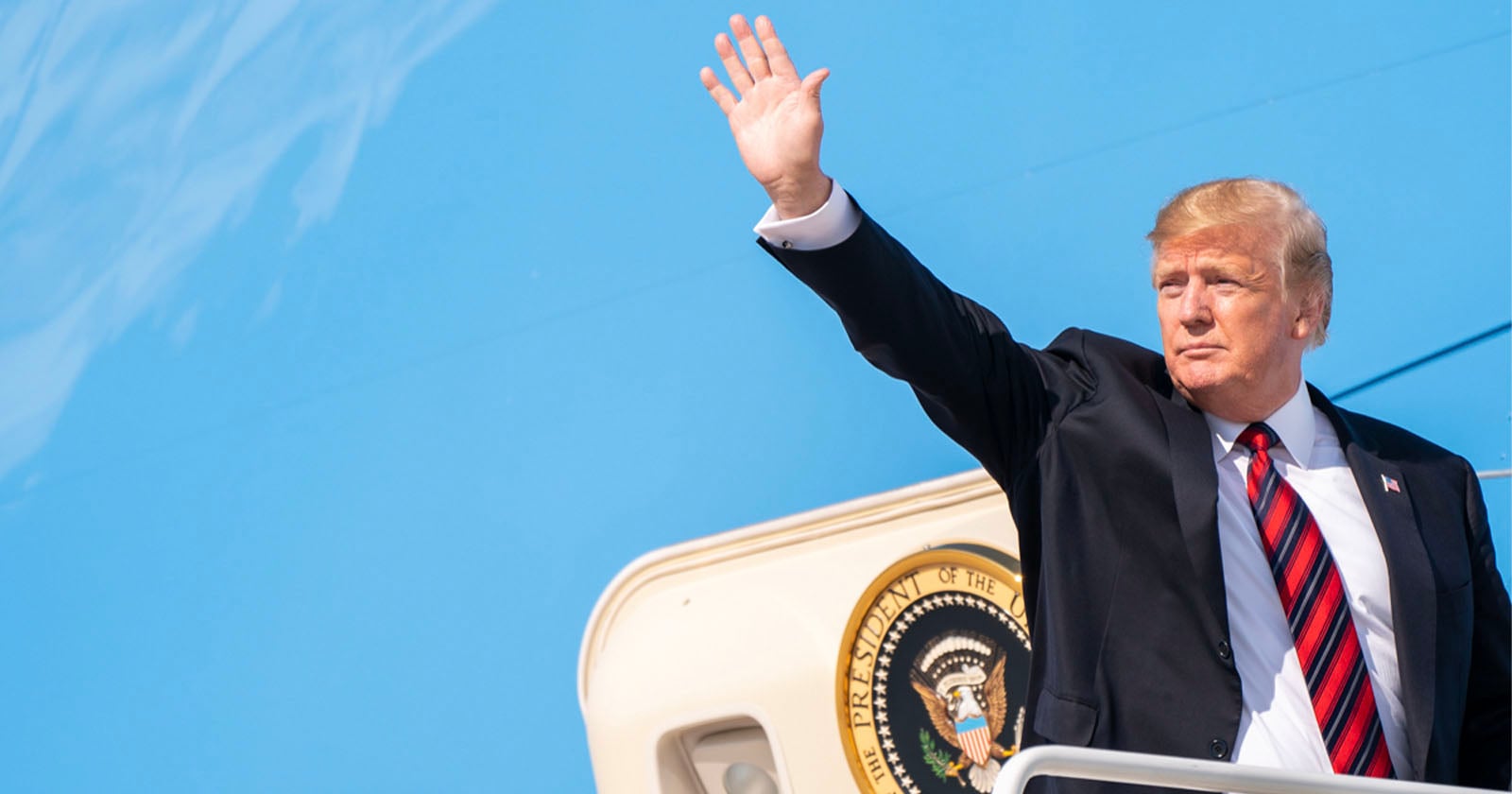
There is a particular kind of vertigo that comes with discovering a moment you trusted was spontaneous was, in fact, a performance. When veteran New York Times photographer Doug Mills learned he had unwittingly captured a staged photograph of President Trump exiting Air Force One, the image itself didn't change. The pixels remained identical. What shifted was the context, and context, as any artist knows, is the quiet architecture of meaning. Mills was shocked, and we were too, not because the revelation is unprecedented, but because it cuts to the heart of how we consume visual truth in an era where the frame around the image often matters more than the subject within it.
This incident is not merely a footnote in the ongoing saga of political media manipulation. It is a masterclass in the subtle erosion of documentary trust, and it carries a practical lesson for anyone who considers themselves a visual consumer. We tend to treat photographs as receipts of reality, but they are, at best, curated interpretations. The photographer chooses the angle, the moment, the light. When a subject stages a scene for the camera, they are simply seizing control of that curation. For our readers, the takeaway is not to abandon photojournalism as a farce, but to approach every image with a more sophisticated literacy. Ask yourself: Who is holding the camera, and who is controlling the space in front of it? The distinction between a captured moment and a constructed one is often invisible in the final print, yet it changes everything about its veracity. This is why the conversation around authenticity in visual media is not just academic; it is the new frontline of public perception.
What would we tell a reader who asks us if this matters? It matters because the shock Mills felt is a shared cultural symptom. We want to believe in the candid frame, the unguarded second. When that belief is exploited, it does not just undermine one photograph; it casts a long shadow over every future image of consequence. We would tell our reader that this is not a reason for cynicism, but a call for deeper engagement. The craft of photography has always involved a negotiation between the photographer's eye and the subject's will. In this case, the subject won, and the photographer was the last to know. That power dynamic is the real story, and it is one we should all watch closely. The specific detail to monitor is how newsroom protocols evolve in response. Will there be more rigorous verification of the circumstances surrounding official imagery? Or will we simply accept that the stage is part of the show? For now, we are left with the image itself, a beautiful, crisp, and utterly unreliable narrator. The concrete point to watch is not what the photograph shows, but what the next one hides, and whether the industry develops a keener eye for the difference.