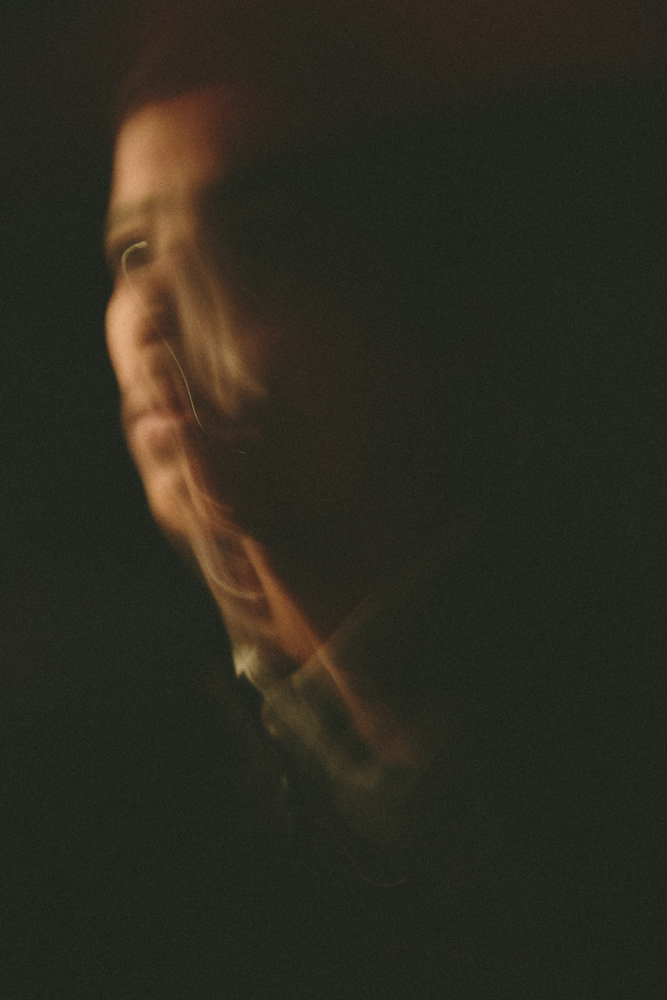
There is a quiet rebellion happening in photography, and it has nothing to do with gear. It is the refusal to accept that a camera's job is to record what is in front of it. For too long, we have treated the lens as a passive witness, as if the truest image is the one that most faithfully reproduces the scene. But that is a lie we tell ourselves to avoid the harder work of feeling. The camera cannot capture how we see, and it certainly cannot capture how we feel. What it can do, if we let it, is translate emotion into light and shadow. That is the conversation photographer Tom Bradley started with us, and it is one worth continuing.
We have all scrolled past technically perfect images that left us cold. They are sharp, well-exposed, and utterly forgettable. Meanwhile, a slightly blurry, overexposed frame of a laughing friend can bring us to tears. This is not an accident. It is a choice. When we prioritize feeling over documentation, we stop apologizing for our instincts. We stop cropping out the messy edges of life to fit some imagined standard of correctness. Bradley's approach, as shared in his interview, is a reminder that the most honest photograph is not the one that shows the most, but the one that makes you feel the most. That is a distinction worth sitting with, especially for those of us who have spent years chasing sharpness while ignoring the ache in our own chests.
For our readers, this is not abstract philosophy. It is practical permission. The next time you are out shooting, ask yourself: Am I trying to prove I was here, or am I trying to show what it felt like to be here? The former is documentation. The latter is expression. If you are more in touch with how you feel, you will naturally find ways to make that effect felt in your images. It might mean moving closer, waiting longer, or even putting the camera down for a moment to memorize the sensation before you lift it back to your eye. It might mean embracing grain, motion blur, or the awkward pause between poses. The tools do not matter as much as the intention. We would tell any reader who asks: stop trying to make your photos look like everyone else's idea of a good photo. Start making them look like your memory of the moment, which is never as clean or as still as the reality.
The takeaway here is simple, but it cuts deep: a photograph that makes someone feel something is worth more than a photograph that merely shows them something. That is the standard we should hold ourselves to, not just as photographers, but as people curating a visual life. So the next time you edit, ask if you are removing the soul along with the noise. And when you share, share the image that makes your stomach drop a little, not the one that is merely safe. Because the camera is just a tool, but your feelings are the real subject. Let the photograph be the evidence of that.