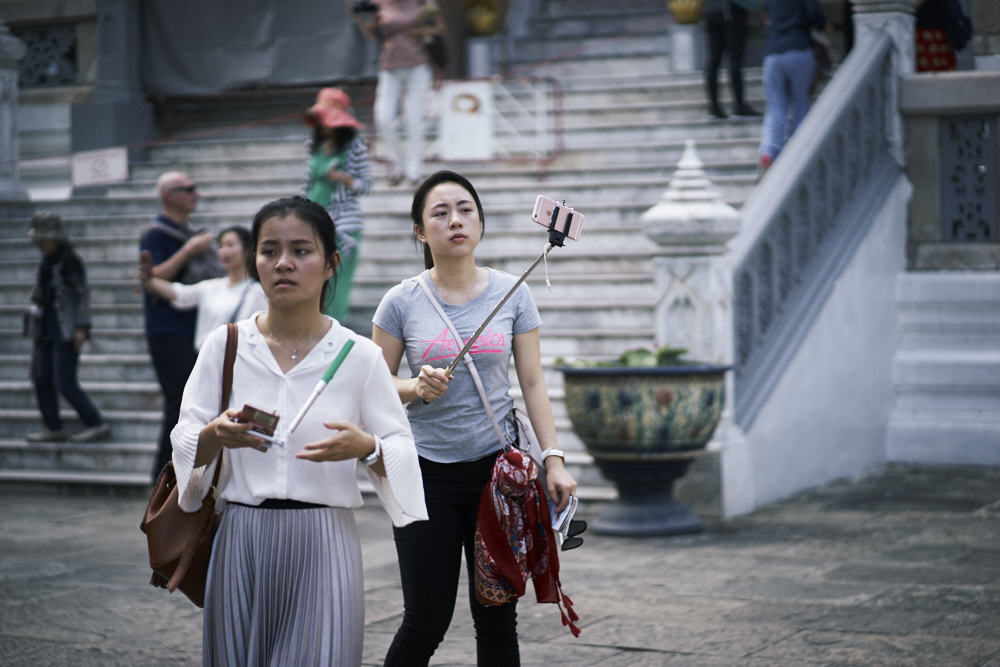
There is a quiet insistence in the argument that street photography is less about the glass and more about the guts it takes to step closer. The article's premise, that wide to normal focal lengths force accountability, rings true in a way that transcends the technical. It is a philosophy that demands you become a participant in the world rather than a distant observer. We see this echoed in our own coverage of the genre, particularly in our piece on Finding Joy on the Streets, One Frame After Fashion, where the act of shooting becomes a dialogue with the environment, not a transaction. The connection is not incidental; it is the entire point.
But the piece also cuts through the noise by pointing out that we are talking too much about gear. This is where we find ourselves nodding, not because gear is irrelevant, but because it has become a convenient shield. It is easier to debate sensor sizes and autofocus systems than it is to confront the vulnerability of raising a camera to your eye and engaging with a stranger. The truth, as the article suggests, lives in the middle. The gear matters only insofar as it removes friction between your intention and the moment. It is the same tension we explore in our coverage of artistic expression, such as the celebration of community in Experience Photography's Artistry: The 5 Boro Foto Fest Returns. There, the focus shifts from the individual capture to the shared experience, reminding us that the camera is merely a passport to presence.
Our honest take is that the obsession with focal lengths is a distraction from the real work of being human. When you choose a longer lens, you are making a conscious choice to remain apart. There is nothing wrong with that in certain contexts, but let us not pretend it is street photography in the truest sense. The accountability the article speaks of is not a limitation; it is liberation. It forces you to be curious, to be respectful, and to be fully awake. We would tell a reader who asks for advice that the next time you step out with your camera, leave the zoom at home. Force yourself into the frame of connection. You might miss a few shots, but you will find something far more valuable than a technically perfect image. You will find a story.
The practical consequence here is a challenge. Consider how this philosophy applies beyond the streets, perhaps even to the way we approach the vast and solitary pursuit of astrophotography, as seen in Capturing Cosmic Beauty: An Astrophotography Journey with Nikon. Even there, the lesson holds: the equipment is a bridge, not the destination. The next time you scroll past a forum post debating the sharpness of a 35mm versus a 50mm, remember that the only sharpness that matters is the clarity of your nerve. The question is not what lens you own, but whether you are willing to get close enough to see. That is the detail to watch, and it is the only gear that truly matters.