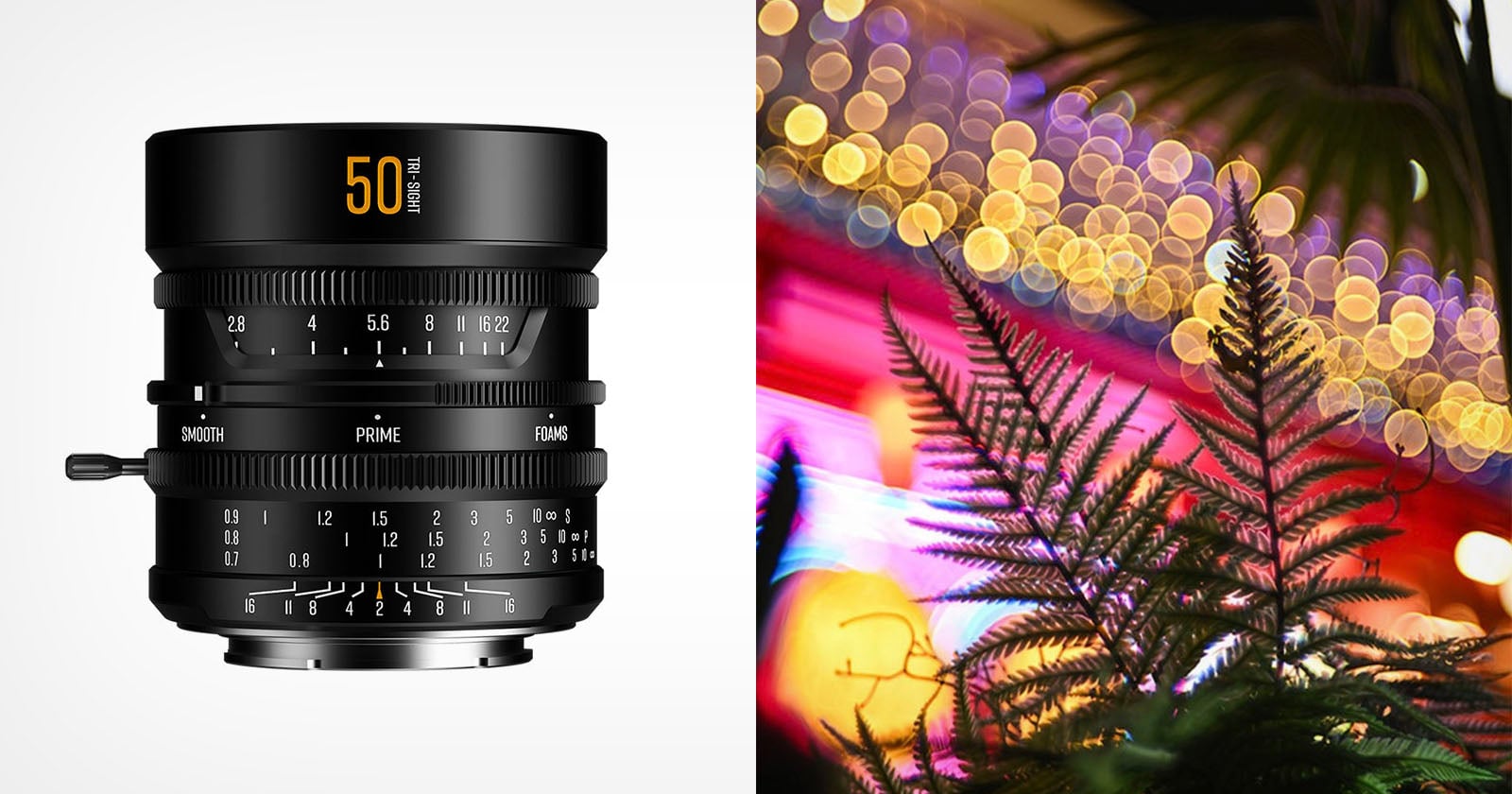
There is something quietly radical about a lens that asks you to decide how you want to see before you press the shutter. Brightin Star's new 50mm f/2 Tri-Sight, now officially launched for E, L, RF, and Z-mount full-frame cameras, offers exactly that: three distinct rendering modes in a single manual focus body. It is not a gimmick. It is an invitation to treat bokeh as a creative variable rather than a happy accident.
This feels like a natural counterpart to the kind of curated visual storytelling we explored in Finding Joy on the Streets, One Frame After Fashion. That piece reminded us that the best street photography often depends on how a photographer chooses to interact with light and texture. The Tri-Sight takes that philosophy and makes it literal. Instead of swapping lenses or relying on post-processing, you twist a ring and the character of the background changes in real time. For anyone who has ever wished they could dial in a softer fall-off or a more structured blur, this lens hands you the control.
The practical appeal is immediate. A portrait session moves from environmental context to tight isolation without changing your focal length. A still life gains or loses atmosphere with a single adjustment. What Brightin Star has done is acknowledge that light is not a fixed property, it is something you shape, frame by frame. The lens becomes a tool for intention, not just capture.
We should also note the timing. This launch arrives in a moment when many photographers are seeking more tactile, deliberate tools. The manual focus design is a statement: slow down, decide, commit. It pairs well with the kind of analog-minded approach we saw in A Rock and a Legend: Salah's Simple Seat Becomes a Curated Pilgrimage, where a mundane object became a destination because someone chose to see it differently. The Tri-Sight offers a similar ethos in hardware form. It does not promise to make bad compositions good. It promises to let good compositions breathe in three distinct ways.
The clearest takeaway for anyone considering this lens is this: you are not buying a standard 50mm. You are buying a system for controlling emotional tone through optics. If your work relies on background atmosphere, portraits, editorial, fine art, the Tri-Sight gives you a vocabulary that most primes cannot. The open question is whether those three modes are distinct enough to justify the premium over a traditional f/2 lens. We will need to see sample images at full resolution to judge. But the concept alone is worth watching, because it suggests a future where lenses are judged not just by sharpness, but by the range of moods they can summon.