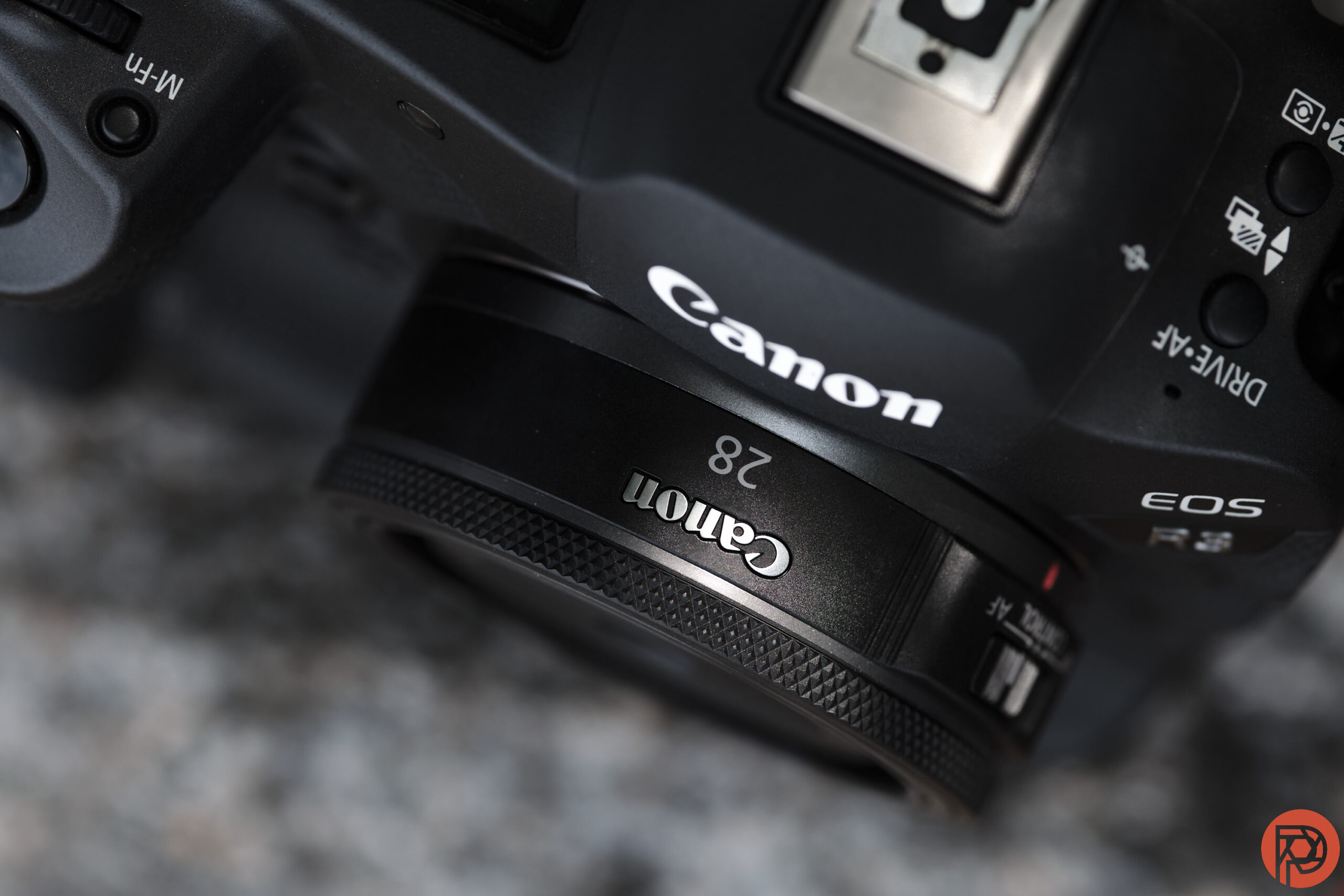
There is something almost poetic about a pancake lens. It is the little black dress of photography gear: compact, unassuming, and theoretically capable of going anywhere. So when Canon released the RF 28mm f2.8 in 2023, we wanted to love it. We really did. But as our review noted at the time, the RAW files carried a heavy burden of fringing and optical quirks that felt less like character and more like compromise. In our eyes, this lens is Canon's biggest miss in the glass game, not because it exists, but because it exists in such a limited form. For a company that built its reputation on marrying technical prowess with artistic possibility, this pancake feels like a sketch when we expected a painting.
The frustration deepens when you consider what could have been. Canon has spent years cultivating an ecosystem where the L-series lenses get all the weather sealing and premium build quality, while the rest of us are left to baby our gear in anything beyond a light drizzle. Why must weather resistance remain the exclusive language of the L-series? We ask this not as a demand for ruggedness in every kit lens, but as a question about philosophy. If the pancake lens is meant to be the ultimate everyday companion, the one you toss in a bag and forget until the moment strikes, then it should be built to handle the accidental splash or the sudden downpour. Instead, we get a lens that feels like a delicate invitation to stay indoors. And then there is the matter of the early 2010s. Canon had a banger of a 28mm back then, a lens that had character and sharpness in spades. Reimagining that classic with modern coatings and a weather-sealed barrel would have been a love letter to the community. Instead, we got a lens that plays it safe, and safe is not the same as versatile.
This is where the conversation gets interesting for our readers, especially those of you who follow the broader landscape of lens mounts and creative freedom. The recent legal win we covered regarding third-party lens makers shows that the pressure is mounting on closed ecosystems. If Canon continues to reserve its best build quality for the expensive stuff, they are leaving the door open for competitors who are willing to give creators more for less. We are not saying the pancake lens alone will topple an empire, but it is symptomatic of a larger tension between accessibility and premiumism. When you pair that with the sheer joy of finding spontaneous moments on the streets, as we often explore in our street photography coverage, you realize that the best gear is the gear that disappears in your hands. This lens does not disappear; it reminds you of its limitations every time you pixel-peep.
So what would we tell a reader who asks whether they should buy it? If you need a compact walk-around lens and you shoot primarily in JPEG, you might be fine. But if you value the latitude to edit raw files without fighting fringing, or if you have ever cursed a splash of water on a front element, look elsewhere. The takeaway is simple: Canon had a chance to give us a modern classic and instead delivered a missed opportunity. The open question now is whether they will listen to the feedback or double down on the L-series exclusivity. We will be watching, and we hope our next pancake comes with a little more conviction.