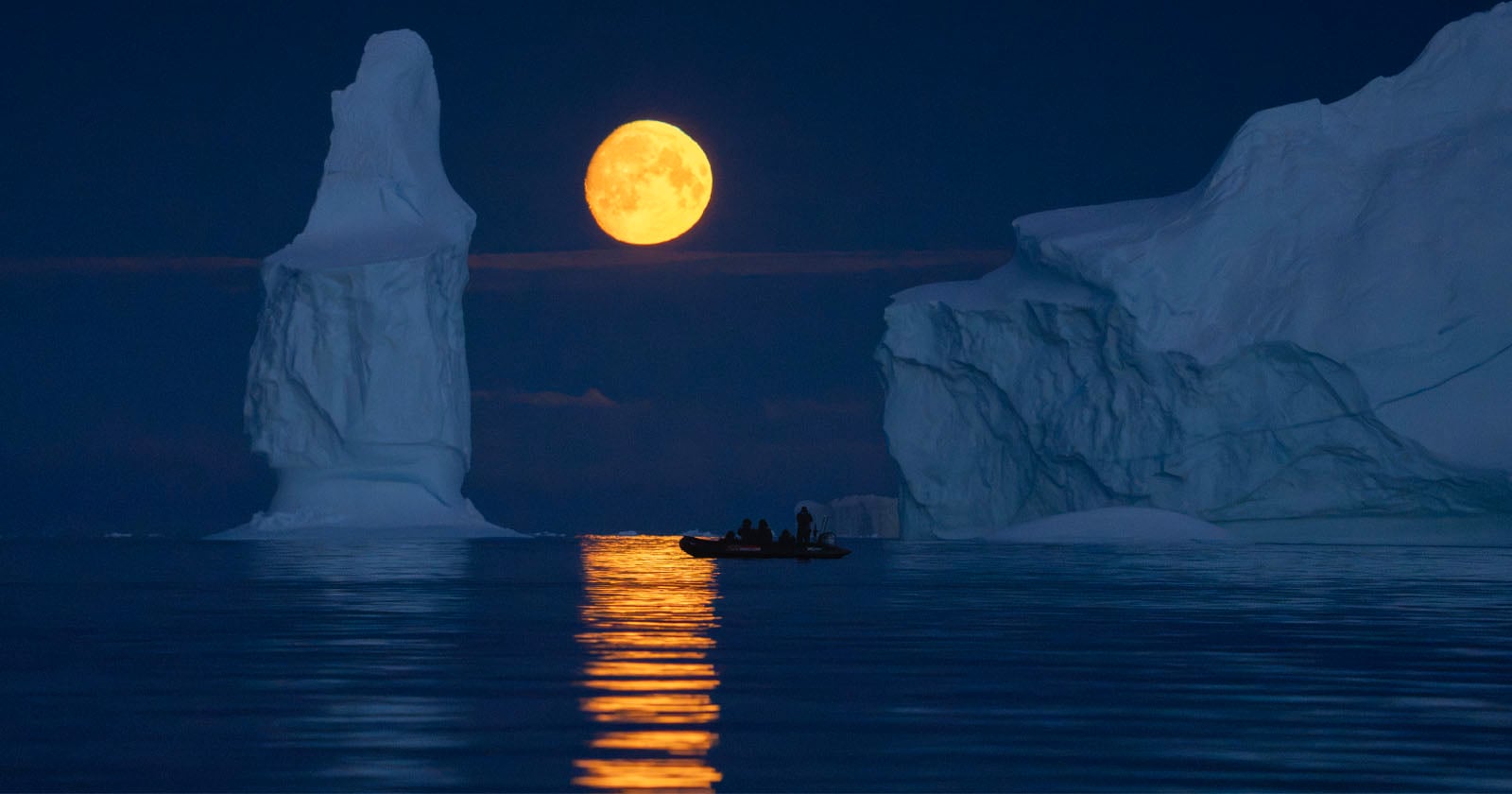
There is something quietly profound about a landscape that refuses to cooperate. The story of photographing East Greenland at night is not one of triumphant composition or perfect golden hour light, it is a meditation on patience, preparation, and the humility required when nature holds all the cards. The terrain is immense, the conditions demanding, and the window to capture a single image can shrink to minutes. We find this tension deeply resonant, because it mirrors a truth that extends far beyond the Arctic: the most memorable work often emerges not from control, but from surrender to the moment.
What makes this approach to photography so compelling is its rejection of the ordinary. The towering icebergs, drifting sea ice, and shifting Arctic fog create an environment where light becomes the true subject, transforming a scene completely, unpredictably, and sometimes fleetingly. This is not a shoot-and-move operation. It is an immersive practice of observation and adaptation, qualities that align closely with the mindset explored in our related piece on Mastering Exposure in the Wild Where Art Meets Instinct, where technical skill and raw intuition must coexist. Similarly, the photographer working in East Greenland is not simply documenting ice; they are learning to read its language, anticipating how low clouds will diffuse moonlight or how fog will soften a ridge. That kind of seeing takes time, and time in the Arctic is never guaranteed.
For our readers who value both the artistic and the athletic, this story offers a practical lesson in preparation as a form of creative discipline. You cannot force the sky to clear or the ice to drift into a more pleasing arrangement. What you can do is arrive ready, with gear tested, with exposure settings understood, with a willingness to wait. This is not unlike training for an endurance event or curating a capsule wardrobe: the outcome depends on the decisions made long before the moment arrives. The photographer in East Greenland knows that spectacular scenery does not guarantee a spectacular image. That honesty is refreshing, and it echoes the grounded authenticity we champion across every discipline we cover.
Consider also how this Arctic night work contrasts with the quiet stillness of Concrete Giants: Documenting Virginia's Silent Data Skyline. Where one photographer hunts ephemeral light over ancient ice, another documents the unblinking, permanent architecture of the digital age. Both demand a specific kind of seeing, one tuned to motion and atmosphere, the other to structure and scale. And both remind us that the best images are not taken; they are earned through attention. The specific takeaway here is direct: next time you step into a challenging environment, resist the urge to capture everything. Instead, commit to watching one thing, a single iceberg, a patch of sky, a shift in light, until it reveals something you could not have planned. That is where the transformation begins.