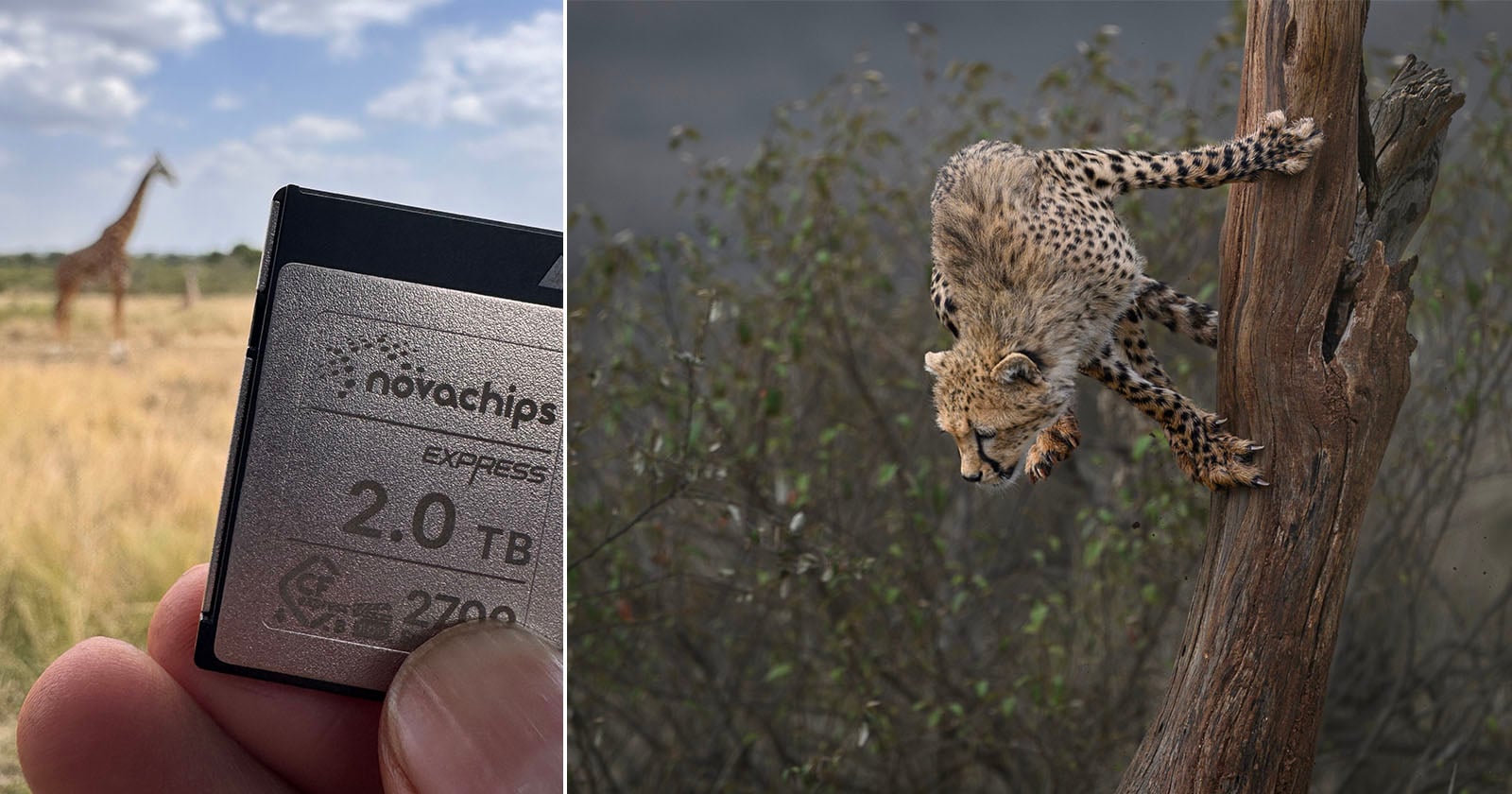
There is a quiet poetry in the gear we choose to trust, especially when the subject is as fleeting as a cheetah cub pausing mid-climb. We obsess over sensors and lenses, yet the humble memory card is where the story survives its first fragile second. Amish Chhagan's decision to build his wildlife toolkit around Novachips' CFexpress 4.0 Type B cards is a reminder that the unsung hero often deserves the loudest applause. It echoes a theme we have explored in Embrace the Drama: Exploring the Allure of Ultra-Low ISO Film, where the quiet pursuit of image quality over convenience becomes its own artistic statement. Here, the stakes are less about grain and more about the split-second window that never repeats.
Our take is simple: this is a story about the discipline of preparation, not just the romance of the shot. For the working photographer, the distinction between a card that writes fast and one that writes reliably is the difference between walking away with the frame and walking away with a blurry excuse. Amish's preference for Novachips signals a mature understanding that the boldest wildlife images are not born in the camera alone; they are secured in the silent, split-second transaction between the shutter and the storage. This is a practical reminder that our audience, whether they are chasing light through a viewfinder or curating a lifestyle around the craft, should treat memory as a primary creative material, not an afterthought. We would tell a reader who asks, "Is the card really that important?" that the most expensive lens in the world is useless if the card fails when the action peaks.
There is also a lesson here about the quiet confidence of using tools that do not shout. In a world where A Photographer's Fall: Luxury, Swiftie Dreams, and a $4.6M Loss shows us the consequences of misplaced trust and flashy shortcuts, the choice of a reliable card feels almost radical in its simplicity. It is not about chasing the newest spec sheet, but about respecting the integrity of the moment you are hired to capture. This aligns with the philosophy we champion when discussing tools like Elevate Your Vision: PolarPro’s Radial Filters Reimagine In-Camera Color, where the focus is on getting the image right at the point of capture rather than relying on rescue missions later. The card is the ultimate filter; it decides what survives the journey from raw light to finished art.
The specific consequence to watch is how this shifts the conversation around gear ownership. Amish's public trust in Novachips is not just a product endorsement; it is a signal to the industry that speed is meaningless without stability. The open question we are left with is whether other manufacturers will follow suit in prioritizing endurance over sheer capacity. For our readers, the takeaway is concrete: before your next big shoot, audit your own memory strategy. Ask yourself if your card is worthy of the moment you are about to chase. Because in the wild, and in life, the difference between a great story and a lost one is often just a few milliseconds of reliable performance.