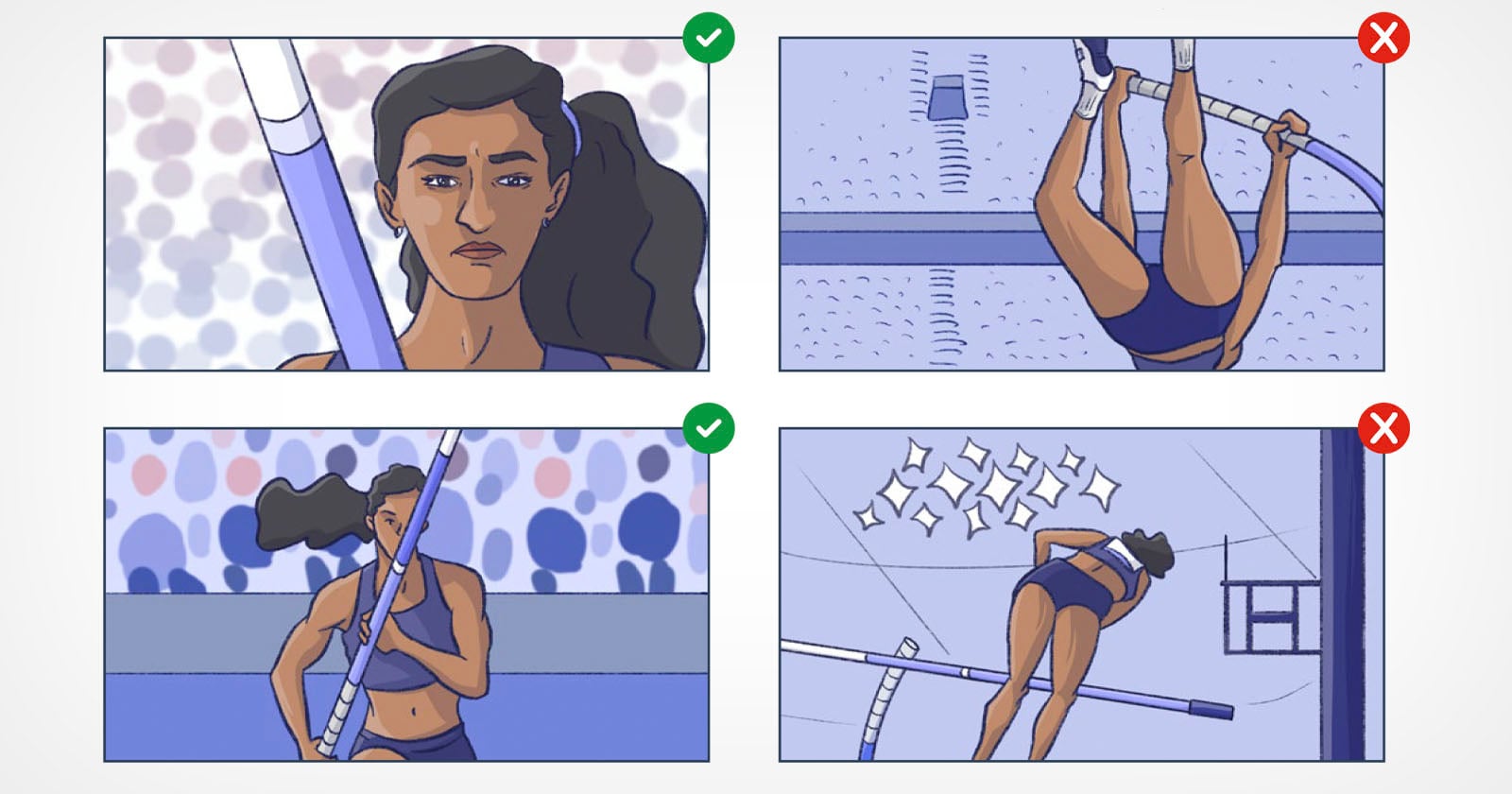
The European Broadcasting Union has finally put words to something many of us have felt while watching sports: the camera's gaze matters. Their new guidelines on how to film women athletes without resorting to sexualized angles are not a restriction on creativity, they are an invitation to see performance the way it deserves to be seen. For anyone who has cringed at a lingering slow-motion shot of a sprinter's hips or a gymnast's landing framed like a fashion editorial, this feels less like a rulebook and more like a relief. We have long argued that athleticism and artistry should be celebrated in the same breath, and the EBU's approach finally aligns the lens with that truth. As Petapixel reported, the illustrations in the guide show exactly where the line falls: a green check on a pole vaulter's preparation and run-up, a red X on the vault and landing. That specificity is what makes this more than a gesture.
What does this mean for our readers, the athletes, the photographers, the designers, the wellness-curious who watch sports for inspiration? In practical terms, it shifts the conversation from intention to execution. A broadcaster can no longer claim a close-up of a diver's back was "just artistic framing." The guidelines give producers, directors, and camera operators a shared vocabulary: respect the sport, not the stereotype. For the creative collaborators among us, this is a chance to reimagine how we capture movement. Think of the difference between a shot that follows a swimmer's arm through the water versus one that pauses on her waist. One tells a story of power; the other tells a story of consumption. We would tell any reader who asks: bring these guidelines into your own work. Whether you are filming a yoga flow for Instagram or shooting a brand campaign with a runner, ask yourself if the angle serves the action or the gaze. That question alone can transform a frame.
Our take is straightforward: this is not about policing beauty, it is about honoring effort. The EBU's move acknowledges that women athletes have been subjected to a double standard that their male counterparts rarely face. A male shot-putter's thigh is a feat of strength; a female shot-putter's thigh is often framed as a "detail." The guidelines dismantle that imbalance by focusing on what the athlete is doing, not how she looks doing it. For a brand that champions the intersection of fitness, beauty, and authenticity, this resonates deeply. We believe style and strength can coexist, but only when the camera treats the athlete as the author of her own motion, not as an object to be consumed. The takeaway a reader could quote: "The best angle is the one that lets the athlete's performance speak, not the one that tries to speak for her."
One concrete detail to watch: how will these guidelines influence the next Olympic Games? The EBU's reach spans dozens of broadcasters across Europe, and the Paris 2028 cycle is already in production. If major networks adopt these standards, the visual language of sports coverage could shift permanently. That is the real test, not the document itself, but whether the industry chooses to see it as a baseline rather than a suggestion.