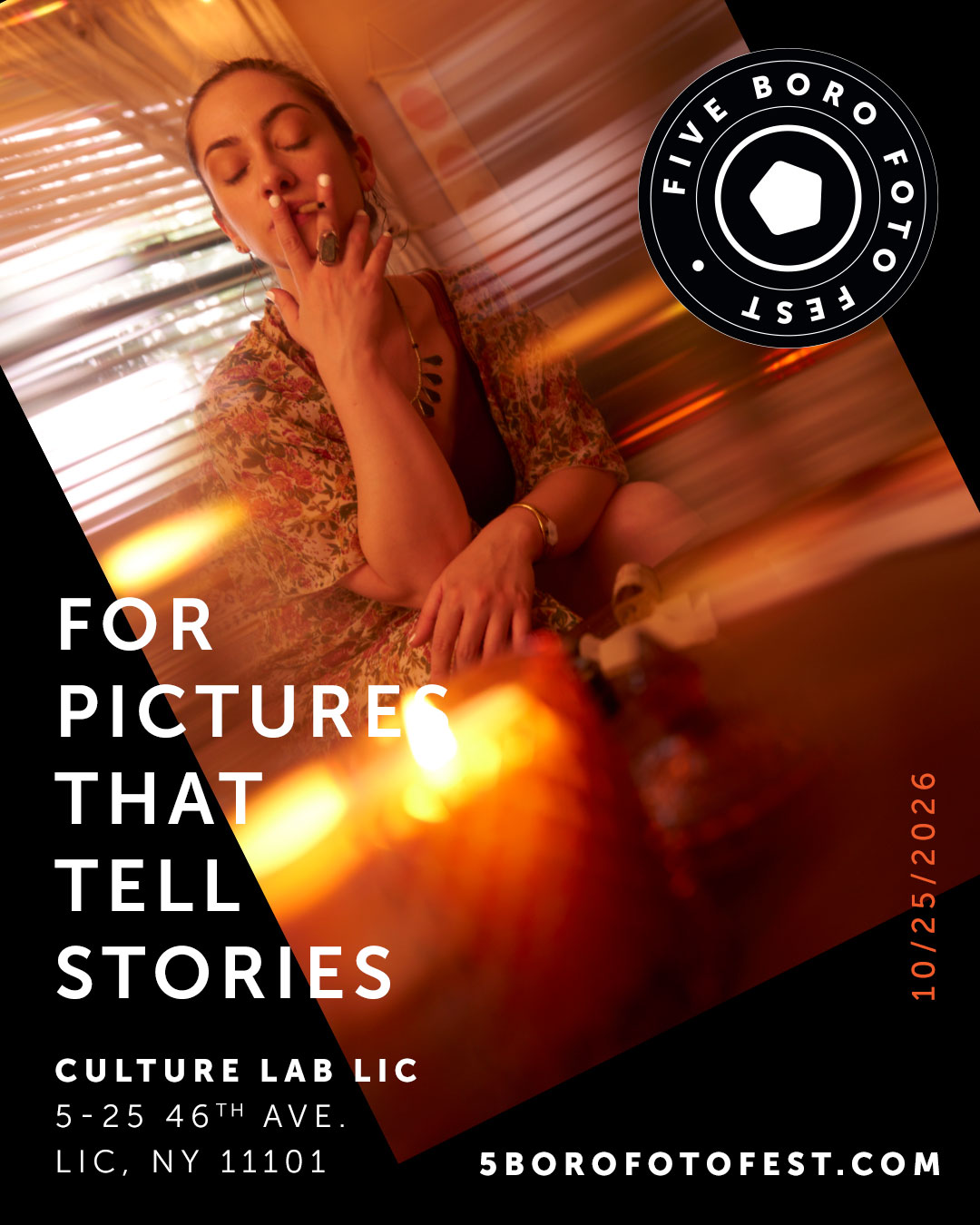
For too long, the photography world has been caught between two unsatisfying extremes: sterile convention halls and the algorithmic void of social media. The 5 Boro Foto Fest is the first idea in years that feels like it actually understands what photographers need, and what art lovers have been missing. We're not just talking about another trade show; we're talking about a deliberate, human counterweight to the curated noise that has come to define how we see and share images. This is a bold move, and honestly, it's about time someone made it. As we've explored the state of the industry, the disconnect between creators and their audience has never been wider, and this festival feels like a direct answer to that growing chasm.
What excites us most is the refusal to play by the old rules. No algorithms deciding what you see, no generative AI flooding the frame with synthetic prettiness. Just humans, their prints, and the tangible exchange of a physical object that carries intent and craft. For our readers, whether you're a working photographer or someone who simply loves living with beautiful images, this means something concrete: a return to the moment of discovery. You're not scrolling; you're walking. You're not double-tapping; you're negotiating. The practical takeaway here is that the 5 Boro Foto Fest is betting on the idea that people still crave the authentic artifact, the one that exists in your hands and not just on a screen. And in an era where sustainability in the arts is often just a buzzword, doing this in the name of industry longevity isn't just smart, it's essential.
This is also a quiet rebellion against the exhaustion of the content treadmill. We've watched photographers get burned out producing for platforms that change their rules on a whim, and we've seen the value of their work plummet to near zero in the public eye. The Fest doesn't just give them a wall to hang on; it gives them a stage where the work is the point, not the engagement metrics. For the audience, it's a chance to meet the person behind the lens, to hear the story that no caption can capture. That's not nostalgia; that's a better business model for everyone involved. It's a reminder that the most sustainable way to support the art is to buy directly from the artist, and that's a transaction that benefits the soul as much as the bottom line.
So, what should you watch for as this develops? The details matter here, the curation of who gets a table, the layout of the five boroughs, and whether the energy can match the ambition. We'll be watching to see if this becomes a blueprint for other cities, or if it remains a singular, beautiful anomaly. The real question isn't whether people will come; it's whether the industry will listen when they do. We hope the answer is yes, because this is the kind of event that deserves to become a tradition.