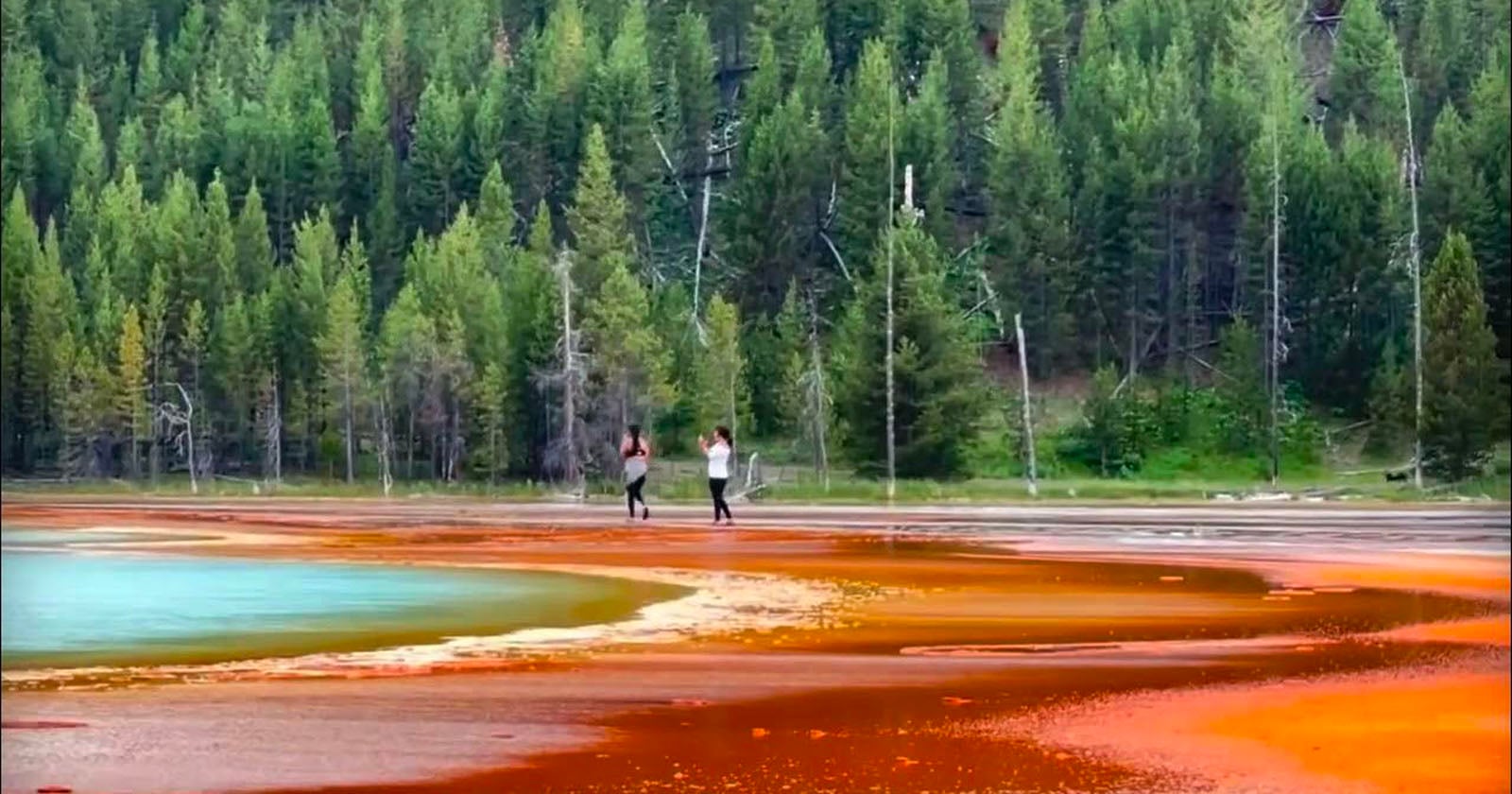
The image is almost painterly from a distance: the Grand Prismatic Spring's concentric rings of electric orange, simmering blue, and deep teal, framed by a forest of tall evergreens. It looks like a living canvas, a place where nature's palette is at its most audacious. But two tourists decided that this natural masterpiece was not enough to admire from the boardwalk. They walked out onto the fragile, steaming crust for a photo, and the internet responded with the predictable, justified outrage. We get it. The shot is tempting. But what we are really witnessing is a failure of imagination, a confusion between experiencing a place and owning it.
Our take is simple: the moment you step off the path in a place like Yellowstone, you are no longer a guest in a sacred space; you are a trespasser on a living, breathing geological wonder. The crust over the Grand Prismatic is thin, unstable, and hot enough to cause severe, life-altering burns. The tourists were not just risking their own safety; they were disrespecting the very reason they came to see it. This is not about being risk-averse or joyless. It is about understanding that some places demand humility. We have written before about the fine line between chasing the perfect shot and the ethics of travel photography, and this incident is a textbook case of the latter. The real skill is not in getting the photo; it is in knowing when to put the camera down and simply be present.
For our readers, the practical takeaway is less about scolding and more about recalibration. We would tell anyone who asks: your portfolio will never be worth your life, and it will never be worth the ecological damage you cause. The boardwalk exists for a reason, and the fact that it is crowded is not an inconvenience; it is a sign that you are in a place worth protecting. If you want a unique shot, arrive at dawn when the light is soft and the crowds are thin. Bring a zoom lens. Find a composition that respects the boundaries. The most powerful images are often the ones that show a place's grandeur without pretending you can own it. That is the difference between a tourist and a traveler, and between a photograph and a trophy.
What we will be watching for is the outcome of this specific incident. Will the park service issue fines, or will this be another viral moment that fades into the feed? We hope it becomes a teaching moment, but we are not naive. The allure of the forbidden frame is strong. So here is the concrete question we leave with you: the next time you are standing at the edge of something beautiful and fragile, will you be able to tell the difference between a moment worth capturing and a moment worth letting go? Because the spring will still be there tomorrow, but the person who steps on it might not be.