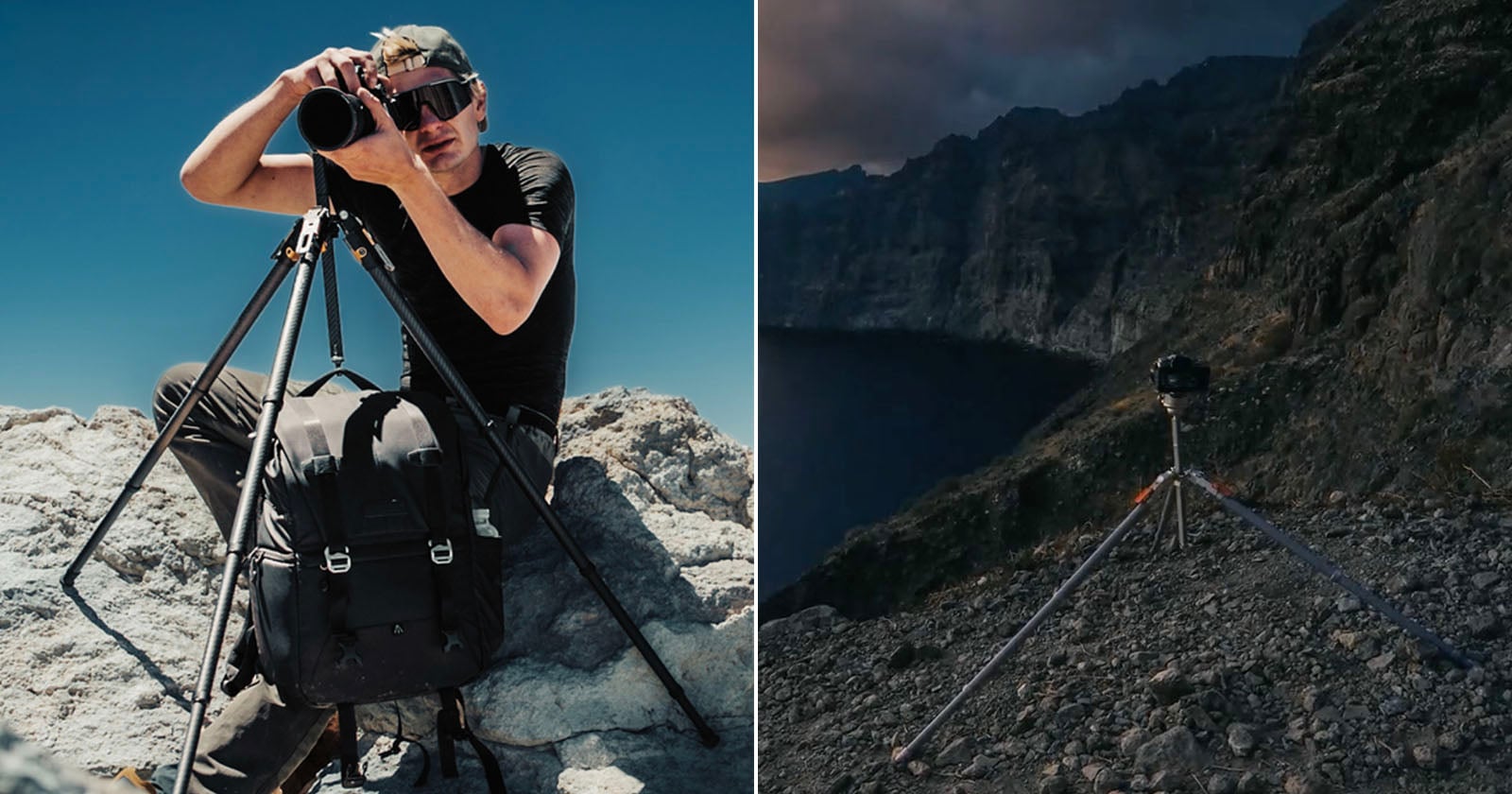
The T1 Mini tripod's crowdfunding success is less about a piece of hardware and more about a quiet recalibration of what photographers actually value. Coman has raised over $375,000 on Kickstarter with three days remaining, and the reason isn't clever marketing, it's a design philosophy that treats gear as an extension of the creative process, not a burden to be tolerated. This is a tripod that understands the friction between impulse and execution, and it's telling that the market has responded so decisively.
The claim of being "the world's first one-click travel tripod" could easily land as gimmickry, but the funding numbers suggest otherwise. Photographers, especially those who move between studio and location, know that setup time is the enemy of spontaneity. A one-click mechanism that collapses the gap between seeing a shot and capturing it speaks directly to the same instinct that drives work like the Microgravity’s Hidden Canvas: The Art of Cancer Cells in Space project, where precision and timing are everything. Coman has essentially asked: what if the tool itself became invisible? What if the tripod stopped demanding attention and started enabling flow? That's an artistic question, not an engineering one, and the crowd has answered in the affirmative.
This also signals a shift in how the photography community defines quality. We are used to seeing specs drive purchasing decisions, carbon fiber weight limits, leg section counts, load capacities. But the T1 Mini's appeal is experiential. It aligns more closely with the tactile joy of The Art of Soft Light: Rethinking Direct Flash, where the real innovation is in how the tool changes your relationship with the subject. Coman has bet that photographers will pay a premium for a tripod that feels like an intuitive collaborator rather than a necessary chore. At nearly $400,000 in pledges, that bet is paying off.
The practical takeaway for our readers is this: the next time you evaluate a piece of gear, ask yourself whether it reduces friction or adds another layer of management. The T1 Mini's success suggests the market is hungry for tools that disappear into the background of the creative act. The real question now is whether Coman can deliver that experience at scale, or whether the one-click promise will prove more satisfying on paper than in the field. Watch the fulfillment phase closely, that's where the design's integrity will be tested.