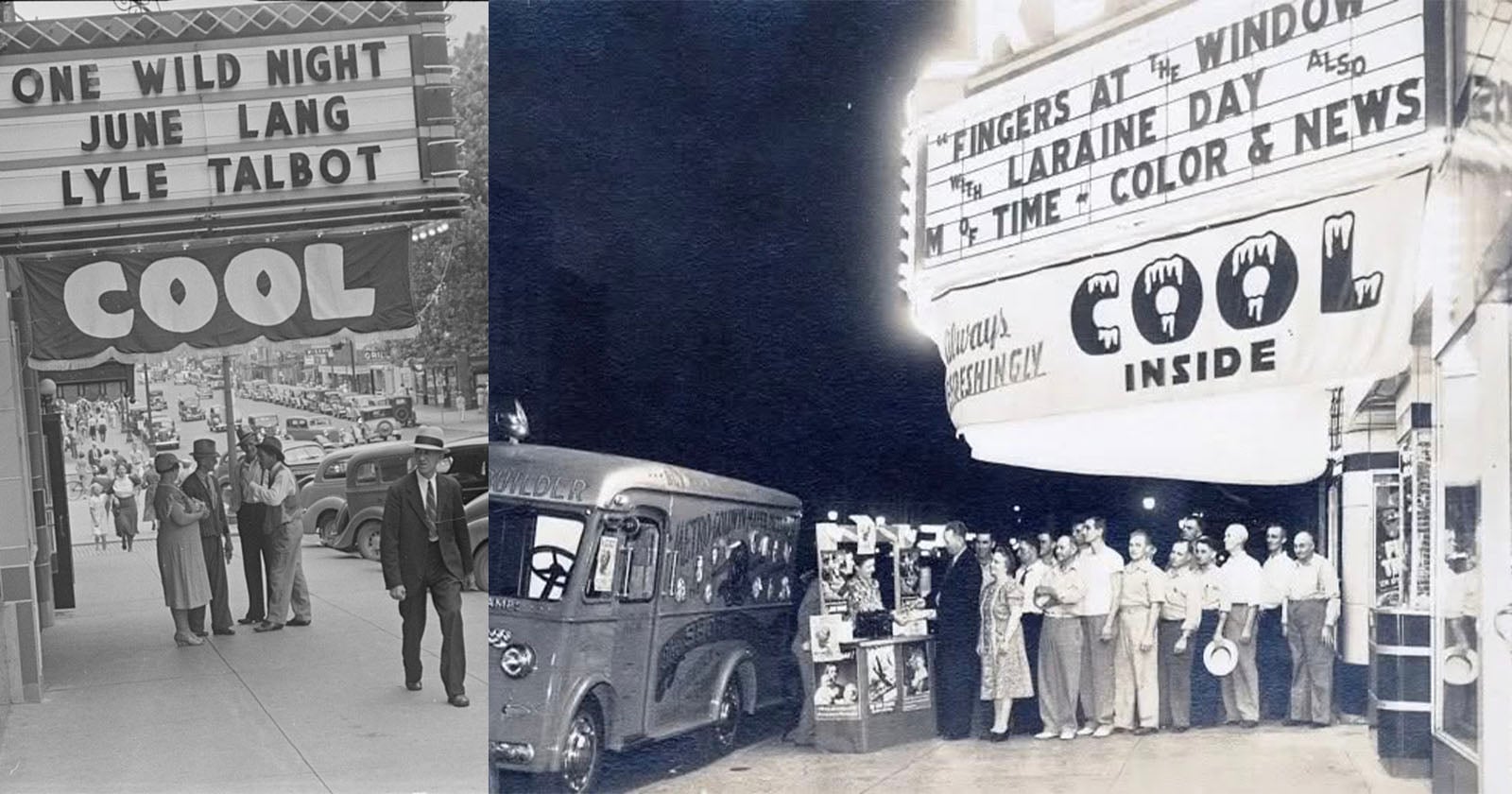
There is a particular kind of magic in the old photograph that surfaces when the August heat becomes unbearable. The black-and-white marquee promises relief, not from a plot twist, but from the sticky, oppressive weight of summer itself. The sign outside that theater, the one declaring it "Always refreshingly cool inside," is more than a piece of vintage advertising. It is the quiet origin story of a ritual we now take for granted. We often talk about the summer blockbuster as a triumph of spectacle or storytelling, but the real hero of that season has always been the compressor hum, the blast of arctic air that greeted you the moment you stepped through the doors. That single invention turned a passive pastime into a necessity, a sanctuary that felt less like a cinema and more like a collective sigh of relief.
We find ourselves drawn to this particular slice of history because it speaks to the way our environments shape our culture in ways we rarely pause to consider. The film industry didn't just discover a new audience in the summer; it discovered a new reason to exist during those months. Before this, the warm weather was a time for the outdoors, for beaches and parks, not for sitting in a dark room. Air conditioning changed the calculus of the entire day. It gave us permission to seek out luxury in the middle of a heatwave, to pay for a ticket not just for the story, but for the experience of the cool. This is a lesson in curation that feels as relevant today as it was in 1940. We are not just consuming a product; we are buying a feeling, a temporary escape from the elements that has become so deeply embedded in our expectations that we only notice it when it fails.
For our readers, the creatives, the fitness enthusiasts, the ones who curate every corner of their lives, this story is a reminder that the most compelling narratives are often built on the most practical foundations. You can craft the most beautiful campaign, the most immersive wellness retreat, or the most vibrant fashion editorial, but if the environment isn't welcoming on a primal level, the magic falls flat. The lesson here is about paying attention to the sensory experience we are offering. It is not just about the visual aesthetic or the intellectual appeal; it is about the temperature of the room, the comfort of the chair, the intangible feeling of being taken care of. When we strip away the hype, the most authentic connections are forged in spaces that feel good to occupy. The theater owners understood this instinctively; they were selling a feeling of relief, and the movies were simply the vehicle for that relief.
What we would tell a friend who asked about this piece of history is simple: do not underestimate the power of the mundane. The next time you plan something, whether it is a launch event or a simple gathering, ask yourself what the *physical* payoff is for your guest. The blockbuster era was not born from a brilliant script; it was born from a brilliant duct system. As we look ahead, the open question is not about what new technology will emerge, but how we will continue to adapt the spaces we inhabit to serve the moments we want to create. The specific detail to watch is the evolution of the so-called "escape" itself. We have moved from escaping the heat to escaping our screens, but the underlying desire remains unchanged. The real question is, what promise will you make to your audience to get them to step inside?