DJI Used an AI-Generated ‘Person’ In an Ad, Angering the Actual Humans Who Buy Products
Our take
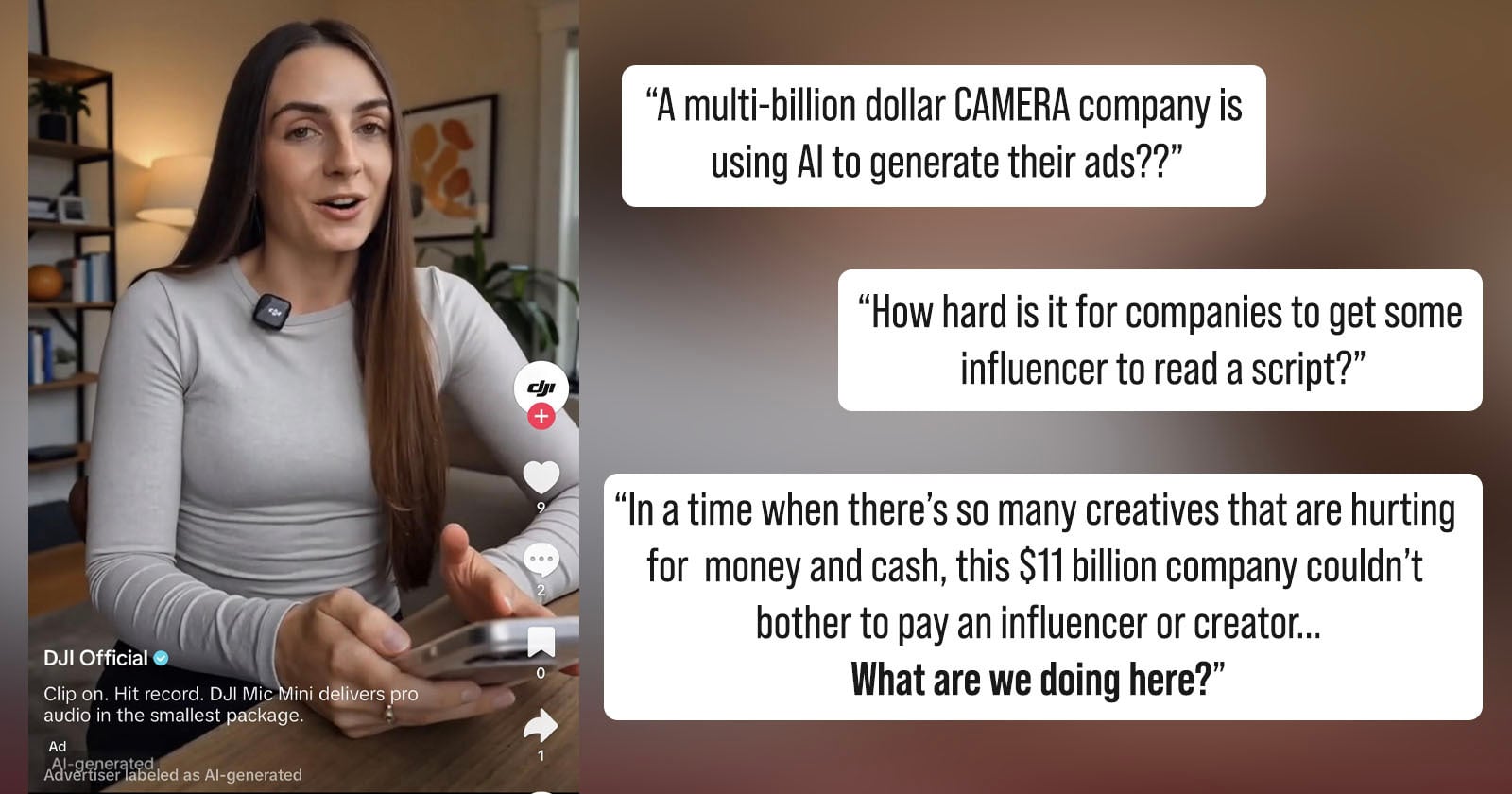
The recent controversy surrounding DJI’s use of an AI-generated avatar in a TikTok advertisement highlights a growing tension within the creative industries – a tension we’ve been vocal about We’re Taking a Stand Against AI. Join Us. While the deployment of AI-generated individuals in advertising isn’t entirely new, particularly on platforms like TikTok, DJI's choice to present this avatar as convincingly human has sparked significant backlash. The core issue isn’t simply the use of AI, but the deceptive nature of portraying it as a genuine person, effectively substituting a real creator without transparency or compensation. It mirrors a broader conversation about authenticity and the value of human connection in a landscape increasingly shaped by algorithms. This incident arrives amidst a flurry of innovative applications of technology in photography and videography, as showcased in Canon’s playful approach to educating children about cameras Canon New Children’s Book Has Aliens Explaining Why Cameras Are Awesome, but the DJI case underscores a potentially problematic side effect: the devaluation of human artistry and the erosion of trust.
The anger directed towards DJI isn’t just about a marketing misstep; it’s a reaction to the potential for widespread displacement of human talent. Influencers, content creators, and even everyday individuals who build their brands and livelihoods through authentic engagement are now facing competition from entities capable of generating seemingly identical representations at a fraction of the cost. This raises critical ethical questions about transparency, consent, and the future of work in the digital age. While AI tools can undoubtedly empower creators – assisting with editing, post-processing, and even generating novel visual effects – their deployment as direct replacements for human beings warrants careful consideration. The reliance on algorithms to mimic genuine emotion and experience risks creating a sterile and inauthentic digital world, ultimately diminishing the value of human expression. A deeper understanding of core photographic principles, like white balance, for example, remains a distinctly human skill White Balance in Photography: The Essential Guide, and the nuances that automated systems struggle to replicate.
Beyond the immediate impact on content creators, this situation has broader implications for consumer trust. Audiences are becoming increasingly savvy about recognizing digital manipulation, but the line between reality and simulation continues to blur. The use of AI-generated avatars, especially when presented without clear disclosure, can create a sense of deception and erode confidence in brands and the media they produce. This is particularly relevant within industries like photography and videography, where authenticity and visual truth have long been prized values. The DJI controversy serves as a stark reminder that brands must prioritize ethical considerations and transparency when integrating AI into their marketing strategies, ensuring they do not sacrifice authenticity and trust for short-term gains. A curated aesthetic, the foundation of our brand, relies on genuine human expression and artistry - something an algorithm can only attempt to mimic.
Ultimately, the DJI incident is a watershed moment, forcing a broader conversation about the role of AI in creative industries and the responsibilities of brands deploying these technologies. As AI capabilities continue to advance, the challenge will be to harness their potential while preserving the value of human creativity, fostering transparency, and upholding ethical standards. The question isn’t whether AI will be used in advertising – it almost certainly will – but how we ensure its integration respects the livelihoods of creators, maintains consumer trust, and doesn’t lead to a homogenized and inauthentic digital landscape. How will brands successfully navigate this evolving intersection of technology and artistry, and will consumers ultimately demand greater transparency regarding the use of AI in the content they consume?
DJI is in a bit of hot water after it was discovered publishing an AI-generated ad on TikTok, where AI-generated people are not all that unusual. DJI's now-deleted ad featured a video with an AI avatar who looks, mostly, like a real, actual person.
Read on the original site
Open the publisher's page for the full experience