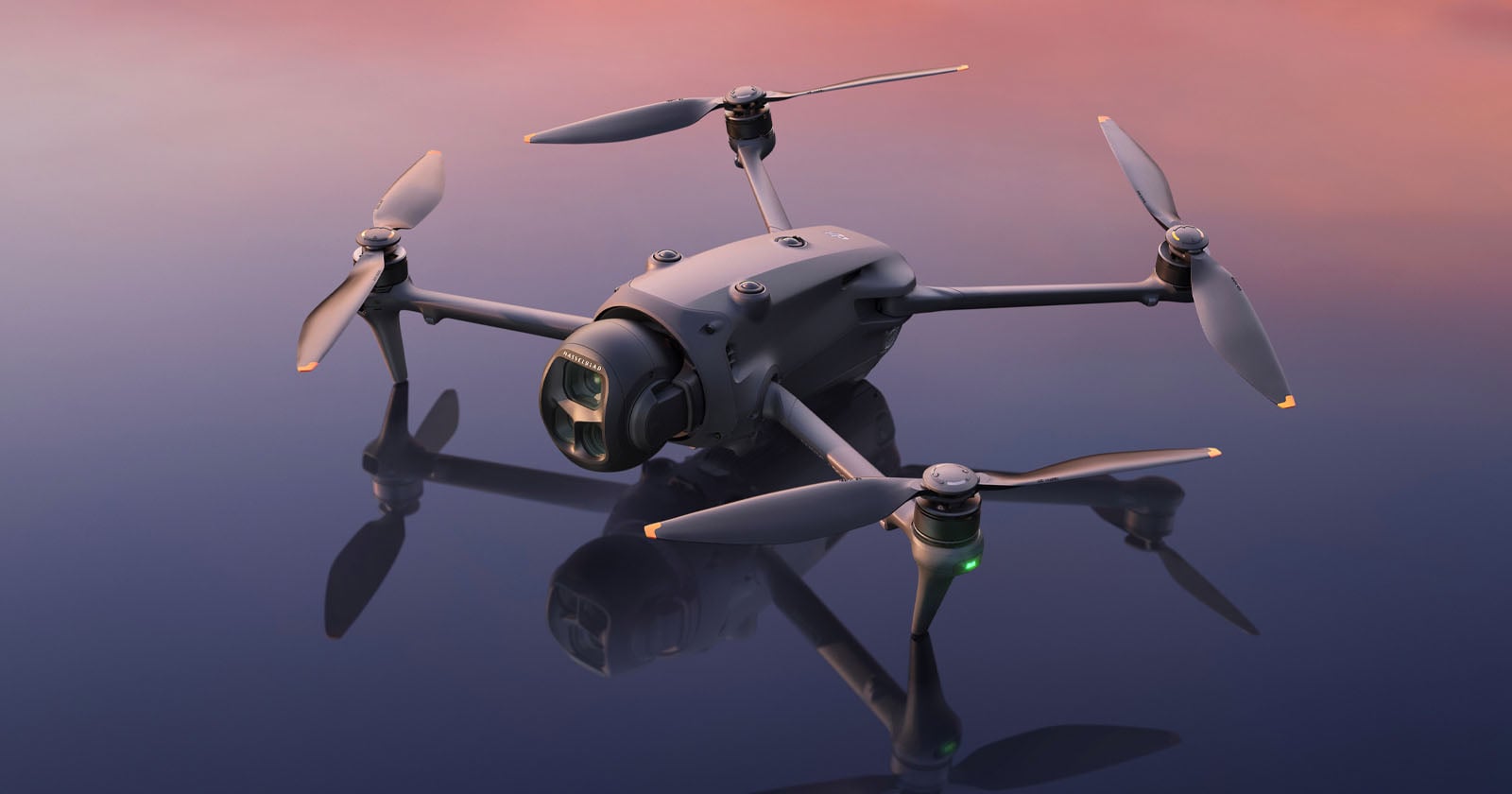
There's a particular kind of relief that comes when a ruling doesn't go all one way, it's not a clean win, but it's a thread to pull. This week, a U.S. Court of Appeals partially reversed a lower court's decision regarding DJI's designation as a Chinese Military Company, sending the case back for further review. For photographers, videographers, and creators who have built entire workflows around DJI's drones, this isn't just a legal headline; it's a moment of suspended breath. The designation has always carried a weight that goes beyond paperwork, touching everything from procurement to personal trust. And while the court's decision doesn't erase the label, it cracks the door open for a more nuanced conversation.
We're watching this through a lens that feels intimately familiar. Just last year, we saw A Moment of Tension: Photographers Converge Outside the White House unfold, where the collision of geopolitics and image-making became a literal street scene. This DJI case carries a similar charge, but the battlefield is quieter: a courtroom instead of a sidewalk. What strikes us is how much of this is about perception as much as hardware. DJI's gear has long been the quiet workhorse of visual storytelling, from indie sets to major productions. The idea that a legal label could ripple into the hands of a solo creator in Montana or a small studio in Ohio feels abstract, until you remember that trust, once questioned, is hard to rebuild. We'd tell a reader who asks, "Should I be worried?" that the honest answer is: not yet, but stay informed.
There's also a practical thread here that connects to the broader state of imaging tech. We're seeing brands pivot, adapt, and sometimes stumble, as noted in Sony FX5 Shipping Now Expected Late October and the more accessible Refined and Accessible: The Nikon Z5 IIC—A Full-Frame Camera, Reimagined. The market is already shifting toward alternatives, but DJI's dominance in aerial imaging isn't just about specs, it's about an ecosystem that's become second nature. The appeals court's decision doesn't change that overnight, but it does introduce a variable. For creators, the takeaway is less about panic and more about awareness: diversify your kit if you can, keep an eye on policy updates, and remember that gear is a tool, not a doctrine. One clear quote to hold onto: "A legal label doesn't change what your drone can capture, but it might change where you're willing to fly it."
What we'll be watching now is the lower court's next move. The partial reversal isn't a full vindication, but it signals that the initial ruling wasn't bulletproof. For a company that has weathered so much, this is a chance to show how it handles nuance. Will they lean into transparency, or will the fight drag on? That's the open question. For now, the practical consequence is simple: keep creating, keep documenting, and keep asking the hard questions, because in this industry, the only constant is that the frame is always in motion. And that's a story worth following.