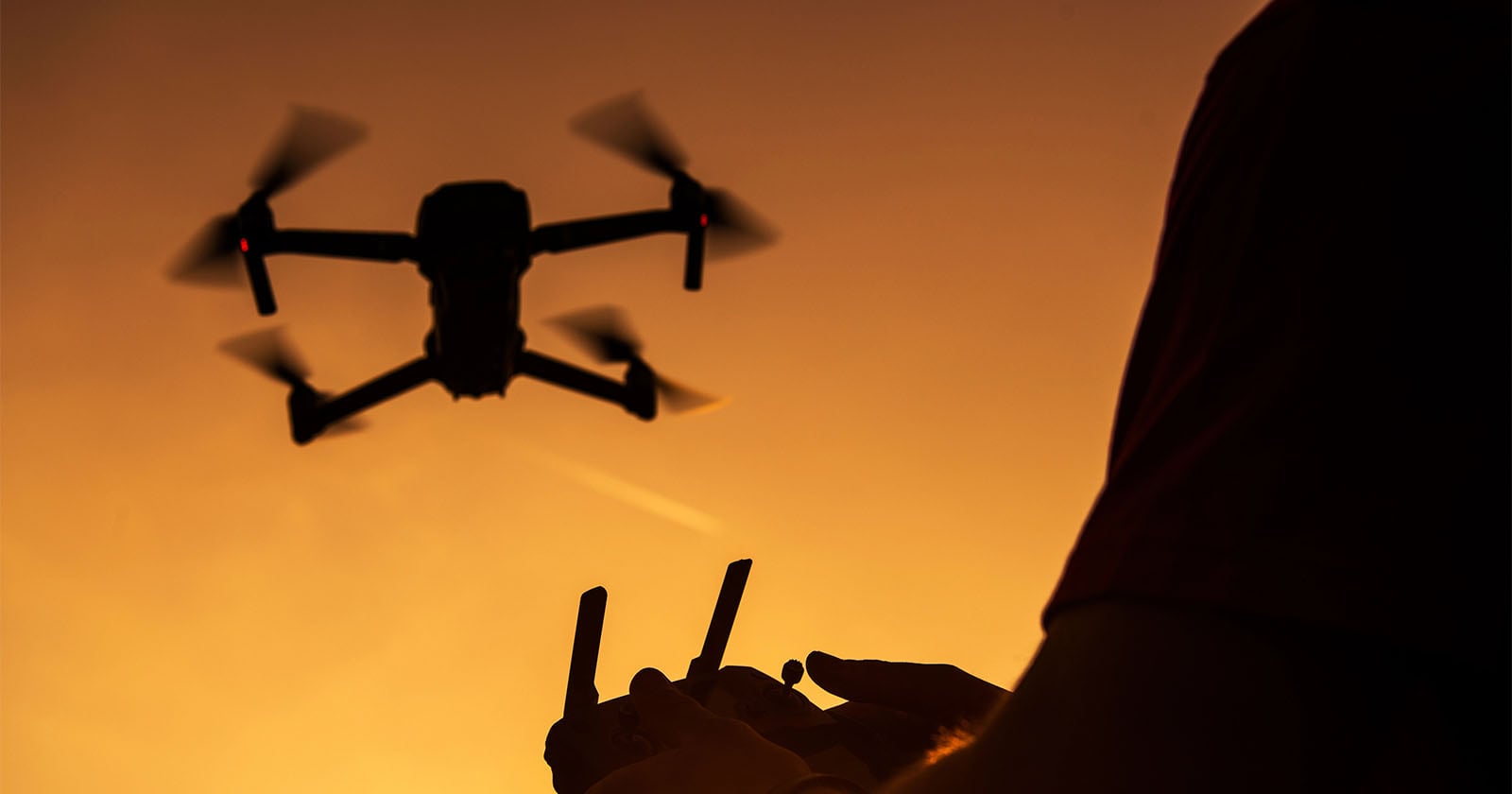
The United States Federal Aviation Administration has proposed rule changes that would restrict drone operations over critical infrastructure sites, citing safety and security. The National Press Photographers Association has filed comments raising concerns about First Amendment-protected newsgathering. On the surface, this looks like a technical regulatory debate. Scratch that surface, and you find a pattern that should concern anyone who believes in visual journalism. This is not the first time we have seen access restricted in the name of security. Consider how camera operators for MS NOW were turned away from the White House after the U.S. Secret Service imposed unexpected measures, a story we covered in White House Access Restricted: News Crew Faces Unexpected Security Measures. Or recall the photographer put into a choke hold by a police officer at the Spanish Grand Prix, an incident we documented in Tension at the Grand Prix: Photographer Involved in Incident with Police. Each story is distinct, yet they share a quiet thread: the physical space where journalists work is shrinking.
Our perspective is straightforward. The FAA proposal is not inherently malicious. Protecting power plants, pipelines, and airports from rogue drones is a legitimate concern. But the language of the rule is broad, and broad language invites interpretation that can chill legitimate newsgathering. A photojournalist documenting a wildfire near a power substation, or covering a protest outside a fuel depot, could find themselves in violation of rules designed for saboteurs. The NPPA's constitutional argument is not hyperbolic. The First Amendment does not disappear when a journalist lifts a camera into the air. The practical consequence for our readers, many of whom are photographers, videographers, or creative storytellers, is uncertainty. You may own a drone, you may have a license, and you may still face a legal gray zone that makes you hesitate. Hesitation is the enemy of documentation.
What would we tell a reader who asks us about this? We would say: pay attention to the comment period. The NPPA has filed its objections, but the FAA will hear from industry and security voices too. The outcome depends on how narrowly or broadly the final rule defines "critical infrastructure." If the definition includes every cell tower, every bridge, and every data center, then large swaths of American airspace become no-fly zones for journalists. That is not hyperbole, it is a logical endpoint. We would also remind our readers that this is happening alongside broader conversations about youth social media restrictions in the EU, which we examined in Safeguarding Childhood: EU Proposes Restrictions on Youth Social Media Use. Different continent, different technology, same instinct: to control the tools of communication in the name of protection. The question is always who decides where protection ends and suppression begins.
The specific detail to watch is how the FAA defines "critical infrastructure" in the final rule. If the definition is vague or expansive, expect legal challenges from press freedom organizations. If it is narrow and tied to specific, high-risk sites, the tension may ease. But the pattern across these stories suggests a drift. Access is not being taken away all at once. It is being eroded, one rule, one checkpoint, one incident at a time. For the photographer with a drone and a story to tell, the sky is not the limit. It is the next frontier of a very old fight.