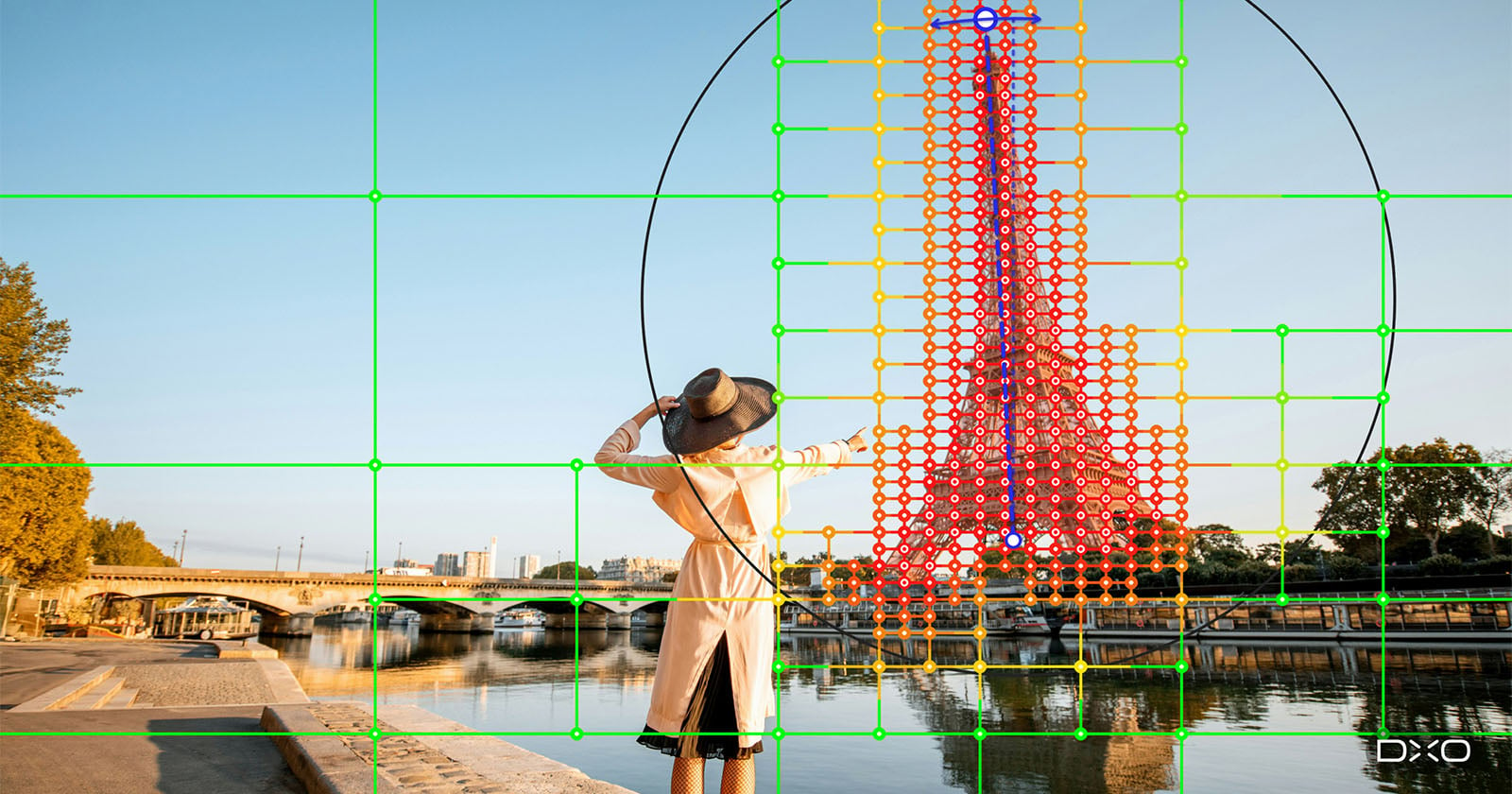
Precision has never felt this personal. DxO's ViewPoint 6 isn't just another software update, it's a quiet declaration that the smallest details deserve the most refined tools, and for those of us who obsess over the geometry of a frame, that distinction matters deeply.
The French company calls this its "most precise version yet," and the leap comes from new AI masking technology. Where earlier versions asked you to manually trace distorted lines or guess at corrections, ViewPoint 6 now identifies and isolates the problematic areas itself. Think of a wide-angle shot where a building's edges lean inward, or a group portrait where faces at the edges warp slightly. In the past, fixing that meant compromising on other parts of the image. The new masking promises to treat each distortion as its own problem, preserving the integrity of everything else. That is not a minor convenience; it is a philosophical shift toward trusting the machine to see what the eye has already sensed. For photographers who value both authenticity and control, this is the kind of thoughtful automation that feels less like a shortcut and more like a partnership.
This release sits in a fascinating conversation with other recent innovations from the French imaging world. DxO's focus on algorithmic precision echoes the ethos behind The Lens on Pixii: A French Rangefinder's Curated Final Frame, where a screen-less digital rangefinder stripped photography back to its essential mechanics. Both companies operate from a belief that the tool should refine the craft without overwhelming it. Similarly, the tactile, handheld spirit of The Elgato Wave Go blends handheld warmth with clip-on freedom reminds us that creators increasingly demand gear that adapts to their physical rhythm, not the other way around. ViewPoint 6 does exactly that: it adapts its intelligence to the frame you already chose, rather than forcing you to recompose around its limitations.
What makes this version genuinely interesting is where it lands on the spectrum of automation. AI masking can easily become a crutch, a black box that does the work and leaves the photographer wondering what was actually changed. DxO appears to have avoided that trap by keeping the correction visible and adjustable. You can see where the mask is applied, tweak its edges, and decide how much of the correction to accept. That transparency is the difference between a tool that empowers and one that erases. For the creative collaborator who shoots architecture, interiors, or editorial portraiture, that distinction is everything.
The practical takeaway is straightforward: if your work involves any lens wider than 50mm, ViewPoint 6 is worth your time not because it is new, but because it solves a specific frustration without asking you to surrender your eye. The open question is how well the AI handles organic shapes, faces, foliage, fabric, where hard lines blur. That is the test. We will be watching how the masking performs on a crowded street scene, not just a pristine facade.