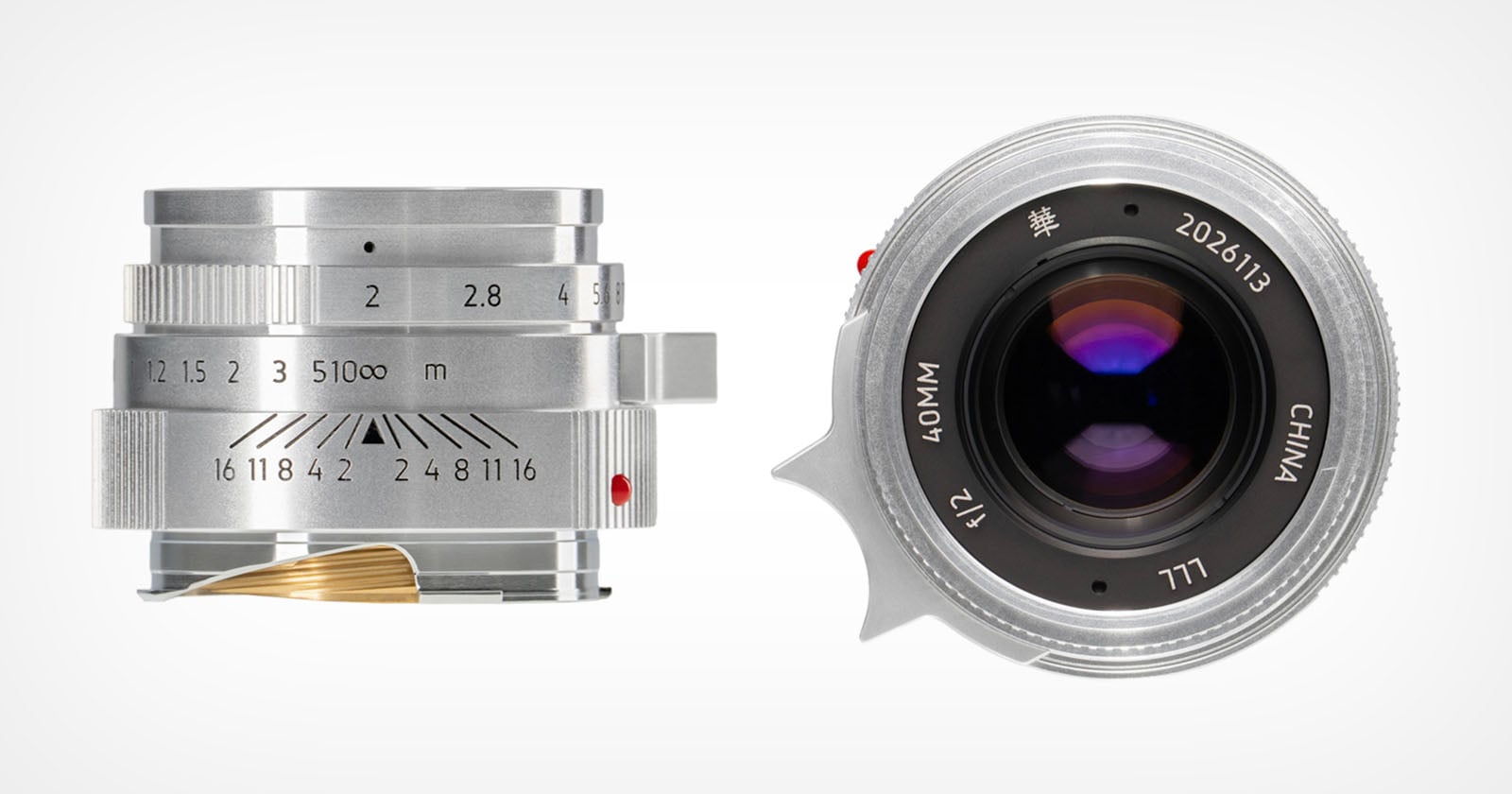
There is something quietly radical about a lens that refuses to rush. The Light Lens Lab 40mm f/2 "Hua" is not a feat of modern engineering designed to outresolve every sensor on the market, it is a deliberate, curated homage to the vintage Chinese optics that founder Mr. Zhou spent years collecting before he ever built a company. And that changes what we expect from a piece of glass. This is not a product launch; it is an argument for slowing down, for letting imperfection and character shape an image, and for treating every lens as a story rather than a spec sheet. For anyone who has ever felt that modern photography has become too clinical, too obsessed with sharpness at the expense of soul, the Hua arrives as a quiet invitation to reconsider what we actually want from our tools.
This ethos of intentional curation is something we have seen echoed elsewhere in the gear world recently. Reto's Unbox a curated E Ink display that tracks what matters most takes a similarly playful approach to revealing a product's personality through the act of unboxing itself, turning a functional device into an experience. And in Kodak SlideTag pairs clever design with surprising substance, we saw how a seemingly simple accessory can carry more depth than its appearance suggests. Light Lens Lab is doing something related but distinct: instead of hiding the magic inside a blind box or a clever tag, they are letting the lens itself tell its own history. Every Hua carries the DNA of those vintage Chinese optics Mr. Zhou studied and revered, not as a replica but as a distillation of their best qualities, the glow, the character, the way they render light with a warmth that modern coatings often erase.
For the photographer who values both form and function, the practical takeaway here is clear: this lens is an invitation to shoot with intention. A 40mm f/2 sits in that sweet spot between a standard fifty and a slightly wider thirty-five, demanding that you move your feet and compose with care. It is not a zoom; it will not autofocus at the speed of light. What it offers instead is a tactile connection to the act of making an image, the same kind of deliberate pace that collectors like Mr. Zhou must have felt when they first held those vintage Chinese lenses in their hands. This is a lens for the person who wants their gear to have a voice, not just a resolution chart.
The question that lingers is whether this approach can scale. Light Lens Lab has built its reputation on small-batch, thoughtful releases that reward patience and curiosity. The Hua feels like a natural next step, but it also raises the bar: if every lens is a tribute to a specific history, how do you keep that story from becoming formulaic? For now, the answer seems to be that you start with a founder who collected the originals before he ever thought of making his own. That kind of authenticity cannot be manufactured. The Hua is proof that when you let the past inform the present, the result is not nostalgia, it is a new way of seeing.