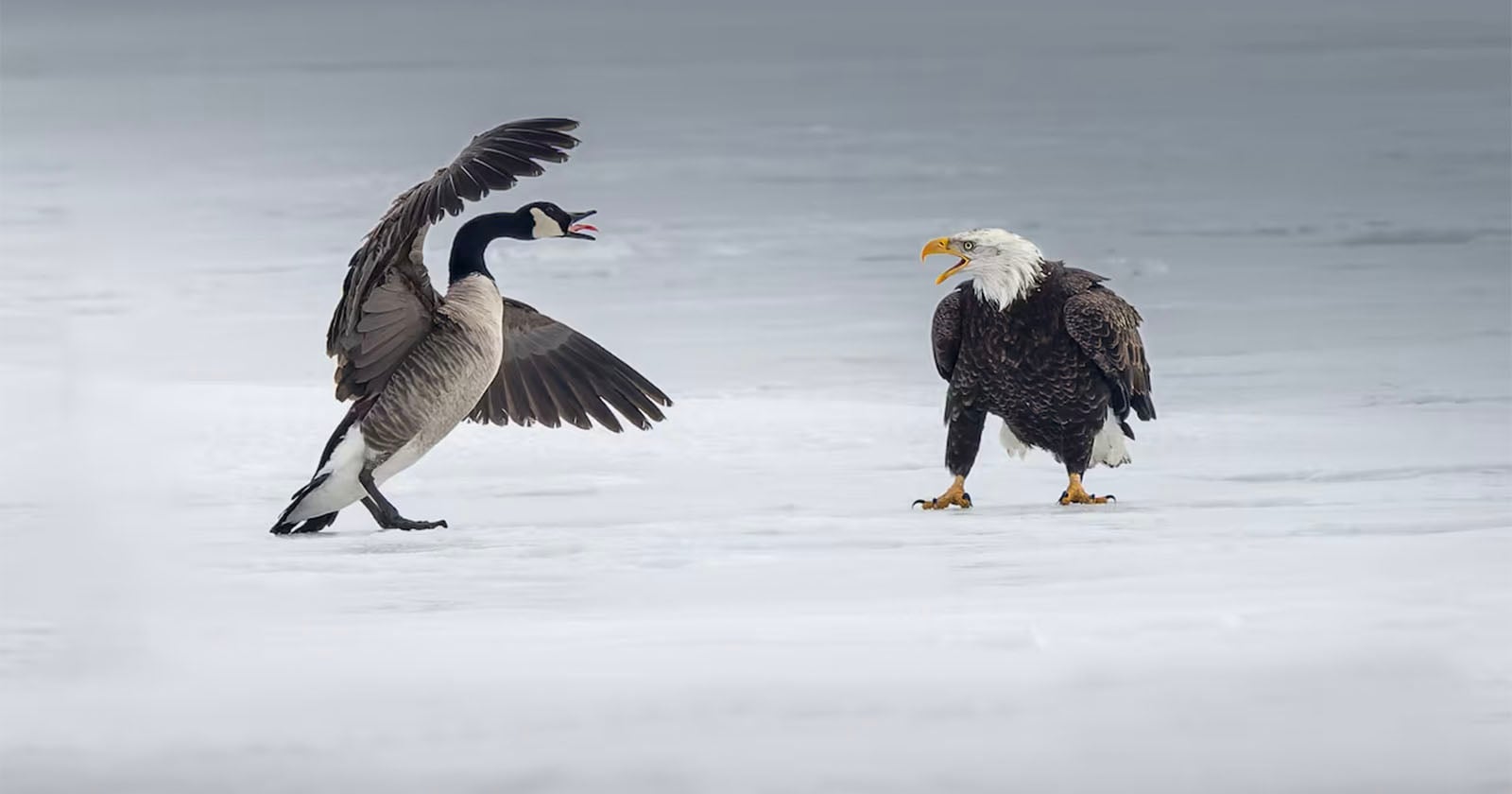
There is something quietly funny, and a little unsettling, about an image outlasting the context that created it. The White House has adopted a striking photograph of a bald eagle with its talons pressed against a Canada goose as the default visual for US-Canada relations on X. It is a stirring image, no question. But the question that lingers is not about the eagle or the goose. It is about the photographer, the origin of the frame, and how quickly a moment of genuine artistic tension becomes a prop for political messaging. We are watching a photograph get stripped of its authorship in real time, and that should matter to anyone who has ever picked up a camera.
This is not a new phenomenon, but it feels sharper now because the image is so perfectly emblematic of a frosty diplomatic moment. The photograph works because it looks like a metaphor. That is precisely the danger. When an image becomes too good at symbolizing a situation, it stops being seen as a crafted piece of work and starts being used as a shorthand. For our readers, many of whom are photographers themselves, this is a familiar anxiety. Your work can be lifted, shared, and repurposed without your intent following along. It is worth remembering that the same instinct that makes a photo go viral is the instinct that can erase its context. We saw a version of this chaos play out recently in A Moment of Tension: Photographers Converge Outside the White House, where the physical act of photographing became its own battleground. The camera does not just capture tension; it can create it, and when institutions start using images as badges, the line between documentation and decoration blurs.
What we would tell a reader who asks us about this is simple: do not let the image do the thinking for you. The photograph of the eagle and the goose is a piece of reality, but its use in this context is a choice. It is a choice to frame a relationship as a predator-prey dynamic, to reduce a complex economic and political relationship to a single frozen moment. That is not a criticism of the photographer, who likely captured a genuine encounter with skill and timing. It is a caution about how that skill gets consumed. For photographers, the takeaway is practical and a little uncomfortable. Your work can become a tool for narratives you never intended to serve. The question is not whether your image is good, but who gets to decide what it means. As we have seen with Collaborate & Create: Boudoir Sessions Offered Across Florida's Coast, context and intent are everything in how a photograph is received. A portrait made for collaboration reads differently when moved into a different frame, and the same is true for a wildlife shot turned into a diplomatic statement.
The specific detail to watch is whether the White House ever credits the photographer. If they do not, that is not an oversight. That is a signal. It tells you that the image is being used as a symbol, not as a work of art. And if the photographer does come forward, watch how quickly the story shifts from the image itself to the politics it now represents. Either way, the photograph has already left the hands of its creator. The only question is whether we, as viewers, are willing to ask who took it and why that matters.