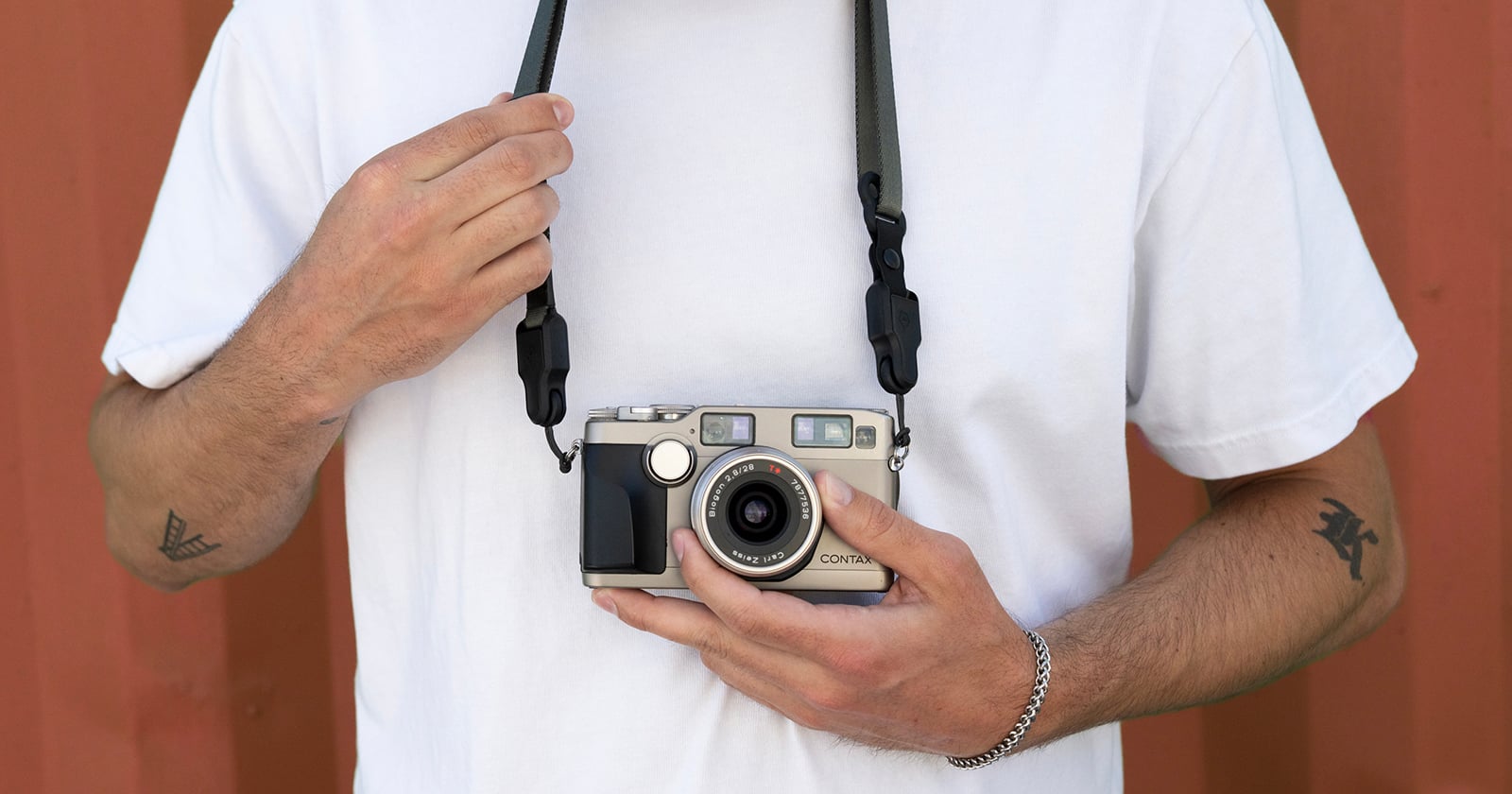
Wandrd's new magnetic camera strap system launches today on Kickstarter, and it promises to solve a frustration every photographer knows: the fumbling, twisting, slow dance of attaching and detaching a camera from its strap. The system is designed to make switching cameras faster while delivering a more secure connection than traditional hardware. At first glance, this feels like a small, almost mechanical improvement. But look closer, and it reveals something about how we move through the world with our cameras, a subject we explore regularly, whether we are Finding Joy on the Streets, One Frame After Fashion or documenting the quiet rituals of daily life.
The magnetic system is not about reinventing photography. It is about removing resistance. Anyone who has missed a fleeting moment because they were fighting with a strap clip knows exactly what that resistance costs. Wandrd's approach treats the camera as something that should flow with the body, not fight it. That sensibility aligns with what we admire in the best street photography: an instinct for movement, a refusal to let gear become a barrier between the photographer and the frame. The same impulse that drives a photographer to shoot from the hip or pre-focus at a certain distance is the impulse that makes a magnetic connection feel inevitable. It is not about speed for its own sake. It is about preserving the rhythm of seeing and capturing.
We would tell any reader considering this system to think about their own shooting habits first. If you carry one camera and rarely swap bodies, a magnetic strap is a convenience, not a necessity. But if you juggle two bodies, or if you frequently switch between a camera and your hands for other tasks, adjusting a reflector, checking a phone, holding a coffee, the friction saved per swap adds up fast. Over a full day of shooting, that is not a small thing. It is the difference between staying in the flow and being pulled out of it. We have written before about Capturing Cosmic Beauty: An Astrophotography Journey with Nikon, where every second of setup matters under a dark sky. The same principle applies here: the less time your hands spend on hardware, the more time they spend making images.
What interests us most is the question of trust. Magnets have a reputation problem in photography. We have all seen a cheap magnetic phone mount fail at the worst moment. Wandrd is betting that a well-engineered system can overcome that skepticism. The company's reputation for durable bags and thoughtful design gives them credibility, but the proof will be in the magnetic hold under real-world stress, running, climbing, bumping through crowds. If it holds, this system could quietly become the new standard. If it does not, it will be a lesson in how far design can push before physics pushes back.
Our take is simple: this is a tool worth watching, not because it changes what a photograph can be, but because it changes how easily a photographer can stay present. The concrete point to watch is the Kickstarter backers' first field reports. Look for the stories about the one moment a magnetic connection saved a shot that would have been lost to a fumbled clip. Those stories will tell us whether this is a clever accessory or a genuine shift in how we carry our cameras.