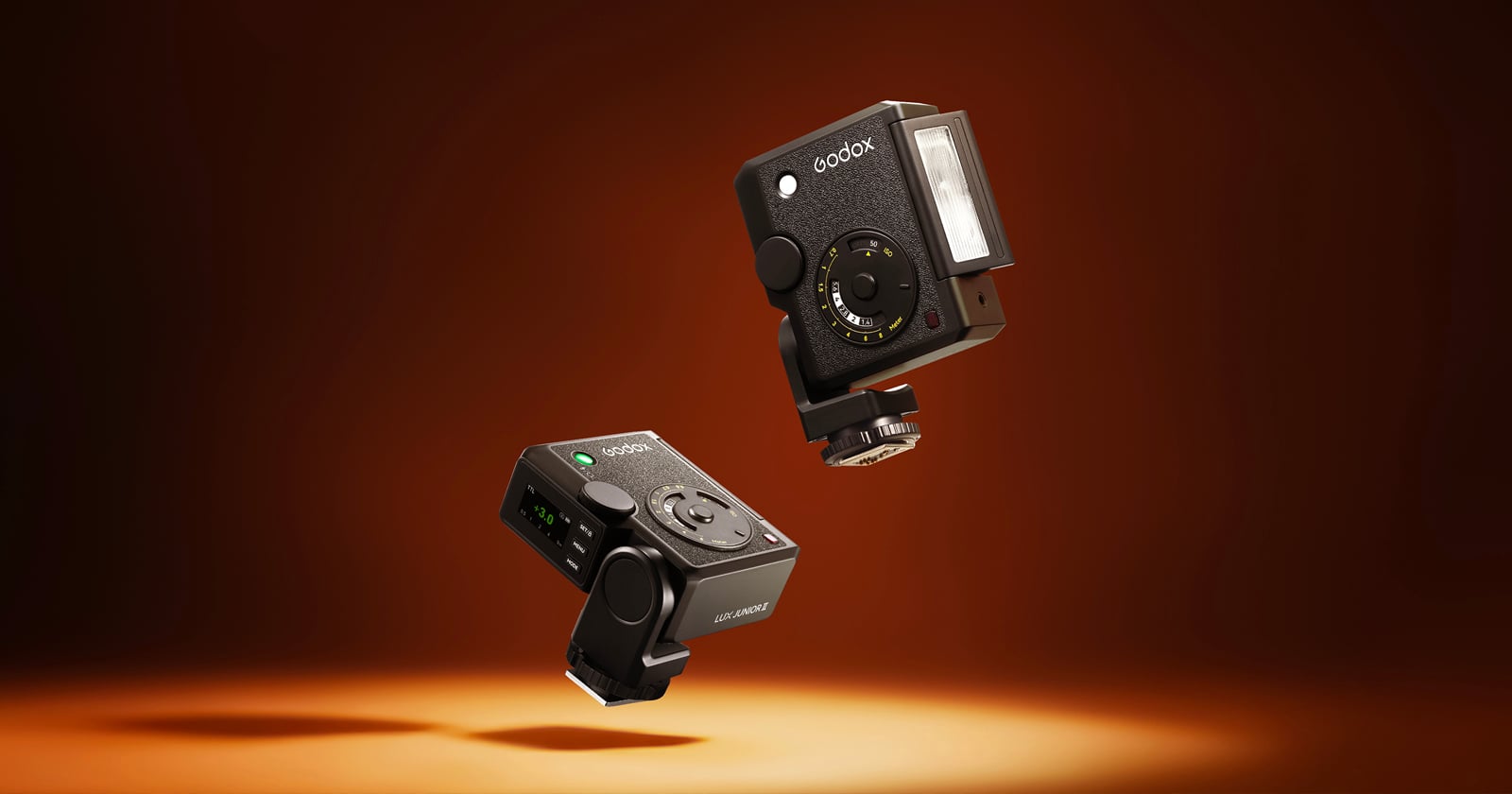
The Godox Lux Junior II arrives with a quiet confidence that feels almost like a statement in itself. A dual-axis head on a retro-inspired body is the kind of update that doesn't shout for attention, yet it solves a problem every flash photographer has felt when the ceiling is the wrong color or the wall is too far away. We have spent years chasing light, and this little unit reminds us that flexibility, not power, is often the real luxury. It is a tool that invites play, and in an era where we are constantly told to upgrade for more, it is refreshing to see a brand refine rather than reinvent.
For our readers who move between street scenes and more curated setups, this feels like a natural companion to the joy of the unexpected frame, much like the approach celebrated in our piece on Finding Joy on the Streets, One Frame After Fashion. That story leaned into the spontaneity of capturing life as it happens, and the Lux Junior II fits that ethos. The ability to tilt and bounce in both horizontal and vertical orientations means you are no longer locked into a single lighting pattern. It gives you the freedom to adapt to the environment rather than forcing the environment to adapt to you. We would tell anyone who shoots with a compact camera that this is not about chasing technical perfection; it is about keeping your eye on the subject while the light does the heavy lifting.
That said, we are not going to pretend this is a tool for every assignment. If you are documenting a fast-moving event or need to overpower the midday sun, this is not your first choice. But that is missing the point. The Lux Junior II is about the craft of small moments, the kind that also draw people to the cosmic patience required in astrophotography, as explored in Capturing Cosmic Beauty: An Astrophotography Journey with Nikon. Both pursuits demand a willingness to work with what you have, to understand light as a language rather than a utility. This flash is a reminder that you do not need a studio to create depth; you just need to know how to bend the light you have.
What we appreciate most is the restraint in the design. Godox did not cram in a touchscreen or a thousand presets. It is a flash that asks you to think, to tilt, to experiment. For the photographer who values form and function equally, this is a quiet invitation to slow down. The real question is whether the build quality holds up to the aesthetic promise, but that is a detail you will only discover in your own hands. We would say this: if you have been waiting for a reason to revisit flash photography, this is a compelling one, not because it is new, but because it makes the old art of bouncing light feel fresh again. Watch for how the dual-axis mechanism feels in real-world use, because that will determine if this becomes a staple or just a pretty conversation piece.